
 Admin
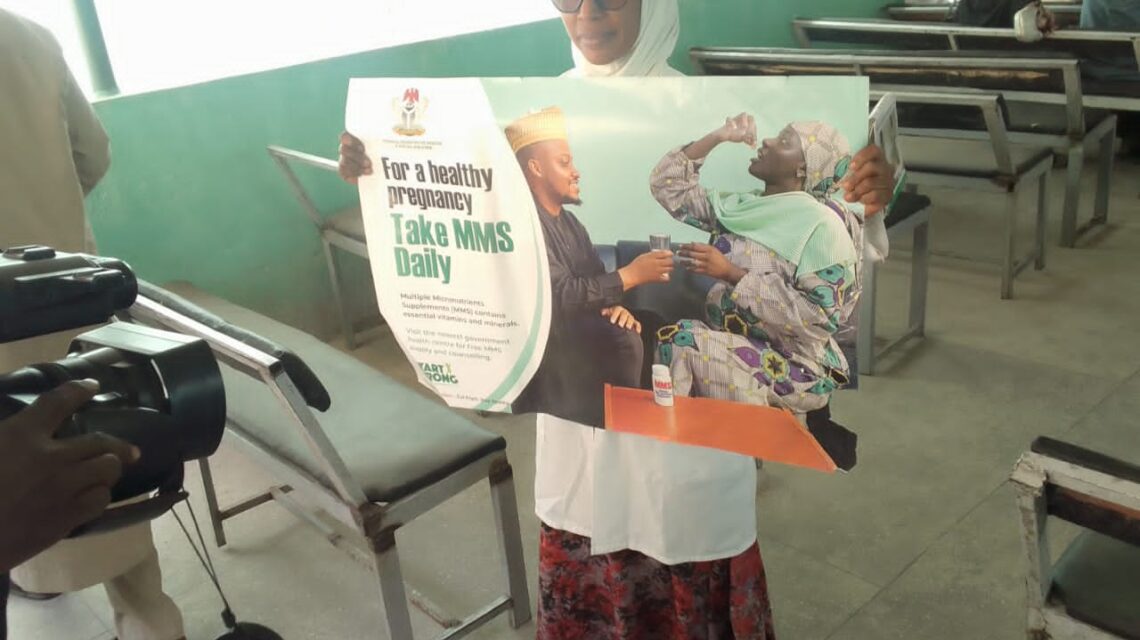
Admin In the heart of Gwagwarwa, a busy community in Kano, the antenatal clinic at the local primary health centre comes alive at dawn.
Rows of pregnant women in colourful hijabs sit shoulder-to-shoulder, listening attentively as health workers speak on nutrition, safe delivery and the lifesaving importance of preventing anaemia.
For many of them, these are not just routine hospital talks. They are lifelines.
“My name is Zainab Salisu Aliyu from Gama quarters,” she says shyly, clutching her antenatal card. “Anytime I am pregnant, I come here. During our lectures, we are taught the importance of anaemia drugs, and they give them to us free.”
Zainab does not joke with her doses.
“I feel stronger when I take them. They help me a lot. I know they are good for my baby.”
Anaemia a condition caused by low levels of healthy red blood cells — remains a major threat to pregnant women, especially in low-resource communities. Without proper care, it can lead to fatigue, premature birth and low birth weight.
Health workers say the simple iron and folic acid tablets, popularly called “anaemia drugs,” are powerful shields against these dangers.
For Hauwa Idris from Tudun Wada, the difference is clear.
“This is where I attend my antenatal,” she says confidently. “We were told the drugs boost our blood and help us deliver healthy babies.”
She believes women who skip antenatal care are taking dangerous risks.
“There is a big difference between us who take the drugs and those who don’t attend clinic at all,” she says. “We thank the government for providing them, but they should do more so every pregnant woman can benefit.”
Zulaihat Idris, Nutrition Officer at Gwagwarwa Health Facility, says education is as important as the drugs themselves.
“We always enlighten pregnant women on why they must take anaemia drugs,” she explains. “They contain the nutrients and vitamins needed to boost the health of both mother and baby.”
According to her, consistency is key.
“Failure to take these drugs during pregnancy can cause serious health challenges for the baby after birth. That is why we urge them to take them strictly as prescribed.”
“The drugs are not always available in quantities that can reach all the women attending antenatal here,” she reveals. “Sometimes we ask them to be patient.”
She, however, notes that during Maternal and Child Health Week campaigns, supplies improve and more women are reached.
Beyond government efforts, civil society groups are lending support. Organisations such as CS-SUNN have intensified advocacy for steady supply and stronger awareness campaigns.
Their message is simple: distribution alone is not enough. Women must understand why skipping doses could put their babies at risk.
As the antenatal session ends, women form a neat queue, waiting to receive their supplements.
To an outsider, they are just small red tablets.
To these mothers, they are protection against weakness, against complications, against preventable tragedy.
“When we take these drugs, we feel the difference,” Zainab says softly, adjusting her scarf. “We just want every pregnant woman to have the same opportunity.”
For the women of Gwagwarwa and Tudun Wada, access to free anaemia drugs is more than a health policy it is a promise of stronger mothers and healthier babies.
 Ambassador Dr. Amina Umar Namadi: A First Lady Defined by Compassion, Service, and Humanity
  Police Rescue Abducted Three-Day-Old Baby, Arrest Two Suspects in Nasarawa
  Governor Yusuf Mourns Alhaji Nuhu Dantani
  ADC Leaders Reject INEC Decision, Vow to Resist, Mobilise Support in Otukpo
  Police Disburse ₦9.26m to Families of Fallen Officers in Kano
  Ambassador Dr. Amina Umar Namadi: A First Lady Defined by Compassion, Service, and Humanity
  Police Rescue Abducted Three-Day-Old Baby, Arrest Two Suspects in Nasarawa
  Governor Yusuf Mourns Alhaji Nuhu Dantani
  ADC Leaders Reject INEC Decision, Vow to Resist, Mobilise Support in Otukpo
  Police Disburse ₦9.26m to Families of Fallen Officers in Kano