
 Admin
Admin
By Adamu Aminu.
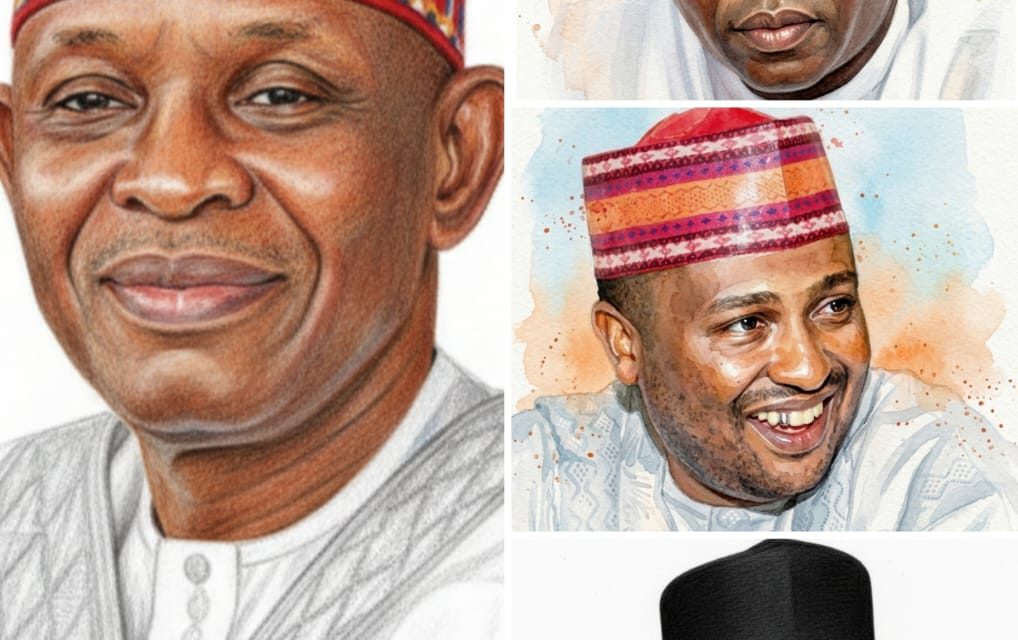
The emerging dilemma facing Governor Abba Kabir Yusuf over the choice of a substantive Deputy Governor reflects a broader test of political balance, institutional judgment, and governance priorities in Kano State.
While public discourse has highlighted specific individuals, the issue extends beyond any single contender to the wider challenge of selecting a deputy from competing political blocs, interests, and expectations.
At its core, the decision is not merely about filling a constitutional vacancy; it is about managing political diversity within the governing structure while preserving public confidence in leadership.
Kano’s political landscape is shaped by multiple “political houses,” each with its own influence, loyalty base, and expectations of inclusion. Choosing a deputy from one bloc may consolidate support in the short term but risks alienating others whose cooperation is essential for stable governance.
This places Governor Abba in a delicate position. On one hand, political inclusivity is necessary to maintain cohesion within the ruling structure.
On the other hand, the choice must reflect competence, credibility, and the ability to support policy execution. A deputy governor is not only a political partner but also an institutional actor expected to contribute meaningfully to governance, coordination, and continuity.
The situation is further complicated by public sensitivity to issues of integrity and accountability. Where concerns or allegations exist about any potential nominee, even if unproven, they can shape public perception and influence the credibility of the administration.
In this regard, the Governor Abba’s decision must carefully balance both political realities and the need to uphold standards that reinforce trust in public institutions.
From a policy and institutional perspective, the guiding principles should be clear: merit, balance, and transparency.
Merit ensures that the individual chosen can effectively contribute to governance. Balance helps manage the competing expectations of Kano’s diverse political stakeholders.
Transparency, in turn, reassures the public that the process is grounded in fairness rather than narrow political expediency.
Ultimately, the strength of the administration will depend not only on political accommodation but on its ability to align decisions with the broader goals of good governance.
The choice of a Deputy Governor offers an opportunity to demonstrate that leadership decisions in Kano can rise above factional pressures and reflect a commitment to stability, accountability, and inclusive governance.
“Do Allah Mai girma Gwamna, ayi duba na tsanaki, kada ayi kitso da kwarkwata” – literally meaning, “Your Excellency Governor, Please, there’s a need to use a critical lens to avoid braiding hair infested with lice” – prioritizing integrity and structural concerns first, before making political choices.
Adamu Aminu writes from Kano.
 FG Assures Nigerians of Stable, Affordable CNG Prices
  Kano Govt Donates Equipment to NDLEA
 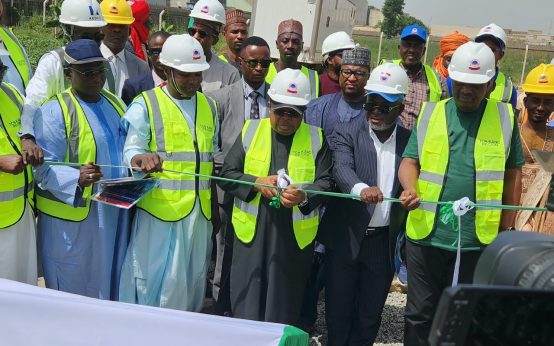 FG Commissions 80MVA Transmission Substation in Kano
 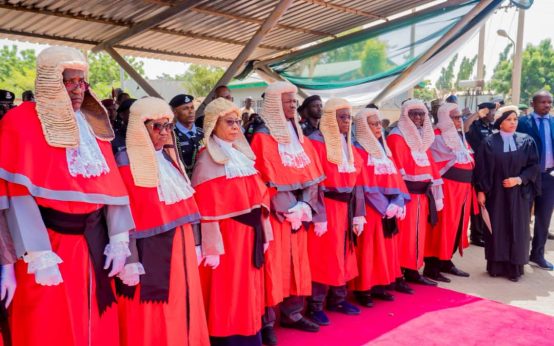 Gov. Radda Announces Digital Courts, Judicial Welfare Package
 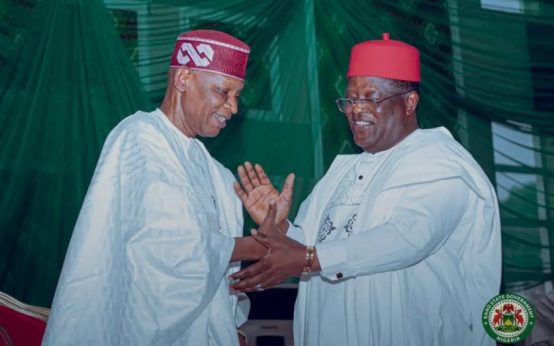 Abuja-Kaduna-Kano Highway to Boost Trade, Connectivity — Umahi
  Kano Assembly Receives Five Commissioner Nominees from Gov. Yusuf
  FG Assures Nigerians of Stable, Affordable CNG Prices
  Kano Govt Donates Equipment to NDLEA
  FG Commissions 80MVA Transmission Substation in Kano
  Gov. Radda Announces Digital Courts, Judicial Welfare Package
  Abuja-Kaduna-Kano Highway to Boost Trade, Connectivity — Umahi