
 Admin
Admin By Abdullahi Kano
For generations, movement within Kano has been defined by a familiar contradiction: a city whose commercial energy never seems to slow, yet one increasingly constrained by traffic congestion, population growth and pressure on its road infrastructure.
From the ancient markets of the city centre to the rapidly expanding suburbs, thousands of commuters, traders, artisans, students and workers compete daily for space on the roads. The resulting congestion has become more than a transportation problem; it is an economic challenge that affects productivity, business operations and the quality of urban life.
It is against this background that the proposed N1 trillion-plus metropolitan railway project has generated considerable interest in Kano.
The project, as reported, is expected to transform transportation within the metropolis, improve connectivity and provide an alternative mass-transit system for a city that remains one of Nigeria’s most important commercial hubs.
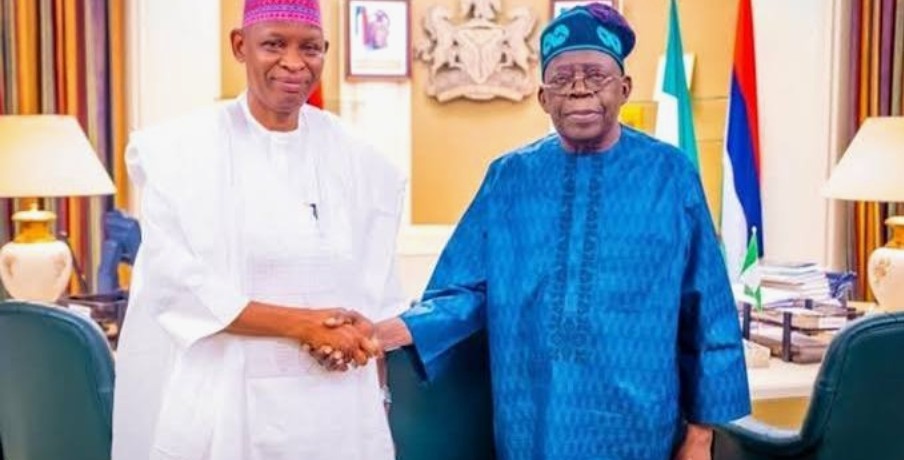
Beyond the huge financial value attached to the proposal, however, the railway has assumed another significance. It has become a symbol of the emerging political and administrative relationship between Kano State Governor, Abba Kabir Yusuf, and President Bola Ahmed Tinubu.
From political differences to development partnership
For much of Nigeria’s political history, relations between state governments and the Federal Government have often been influenced by partisan differences. Kano, with its politically active population and strategic importance in northern Nigeria, has frequently been at the centre of such political dynamics.
Governor Yusuf’s recent movement into the All Progressives Congress (APC) has altered the political equation.
His supporters argue that the governor’s engagement with the Tinubu administration has created a platform for Kano to attract greater federal attention and investment.
The proposed metropolitan rail project is now being presented by his political associates as one of the most significant potential outcomes of that relationship.
Abdulmalik Suleiman, in a statement on the development, described the project as an important outcome of what he termed the governor’s constructive engagement with the Federal Government under President Tinubu’s Renewed Hope Agenda.
For supporters of the administration, the message is straightforward: political differences should not prevent governments from cooperating where the welfare of citizens is at stake.
But for ordinary Kano residents, the political narrative is likely to remain secondary to one question: Will the railway eventually become a reality?
A city waiting for a modern transport system
Kano’s growth has placed enormous pressure on its existing transportation infrastructure.
The metropolis has expanded beyond its traditional urban core into communities and settlements that were once considered peripheral. As the population has grown, so too has the volume of private vehicles, commercial buses, tricycles and other forms of transportation.
The consequence is visible in major roads and commercial districts, particularly during peak periods.
A functional metropolitan rail system could change this pattern by moving large numbers of passengers efficiently while reducing pressure on major roads.
For traders, the implications could be particularly significant.
Kano’s economy is heavily dependent on commerce. The city serves not only residents but also people travelling from neighbouring states and across the wider northern region to buy and sell goods.
Improved transportation could therefore have effects beyond commuting.
A trader who spends less time trapped in traffic can reach markets faster. A worker can travel more predictably. A student can get to school with fewer delays. Businesses along the railway corridor could also benefit from increased human activity.
More than trains on tracks
The potential impact of a metropolitan railway should not be measured only by the number of trains or kilometres of track involved.
Major urban transport projects often create secondary economic opportunities.
Stations can become new commercial centres. Businesses may emerge around transport corridors. Property values and investment patterns can change. Small enterprises can gain access to larger markets, while construction and maintenance activities can create employment opportunities.
For Kano, such development could complement ongoing investments in roads, education, healthcare, agriculture and other sectors.
The railway could also provide a platform for more organised urban planning.
Instead of continued expansion based almost entirely on road transportation, Kano could gradually move towards a more integrated system in which rail, buses and other public transport services work together.
That transition, if properly planned, could help the metropolis prepare for future population growth.
The politics of infrastructure
There is also an unmistakable political dimension to the project.
With the 2027 general elections approaching, infrastructure delivery is likely to become an important part of political messaging.
For the APC, federal projects in Kano could strengthen the argument that closer cooperation between the state and Federal Government produces tangible benefits.
For Governor Yusuf, successful delivery of major projects would reinforce his image as a politician capable of working across political boundaries in the interest of the state.
The governor has also been associated with efforts to build bridges with political figures across Kano, including former governors and serving and former lawmakers.
His supporters see this as a deliberate departure from confrontation towards cooperation.
Critics, however, will inevitably measure such claims against actual project delivery rather than political declarations.
The credibility test
The N1 trillion-plus price tag places the proposed railway among the most ambitious infrastructure propositions in Kano’s recent history.
That makes transparency, financing, technical design and implementation timelines critical.
Residents will want to know the exact route, number of stations, funding structure, construction schedule and agency responsible for implementation.
They will also want assurances that the project will not become another infrastructure promise that dominates political speeches but fails to reach completion.
For a project of this magnitude, continuity will be crucial.
Rail infrastructure requires substantial capital, long-term planning and consistent maintenance. Changes in political administration should not automatically translate into abandonment or redesign.
If the project is properly conceived and delivered, however, its impact could extend well beyond the tenure of any individual politician.
Kano’s larger infrastructure story
The proposed railway is coming at a time when Kano is witnessing increased federal and state attention to infrastructure.
Road projects, railway development, education initiatives, healthcare investments, agricultural interventions and social programmes are increasingly forming part of the broader development conversation.
The Kano-Daura rail project, for instance, has also attracted attention as part of efforts to strengthen transportation connectivity in the region.
Together, such projects could gradually reposition Kano as a more integrated economic and transportation hub.
But infrastructure must ultimately serve people.
A new road is meaningful when it reduces travel time. A hospital is meaningful when patients receive quality care. A school is meaningful when children acquire useful education. And a railway becomes transformative when residents can afford to use it, rely on it and reach their destinations safely and efficiently.
The real dividend
For Kano residents, therefore, the greatest dividend of the Yusuf-Tinubu relationship will not be political photographs, endorsements or statements of cooperation.
It will be measurable improvements in everyday life.
If the proposed metropolitan railway moves from concept to construction and eventually operation, it could represent one of the most important changes to Kano’s urban transportation system in decades.
It could reduce pressure on roads, improve movement, stimulate businesses and reshape the physical and economic structure of the metropolis.
But the journey from a N1 trillion-plus proposal to a functioning railway is a long one.
For now, Kano stands at the threshold of what could become a historic transformation.
The ultimate test will be whether the political partnership translates into a railway that residents can see, board and depend upon—not merely one they hear about in political statements.
Abdullahi Kano writes from Kano
namamaoga799@gmail.com
 KTSG Intensifies Diphtheria Response, Vaccinates Over 150,000 in 5 Days
  Hadejia-Jama’are Basin Authority Empowers 5,000 Farmers, Others in Kano
  Kano Police Boost Border Security With 250 Combat-Trained Officers
  Gov. Yusuf felicitates Kano residents on Takutaha Maulud
  Military rescues 21 kidnapped victims, including 15 NYSC members in Kogi
  Gun Men Abducts APC Chairman in Kano’s Rogo LGA
  KTSG Intensifies Diphtheria Response, Vaccinates Over 150,000 in 5 Days
  Hadejia-Jama’are Basin Authority Empowers 5,000 Farmers, Others in Kano
  Kano Police Boost Border Security With 250 Combat-Trained Officers
  Gov. Yusuf felicitates Kano residents on Takutaha Maulud
  Military rescues 21 kidnapped victims, including 15 NYSC members in Kogi
  Gun Men Abducts APC Chairman in Kano’s Rogo LGA