
 Admin
Admin
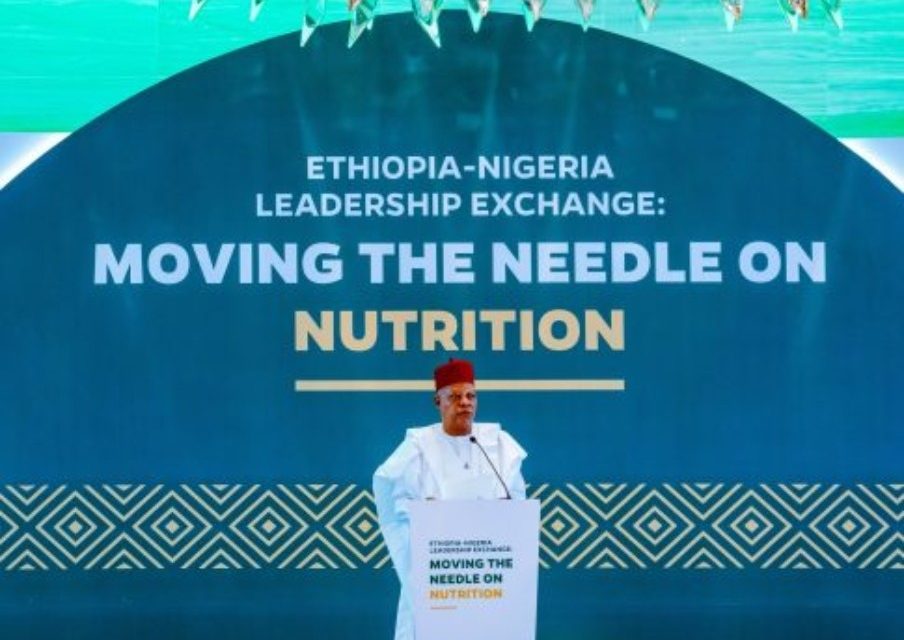
Vice-President Kashim Shettima says Nigeria will accelerate the development of a National Food and Nutrition Bill to safeguard nutrition financing, strengthen accountability and sustain interventions across successive administrations.
Shettima stated this on Wednesday at the Nigeria-Ethiopia Nutrition Leadership Exchange Forum in Addis Ababa, Ethiopia.
He said the National Policy on Food and Nutrition 2026–2035 had set targets to reduce Nigeria’s stunting rate to 32 per cent by 2029, 28 per cent by 2032 and 25 per cent by 2035.
According to him, the proposed legislation will strengthen the Nutrition 774 Initiative and deepen collaboration among the Federal, State and Local Governments in tackling malnutrition, particularly at the community level.
He said nutrition committees had been established in 32 State Houses of Assembly and more than 450 Local Government Areas, describing the development as an opportunity to provide stronger legislative backing for nutrition interventions.
“We are convinced that, with nutrition committees in 32 state assemblies, there is no better time for us to accelerate the development of a National Food and Nutrition Bill and the advancement of a federal, state and local compact to protect financing and enforce accountability beyond administrations,” he said.
Shettima said the Federal Government’s $26 million commitment to the Child Nutrition Fund had attracted matching support, raising the fund to $52 million, while 21 states had contributed $6.3 million since 2023 toward supplies for the prevention and treatment of malnutrition.
He added that the proposed Presidential Nutrition Investment Fund would provide catalytic financing, while the Nutrition Financing Subcommittee was working to mobilise additional domestic resources.
The Vice-President said the urgency of the reforms was underscored by the fact that about 40 per cent of Nigerian children under five were affected by stunting, with undernutrition estimated to cost the country $56 billion annually.
Earlier, Ethiopia’s Deputy Prime Minister, Temesgen Tiruneh, said sustained political leadership, financing and accountability at all levels were critical to addressing malnutrition.
Tiruneh said more than 100,000 children in Ethiopia had been protected from malnutrition through community mobilisation and improvements in the nutritional value of food.
Also speaking, Ethiopia’s Minister of Health, Dr Mekdes Daba, said the forum focused on child malnutrition and Ethiopia’s Seqota Declaration, which seeks to end child stunting by 2030.
Members of the Nigerian delegation, including governors and ministers, pledged to strengthen the country’s nutrition value chain through increased investment in technology, financing, education and food systems.
 Open Letter to President Tinubu on Nigeria’s Development and Renewed Hope Agenda
  Kano to establish mega cities in 36 LGAs
 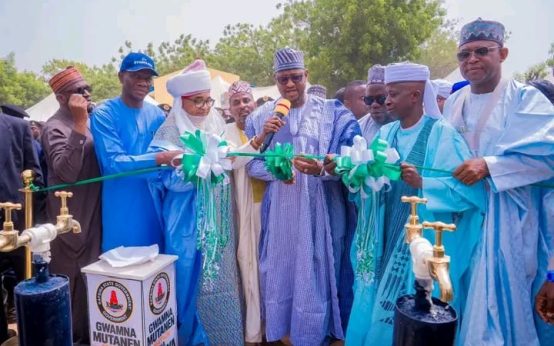 Radda Commissions Skills Centre, Hisbah Office, Mass Transit Vehicles, Delivers 100 Motorcycles in Matazu
 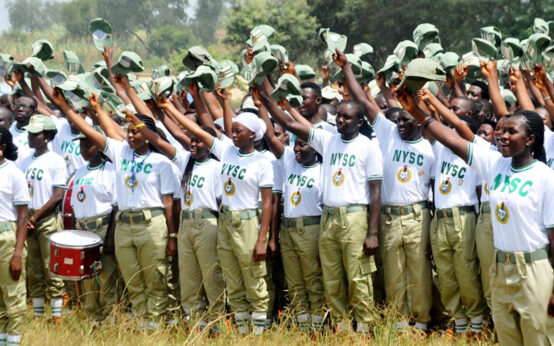 20 Kidnapped NYSC Prospective Corps Members Rescued in Imo
  Kano Drug Abuse Task Force Records Major Breakthroughs in Fight Against Drug Menace
  ASUU-KUST Confirm Kano Govt Implementation of 2025 FGN/ASUU Agreement
  Tinubu’s Northern Appointees Urged to Take Renewed Hope Message to Grassroots ABUJA, Oct. 8, 2026 (NAN) — The Nigeria Forward Project has urged political appointees of President Bola Tinubu, particularly those from Northern Nigeria, to intensify efforts to communicate the administration’s policies and programmes to citizens at the grassroots. The Co-Convener of the group, Comrade Ibrahim Abdullahi Waiya, made the call in a statement on Thursday in Abuja. Waiya said the call by the Secretary to the Government of the Federation, Sen. George Akume, for ministers, special advisers, chairmen and chief executives of federal government agencies to communicate the administration’s achievements more effectively should be extended to communities across the country. He said the message had assumed greater political significance as the country approached the 2027 general elections. According to him, Northern appointees should take the Renewed Hope message beyond Abuja to markets, farms, businesses, universities and local communities, while explaining how government policies and reforms affect the daily lives of Nigerians. “The Northern Nigerian appointees must take the message beyond Abuja, to markets, farms, businesses, universities, local communities and homes at the community level,” he said. Waiya urged the appointees to communicate measurable achievements, explain government policies and highlight developments in infrastructure, institutional reforms and the economy. He said Nigerians would ultimately assess the administration based on what they had seen, experienced and understood, stressing that public communication should therefore be supported by verifiable information. “The 2027 elections will ultimately belong to Nigerians. They will judge the administration by what they have seen, experienced and understood,” he said. Waiya called for sustained grassroots engagement, saying the Renewed Hope Agenda should be communicated in ways that enabled citizens to understand its policies, programmes and objectives. He said the administration’s appointees should use the opportunity to explain the rationale for continuity while presenting the government’s record and future plans to Nigerians. “Renewed Hope must not remain a government slogan. It must become a story Nigerians can see and feel,” Waiya said. He signed the statement as Co-Convener, Nigeria Forward Project.
  Radda Commissions Skills Centre, Hisbah Office, Mass Transit Vehicles, Delivers 100 Motorcycles in Matazu
  Mofarh Ali’s Restaurant Review Tops TikTok in Saudi Arabia
  WTD: Katsina Teachers’ Welfare is Non-Negotiable— Governor Radda
  Tambuwal Sues Sokoto Govt Over Withheld Inquiry Report
  2027: ADC-PCC Urges INEC to Ensure Neutrality, Transparency