
 Admin
An urgent call for action, accountability and the immediate distribution of relief materials to vulnerable communities across the seven North-West states.
There is a question that deserves urgent attention, and one that the people of the North-West must not be afraid to ask: Why are foodstuff, fertilizers, vehicles, tractors and other essential items procured by the North-West Development Commission (NWDC) still awaiting distribution to their intended beneficiaries?
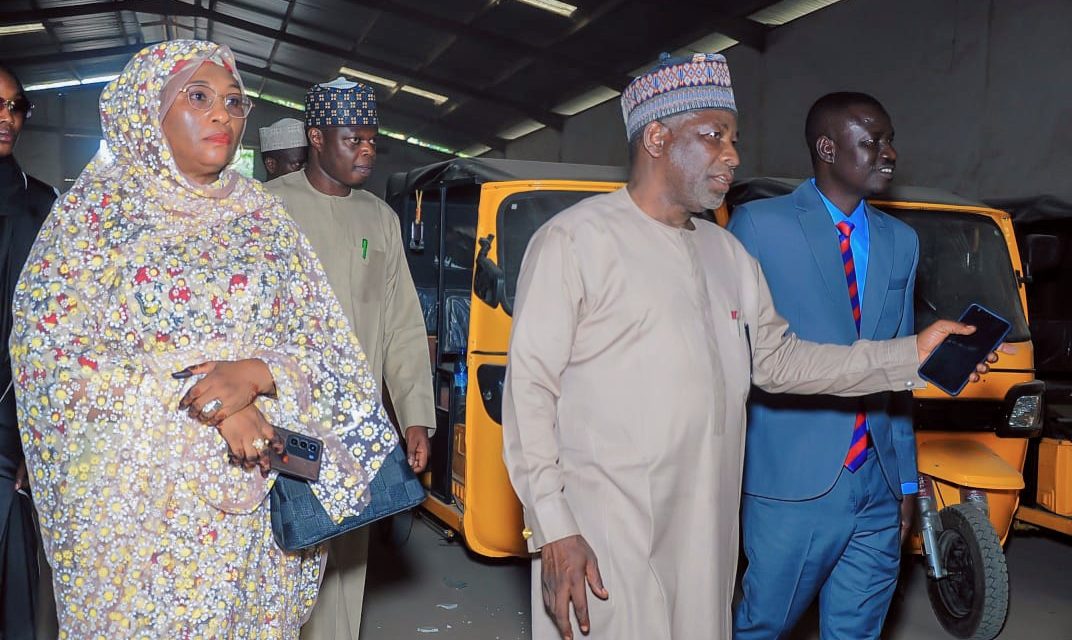
On 29th October 2026, Professor Shehu Abdullahi Ma’aji, the Managing Director/Chief Executive Officer of the North-West Development Commission, invited representatives of civil society organisations, including the League for Societal Protection Against Drug Abuse (LESPADA), for an inspection tour of the Commission’s warehouses.
The invitation provided an opportunity for civil society stakeholders to witness firsthand the substantial quantities of foodstuff, fertilizers, vehicles, tractors and other essential materials procured for distribution to vulnerable communities across the seven North-West states of Jigawa, Kaduna, Kano, Katsina, Kebbi, Sokoto and Zamfara.
The inspection was encouraging. It offered a glimpse into the Commission’s commitment to addressing the pressing humanitarian, agricultural and developmental needs of the region.
However, since that visit, more items have reportedly been added to the warehouses. Yet, the critical question remains: Why have these goods not been dispatched? What exactly is delaying the distribution?
THE COST OF DELAYING DISTRIBUTION
Humanitarian intervention is not measured by the volume of goods purchased, the number of warehouses filled or the impressive photographs taken during inspections. Its true value is measured by the number of lives touched and the needs addressed.
Every day that food supplies remain undistributed is another day that a hungry household continues to struggle.
Every bag of fertilizer awaiting distribution represents a missed opportunity to support farmers, improve agricultural productivity and strengthen food security.
Every tractor waiting in a warehouse represents an opportunity to empower farmers that has yet to be realised.
Every vehicle awaiting deployment represents a potentially delayed intervention that could otherwise improve service delivery and community development.
There is also the question of proper storage, preservation and maintenance. Food items have shelf lives, while fertilizers require appropriate storage conditions. Vehicles and tractors need proper handling and maintenance. Prolonged storage without a clear deployment plan may expose public resources to avoidable deterioration, wastage and additional costs.
Ultimately, the people who suffer most from administrative delays are those who can least afford to wait.
WHY TIE THE HANDS OF A MANAGING DIRECTOR WHO WANTS TO DELIVER?
One cannot help but wonder whether the delay reflects the Managing Director’s intentions or results from administrative, bureaucratic, logistical or other institutional bottlenecks.
Professor Shehu Abdullahi Ma’aji has demonstrated a willingness to engage stakeholders, including civil society organisations, by opening the Commission’s warehouses for inspection.
It is therefore discouraging to witness a situation where substantial resources have reportedly been procured, yet their distribution has not visibly translated into the expected relief for communities.
If the Managing Director has the vision, commitment and determination to deliver on the Commission’s mandate, why should the process be allowed to stall?
Why should the hands of the person entrusted with driving development be tied by unnecessary bureaucracy, delayed approvals, institutional disagreements or other avoidable obstacles?
If there are legitimate procedures that must be followed, they should be followed promptly. If approvals are outstanding, they should be secured. If logistics are the challenge, practical solutions should be provided. If there are disagreements within the administrative structure, they should be resolved in the interest of the people.
The Commission was established to serve the North-West, not to turn its warehouses into permanent storage facilities for development promises.
A development commission must be judged by the development it delivers, not merely by the resources it acquires.
THE HUMAN FACE BEHIND THESE GOODS
Behind every food item is a family hoping for relief.
Behind every bag of fertilizer is a farmer hoping for a productive farming season.
Behind every tractor is an opportunity to improve agricultural output and strengthen livelihoods.
Behind every vehicle is a potential opportunity to improve service delivery.
Behind every intervention is a community waiting for government to make a meaningful difference in its life.
The seven North-West states continue to face serious economic and social challenges, including poverty, food insecurity, displacement and limited economic opportunities. Communities affected by insecurity and other vulnerabilities need interventions that are timely, transparent and impactful.
These resources were procured in the interest of the people. They must not remain inaccessible to the very people they were intended to benefit.
WE NEED ANSWERS, NOT MORE WAREHOUSE INSPECTIONS
As one of the civil society organisations invited by the Managing Director to inspect the warehouses, LESPADA believes that stakeholders have a legitimate responsibility to ask questions and advocate for the people.
We respectfully seek clarification on the following:
1. What is responsible for the delay in distributing the procured foodstuff, fertilizers, vehicles, tractors and other items?
2. Has a comprehensive distribution plan and timetable been approved for Jigawa, Kaduna, Kano, Katsina, Kebbi, Sokoto and Zamfara states?
3. Are there outstanding administrative approvals, procurement processes or logistical arrangements preventing dispatch?
4. Who is responsible for coordinating and monitoring the distribution process?
5. What measures are in place to ensure that the items reach genuine and deserving beneficiaries without political interference, diversion or favouritism?
6. When should communities across the seven states realistically expect the distribution to commence?
These are not questions intended to undermine the Commission or embarrass its leadership. They are legitimate questions arising from public interest and our responsibility as civil society stakeholders to ensure that resources acquired for the people actually benefit the people.
DO NOT ALLOW GOOD INTENTIONS TO BE FRUSTRATED
The Managing Director deserves an enabling environment to perform his responsibilities. Leadership should not be applauded only when resources are procured; it should also be supported when those resources are being translated into tangible results.
It would be unfortunate if a laudable initiative were to lose public confidence simply because the final and most important stage of implementation was delayed.
The Commission’s leadership must communicate openly with stakeholders and the public. A clear distribution timetable, transparent beneficiary-selection criteria and regular progress updates would demonstrate that the Commission is serious about delivering its mandate.
OUR APPEAL TO THE NORTH-WEST DEVELOPMENT COMMISSION
We appeal to Professor Shehu Abdullahi Ma’aji and the relevant authorities to urgently address whatever is delaying the dispatch of these items.
Let the food reach vulnerable households. Let the fertilizers and tractors reach farmers. Let the vehicles be deployed where they are needed. Let the investments begin to produce the intended social and economic benefits across Jigawa, Kaduna, Kano, Katsina, Kebbi, Sokoto and Zamfara.
We must not allow bureaucratic bottlenecks, avoidable delays or institutional interests to stand between the people and the assistance meant for them.
The North-West needs action, not just acquisition. It needs delivery, not just announcements. It needs development that can be seen, felt and experienced by ordinary citizens.
The warehouses should be a temporary stop in the journey of development, not the final destination of public resources.
The people are waiting. The resources are reportedly available. The time to act is now.
LET THE GOODS MOVE! LET THE FARMERS BENEFIT! LET THE VULNERABLE RECEIVE RELIEF! LET DEVELOPMENT BEGIN!
By Amb. Maryam Hassan
Executive Director, League for Societal Protection Against Drug Abuse (LESPADA)
 Dangote’s Industrial Revolution : How Aliko Dangote is Repositioning Nigeria As Africa’s Manufacturing Power House.
 Sunusi Bature’s Appointment: A Reward for Loyalty, Service and Commitment to Kano’s Development
 Kano Nurses Are Leaving: Why Salary Reform Can No Longer Wait
 Sightsavers’ Intervention Opens Global Opportunities for Kano Graduate with Disability
 Kano’s War On Drugs: How Barr. Muhyi’s Taskforce Is Changing The Game
 LESSONS LEARNT FROM THE POLITICAL JOURNEY OF DR JAMIL ISYAKU GWAMNA
 Bichi Leads Thousands of APC Supporters to Pledge Votes for Tinubu’s Re-election
 Nigeria, Russia Strengthen Customs Cooperation to Optimise Trade Facilitation, Information Exchange
 NCoS Promotes 132 Officers in Kano, Controller Charges Beneficiaries on Professionalism
 Senator Kawu Sumaila Commends Kano Drug Task Force, Donates ₦5m to Operatives, Supports Rescued Children
 Nigeria’s Education System Needs Policy Consistency, Effective Implementation – Prof. Faruk Rashid Haruna
 BPSR trains 660 federal officers on post-retirement productivity