
 Admin
Admin
By Dauda Muhammad Hadejia
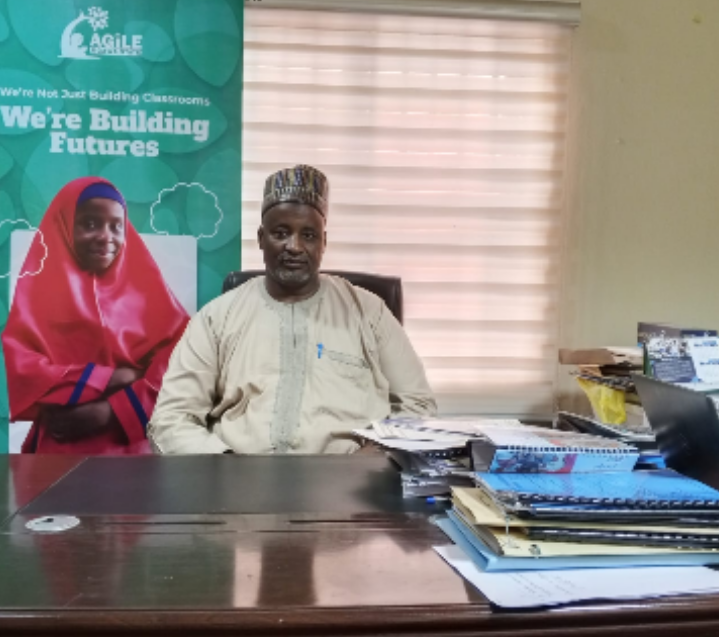
The Adolescent Girls Initiative for Learning and Empowerment (AGILE) Project, a flagship programme supported by the World Bank in collaboration with the Federal Ministry of Education Nigeria and state governments, is recording significant progress in transforming basic education in Jigawa State.
The State AGILE Project Coordinator, Babawuro Fate, disclosed this in an interview, where he described the level of progress achieved so far as “tremendous,” noting that the intervention is helping to reposition the education sector to meet national standards.
He revealed that plans are underway for the construction of 42 new junior and senior secondary schools across the state. According to him, feasibility studies and Bills of Quantities have already been completed, while the project is awaiting final approval before construction commences.
On infrastructure development, the coordinator said the project has made significant impact through the renovation of schools, construction of toilets, and provision of water facilities in 697 schools.
He added that about 600 of such projects have already been completed, improving the learning environment for students.
In the area of digital education, Babawuro Fate explained that 100 senior secondary schools have been selected to benefit from computer-based learning facilities. Each of the schools, he said, has been equipped with 15 computers, solar-powered energy systems, and internet connectivity to enhance teaching and learning outcomes.
He further disclosed that another 100 senior secondary schools have been targeted under a health and safety education programme. Under the initiative, 60 girls in each school are trained on safeguarding and personal hygiene, while sanitary pads are distributed to support their well-being and encourage school attendance.
Highlighting efforts to expand access to education, the coordinator said the project is also implementing a second-chance programme for women who do not possess primary school certificates.
The programme, which combines basic education with entrepreneurship training, is currently operational in 27 centres across the 27 local government areas of the state.
Participants are provided with learning materials in various trades, while plans are in place to establish additional centres.
Beneficiaries are expected to receive certificates upon completion to enable them pursue further education or economic opportunities.
On tackling the challenge of out-of-school children and improving retention, he noted that a Conditional Cash Transfer (CCT) scheme has been introduced.
The programme targets students in JSS3 and SSS1, particularly those from underserved and hard-to-reach communities. Funds are paid directly into the accounts of caregivers, with some beneficiaries already receiving payments.
Babawuro Fate expressed appreciation to stakeholders for their continued support, stressing that their contributions have been critical to the effective implementation of the AGILE Project and the ongoing transformation of the education sector in Jigawa State.
 Governor Radda Signs Executive Order to Tackle Miscreant, Thuggery Activities
  Kano CP Disburses N1m to 36 Youths to Strengthen Community Policing
  26 Barau-Sponsored Postgraduate Scholars Return from India
  Former Kano Federal Lawmaker Shaaban Sharada Distances Self From Barau Group’s Endorsement of New Deputy Governor
  K-SAFE Hails Gov Yusuf Over ₦4.45bn Approval for Students’ Examination Fees
  Governor Radda Inaugurates 2026 Hajj Committee, Charges Members on Integrity
  Governor Radda Signs Executive Order to Tackle Miscreant, Thuggery Activities
  Kano CP Disburses N1m to 36 Youths to Strengthen Community Policing
  26 Barau-Sponsored Postgraduate Scholars Return from India
  Former Kano Federal Lawmaker Shaaban Sharada Distances Self From Barau Group’s Endorsement of New Deputy Governor
  K-SAFE Hails Gov Yusuf Over ₦4.45bn Approval for Students’ Examination Fees
  Governor Radda Inaugurates 2026 Hajj Committee, Charges Members on Integrity