
 Admin
Admin By Ibraheem A. Waziri
30|06|2026
I have spent the better part of the last few days receiving what I can only describe as gentle but unrelenting intellectual *koboko* lashes, in private, from a number of scholar-prodigy friends who took the trouble to read both Professor Moses Ochonu’s book and the review I posted on my Facebook page.
A good number of them felt my claim that Moses’s book had “committed the cardinal error of confusing proximity for equivalence” was simply too strong and could not fairly be pinned on it. As they put it, the book had itself painstakingly identified what they reckoned to be some 60 percent points of divergence between the Fodiawa movement and Boko Haram, against roughly 40 percent points of convergence.
No matter how I tried to explain myself, they remained unmoved.
Yet, interestingly, Shehun Malami Moses himself, Scholar na Kirki as the Hausa would say, offered a thoughtful response to my review, one that reflected the generosity, confidence, and intellectual grace of a scholar prepared to engage criticism on its merits rather than wave it away.
What pleased me most was that he seemed to grasp the methodological point I was actually raising. My concern was never that he found similarities between Boko Haram and the Fodiawa movement. There are undeniable points of contact, and no serious student of Northern Nigerian history can pretend otherwise.
My concern, rather, was that his analytical framework is organised principally around tracing genealogies of reform and dissidence.
Once genealogy becomes the organising principle, the precise tally of convergences and divergences becomes almost beside the point. Whether one counts ten similarities against twenty differences, or the reverse, the reader is still likely to come away thinking Boko Haram is best understood chiefly through its relationship to an earlier reformist tradition.
My review questioned not the scholarship behind that genealogy, but whether genealogy is the most illuminating lens through which to view the movement at all.
The perspective I proposed asks a different question. It begins not with:
*”Where did this movement come from?”*
but with:
*”What kind of civilisation does this movement sustain, deepen, or destroy?”*
That shift moves the conversation from intellectual inheritance to civilisational inheritance, from textual continuities to institutional outcomes, from reformist vocabulary to the moral architecture of society.
In that sense, my concern has less to do with whether Boko Haram shares elements of Fodiawa reformist discourse, and more to do with whether it belongs to the civilisational tradition that successive generations across Hausaland and the wider Central Sudanic world laboured to build.
A movement may inherit a language without inheriting the civilisation that once gave that language its moral meaning.
**Genealogy, after all, is not necessarily pedigree.**
If there is a broader intellectual affinity to my approach, it sits with those who try to understand history through the long life of civilisations rather than solely through the succession of political movements. One finds traces of this in Ibn Khaldun, and, in a rather different register, in Samuel P. Huntington, though it is worth noting, with some quiet amusement, that neither of them was a trained historian either, and yet both made very significant contributions to how we think about history and civilisation. My own interest, in any case, is less in classifying civilisations than in identifying the moral and institutional foundations that allow them to endure conquest, reform, colonialism, and political upheaval.
That is why I consider this more than a disagreement about Boko Haram.
It is, at bottom, a disagreement about how history itself ought to be read.
One approach asks what ideas a movement inherited.
The other asks what kind of society it ultimately leaves behind.
For anyone concerned with the future of Northern Nigeria, I believe the second question is, in the end, the more consequential one.
As Mal. Abdulhalim is fond of reminding us, there is a system behind these things. The reading, the conversations, the accumulation of knowledge, the discipline of learning, and, above all, the habit of writing, none of these happens by accident. They are parts of a deliberate intellectual project. Abdulhalim, the books you suggested are indeed in the pipeline, just as Prof. Waziri Garba Dahiru has already hinted. In shaa Allah, they will find their way out before the year is done, or early in the next, God willing.
Finally, I wish to thank everyone who read the review, commented on it, challenged it, encouraged it, and, above all, insisted it deserved to travel beyond the pages of Facebook.
I am particularly delighted that what began as a simple intellectual exercise – idle one for that matter – has already drawn invitations from several academics to help turn some of these ideas into journal articles and other scholarly work.
If nothing else, this is yet another gift Professor Moses Ochonu has given us, not merely an important book, but an occasion to think more deeply, disagree more honestly, write more carefully, and engage one another with intellectual seriousness and mutual respect.
For that, I remain sincerely grateful.
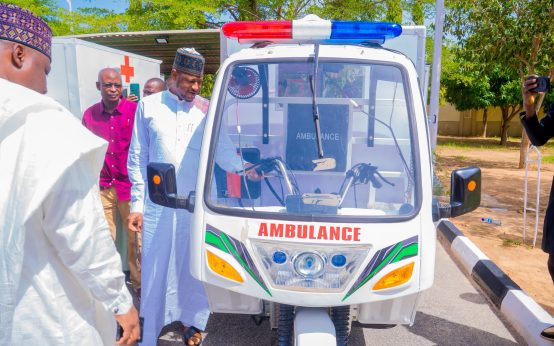 Governor Radda Inspects Mass Tricycles for LGs, Healthcare Workers ahead of Distribution
  Kano Govt Urges IPMAN to Reduce Petrol Price, Warns Fuel Stations Against Shortchanging Consumers
 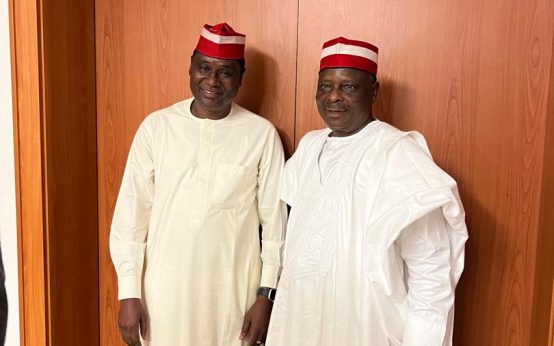 Fresh Crisis Rocks NDC as Governorship, House of Representatives Aspirants Ask Court to Nullify Kano Primaries, Stop INEC from Recognising Candidates
 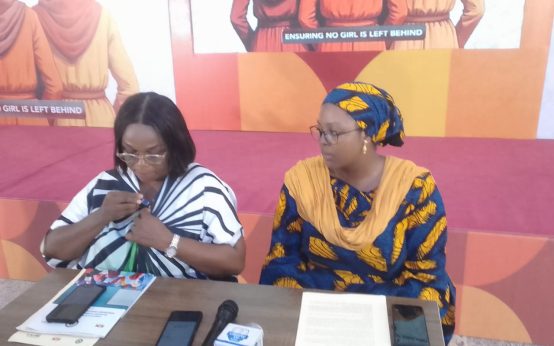 99% of Married Adolescent Girls in Kano Want to Return to School — Study
  Police Arrest Suspected Armed Robber, Recover Locally Made Pistol in Akwa Ibom
  Governor Radda Inspects Mass Tricycles for LGs, Healthcare Workers ahead of Distribution
  Fresh Crisis Rocks NDC as Governorship, House of Representatives Aspirants Ask Court to Nullify Kano Primaries, Stop INEC from Recognising Candidates
  99% of Married Adolescent Girls in Kano Want to Return to School — Study
  Police Arrest Suspected Armed Robber, Recover Locally Made Pistol in Akwa Ibom