
 Admin
The Universal Basic Education Commission (UBEC) has urged state governments to strengthen financial accountability and ensure the effective utilisation of education funds to improve the quality of basic education in Nigeria.
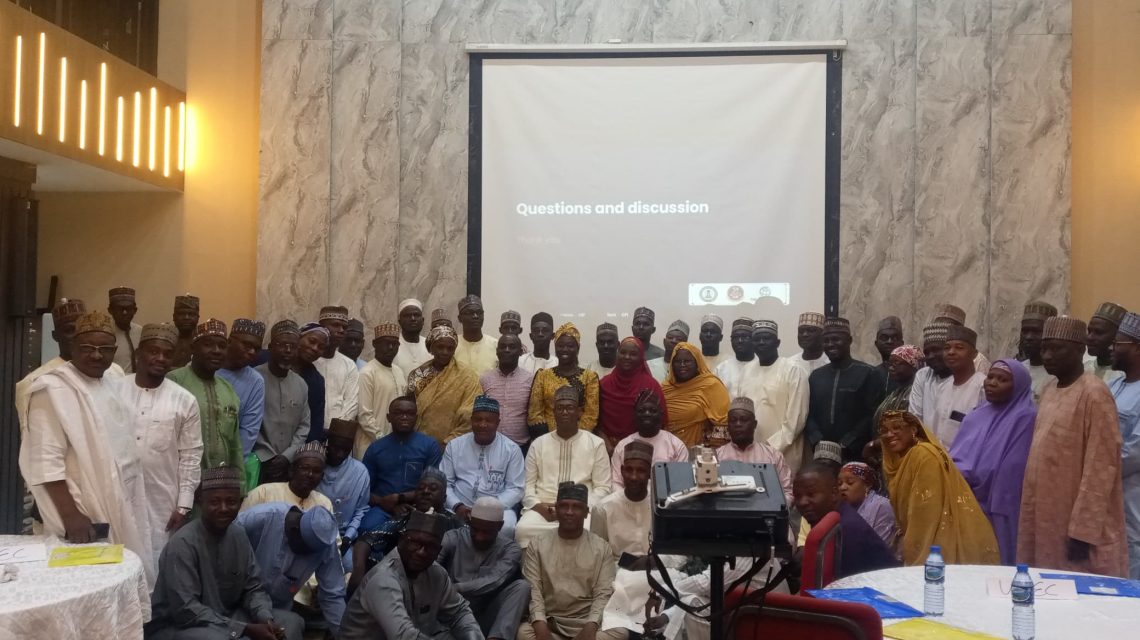
The Executive Secretary of UBEC, Dr Aisha Garba, made the call at a regional thematic workshop on Results Area 3 of the HOPE-EDU Programme in Kano on Tuesday.
Garba, represented by the Deputy Director of Social Mobilisation, Malam Sahabo Basa, said effective decentralised financial management was essential to ensuring that funds reached schools promptly and were used for their intended purposes.
She said the workshop focused on Disbursement Linked Indicators (DLIs) 6 and 7, which cover decentralised financial management and annual school grants for public primary schools.
According to her, the introduction of annual school grants would enable school managers to address immediate needs, including minor renovations and improvements to the school environment.
She added that the initiative would promote timely decision-making at the school level and help create safer and more conducive learning environments for pupils.
Garba, however, identified delays in fund releases, limited access to counterpart funding, inadequate capacity in financial management and procurement, and the absence of clear regulations as potential challenges to the programme’s implementation.
She urged participants to use the workshop to identify practical solutions and develop state-specific action plans to ensure effective implementation.
“Every Nigerian child deserves quality basic education, and that depends on how well resources reach schools and are used there,” she said.
The executive secretary reaffirmed UBEC’s commitment to providing technical guidance and coordinating with state governments and development partners to achieve the programme’s objectives.
Earlier, the HOPE-EDU Programme Manager, Mr Mayowa Aleshin, said the workshop was organised to prepare state officials for the implementation of Results Area 3 and strengthen their capacity to deliver on DLIs 6 and 7.
Aleshin said the programme became effective on Feb. 27, 2026, adding that its focus had shifted from planning to implementation.
He said the workshop brought together officials from states in the North-East and North-West to clarify their responsibilities and strengthen their readiness to implement the two indicators.
According to him, DLI 6 covers core UBEC funds managed at decentralised levels, while DLI 7 focuses on public primary schools receiving and utilising annual school grants.
Aleshin said the workshop would align the responsibilities of directors of finance and accounts, social mobilisation, procurement and other designated officers involved in the programme.
He urged participants to engage actively in the sessions, share experiences and draw on the expertise of resource persons to develop practical solutions to implementation challenges.
“The success of the implementation of the DLIs rests on your shoulders,” he said, urging state focal officers to demonstrate commitment throughout the workshop.
Aleshin added that the DLI 7 workshop would hold from Oct. 28 to Oct. 30, with relevant finance, social mobilisation, and environmental and social safeguard officers expected to participate.
He expressed optimism that the workshop would strengthen implementation of the HOPE-EDU Programme and improve access to quality basic education across participating states.
 Katsina Records 157% Rise in Craft Village Graduates, Invests N4bn
 Kaduna rally: Tinubu’s standing in the North
 Tinubu-Shetima Frontiers Endorses President Tinubu For Re-election
 Farewell, Professor Isa Ali Pantami
 Katsina, UNICEF Move to Combat Child Malnutrition Through Universal Child Benefit Scheme
 Kurawa Attorneys Calls for Urgent Reforms to Tackle Prison Congestion, Delays in Criminal Trials
 Abba Kabir Yusuf: The Peoples Governor Deserving of a Second Term
 Senator Abdulrahman Kawu Sumaila Empowers Kano South Constituents With 16 Vehicles, 400 Motorcycles
 2027: We Will Deliver 1m Votes From Bichi For APC, Tinubu – Rep Abubakar Bichi
 Dangote Cement Steps Up Driver Safety Standards Across Africa
 Speaker Distributes Work Tools to 3,000 Artisans in Zaria
 Gov. Radda Thanks Katsina Stakeholders for Support at Kaduna APC Campaign Flag-Off