
 Admin
By Abdullahi Kano
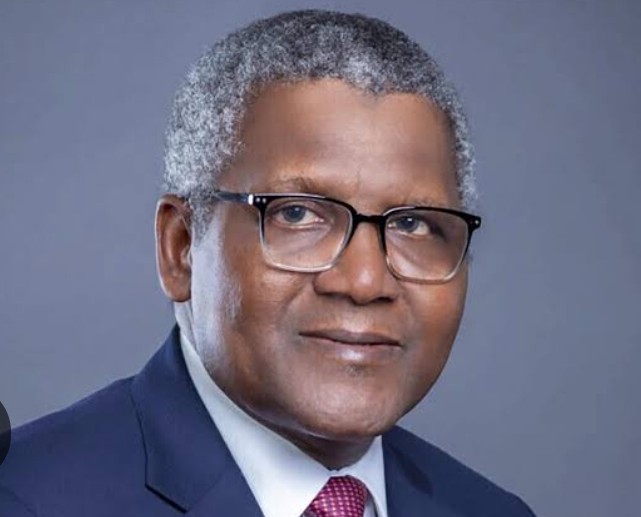
At a time when African economies are grappling with the challenges of unemployment, foreign-exchange pressures, dependence on imported manufactured goods and inadequate industrial infrastructure, one Nigerian entrepreneur is pursuing an ambitious strategy that could significantly reshape the continent’s economic landscape.
That entrepreneur is Alhaji Aliko Dangote, President and Chief Executive of Dangote Industries Limited, whose investments in petroleum refining, fertiliser production, cement manufacturing, petrochemicals, agriculture and other strategic sectors are increasingly positioning Nigeria as an emerging centre of industrial production in Africa.
Through a combination of large-scale investments, technological innovation and expansion into strategic industries, Dangote is championing a development philosophy built around local production, import substitution, job creation and economic independence.
At the heart of this ambition is the Dangote Group’s Vision 2030, an ambitious roadmap designed to transform the conglomerate into a 100-billion-dollar enterprise by 2030 while accelerating industrialisation across Africa.
The vision, unveiled by Dangote in January 2026, targets an expansion of cement production capacity to approximately 90 million tonnes annually, an increase in petroleum refining capacity to 1.4 million barrels per day and the expansion of fertiliser production to 12 million metric tonnes annually.
Beyond corporate expansion, the strategy reflects a broader ambition to reduce Africa’s dependence on imported essential commodities and strengthen the continent’s capacity to produce the materials required for its economic development.
THE DANGOTE PETROLEUM REFINERY: A LANDMARK IN AFRICA’S ENERGY HISTORY
Perhaps the most significant symbol of this industrial ambition is the Dangote Petroleum Refinery and Petrochemicals complex located in the Lekki Free Trade Zone, Ibeju-Lekki, Lagos State.
The multibillion-dollar facility represents one of the most ambitious private-sector industrial investments in Africa and a major turning point in Nigeria’s petroleum industry.
For decades, Nigeria remained heavily dependent on imported refined petroleum products despite being one of the continent’s largest crude oil producers.
The country’s inability to maintain and operate its government-owned refineries at sustainable levels resulted in significant expenditure on fuel imports, pressure on foreign-exchange reserves and recurring concerns over domestic petroleum supply.
The commissioning and subsequent commencement of operations at the Dangote Refinery marked a major departure from that pattern.
Designed initially with an installed capacity of 650,000 barrels of crude oil per day, the refinery has since undergone operational improvements, with its crude distillation capacity reaching 700,000 barrels per day in 2026.
This makes it Africa’s largest refinery and the world’s largest single-train petroleum refining facility.
Its production portfolio includes Premium Motor Spirit (petrol), Automotive Gas Oil (diesel), aviation fuel and other petroleum products, alongside petrochemical materials required by different manufacturing industries.
The facility’s significance goes beyond the production of petroleum products. It provides Nigeria with an opportunity to retain more value from its crude oil resources by processing them locally rather than exporting crude and importing finished products.
It also creates opportunities for the development of supporting industries, including transportation, marine services, engineering, equipment maintenance, storage, distribution and other businesses connected to the petroleum value chain.
Another important milestone is the refinery’s growing participation in international petroleum markets.
Nigeria has increasingly emerged as an exporter of refined petroleum products, supplying markets within Africa and beyond.
According to the United States Energy Information Administration, Nigeria’s seaborne petroleum product shipments averaged 561,000 barrels per day in the second quarter of 2026, compared with an annual average of 79,000 barrels per day in 2023.
The development demonstrates the growing importance of domestic refining capacity to Nigeria’s petroleum trade and its potential to become a significant supplier of refined products to other African countries.
The refinery’s expansion ambition to 1.4 million barrels per day further underscores Dangote’s determination to establish Nigeria as a major global refining and petrochemical hub.
PETROCHEMICALS: BUILDING INDUSTRIES BEYOND FUEL
Another important dimension of the Dangote industrial revolution is the development of its petrochemical business.
The refinery complex is integrated with petrochemical production facilities, including polypropylene manufacturing.
Polypropylene is an essential industrial raw material used in the production of packaging materials, plastic containers, household products, textiles, automotive components and numerous other manufactured goods.
By producing these materials locally, the company is creating opportunities for Nigerian manufacturers to access important industrial inputs without depending entirely on foreign suppliers.
The refinery’s petrochemical facilities have a combined stated polypropylene capacity of approximately 830,000 tonnes annually.
This is particularly important because the development of a domestic petrochemical industry can stimulate investments in downstream manufacturing, create specialised employment and strengthen Nigeria’s industrial supply chains.
Rather than limiting its activities to the production and sale of petroleum products, Dangote is extending the industrial value chain into materials that support other sectors of the economy.
This integrated approach is one of the distinguishing features of the Group’s industrial strategy.
FERTILISER PRODUCTION: SUPPORTING FOOD SECURITY AND AGRICULTURAL DEVELOPMENT
While petroleum refining attracts considerable attention, Dangote’s investment in fertiliser production represents another important pillar of Nigeria’s industrial and agricultural transformation.
Located within the Lekki Free Trade Zone in Lagos, Dangote Fertiliser Limited operates a $2.5 billion fertiliser complex occupying approximately 500 hectares of land.
With an annual production capacity of three million metric tonnes, the facility is recognised as Africa’s largest granulated urea fertiliser complex.
Its establishment addresses one of the major challenges facing African agriculture: dependence on imported agricultural inputs.
Fertiliser availability and affordability are critical to improving agricultural productivity, increasing crop yields and strengthening food security.
Nigeria, like many African countries, has historically relied substantially on imported fertiliser to meet the needs of its agricultural sector.
The Dangote fertiliser project therefore represents a significant investment in local production, with the potential to improve supply reliability and strengthen the country’s agricultural value chain.
Its importance extends beyond Nigeria, as the company is also positioned to supply fertiliser to international markets, particularly countries across Africa.
The project supports farmers, fertiliser distributors, agricultural businesses and other participants in the food production chain.
It also creates opportunities for the development of associated industries, including transportation, packaging, warehousing and agricultural services.
Under Vision 2030, Dangote plans to increase fertiliser production capacity from the existing three million metric tonnes to 12 million metric tonnes annually.
The expansion is expected to strengthen the Group’s position in the global fertiliser market and increase Africa’s capacity to meet its agricultural input requirements through local production.
The Group is also pursuing wider agricultural investments, including plans involving phosphate, potash and other fertiliser-related raw materials.
Such investments could help establish a more integrated agricultural input industry across the continent.
### CEMENT: THE FOUNDATION OF AFRICA’S INFRASTRUCTURE DEVELOPMENT
Another major achievement of the Dangote industrial journey is its contribution to cement manufacturing.
Through Dangote Cement Plc, the Group has become one of Africa’s leading cement producers, with operations extending beyond Nigeria into several African countries.
The company’s investment in cement production has contributed to reducing Nigeria’s historical dependence on imported cement and strengthening local manufacturing capacity.
Cement is a fundamental component of infrastructure development, supporting the construction of roads, bridges, houses, schools, hospitals, factories and other essential facilities.
Nigeria’s growing population and increasing demand for infrastructure make the cement industry strategically important to national development.
Dangote Cement has invested in large-scale production facilities, distribution networks and logistics infrastructure to improve access to cement across different markets.
Its operations also support employment opportunities for engineers, technicians, drivers, distributors, construction workers and other professionals.
Under Vision 2030, the Group intends to expand its cement production capacity to approximately 90 million tonnes annually.
This target reflects its ambition to strengthen its position in the global cement market while supporting Africa’s growing infrastructure requirements.
### BEYOND REFINING: A DIVERSIFIED INDUSTRIAL EMPIRE
The Dangote industrial story is not limited to petroleum, fertiliser and cement.
The Group has established businesses in sugar, salt, food processing and other essential consumer products.
Through these investments, it has developed an industrial structure that connects different sectors of the economy.
Its sugar business, for instance, supports efforts to increase local sugar production and reduce dependence on imported sugar through backward integration and agricultural development.
Its salt and food-processing operations also contribute to the domestic manufacturing sector and the supply of essential consumer products.
The Group’s investments in infrastructure, logistics and transportation further complement its manufacturing activities.
This diversified approach is important because industrialisation cannot be achieved through isolated factories alone. It requires an interconnected system of raw-material suppliers, processing facilities, transport networks, energy infrastructure, distributors and markets.
Dangote’s business model seeks to develop these connections, creating opportunities for other businesses to participate in the industrial value chain.
### VISION 2030: A $100 BILLION AMBITION
The unveiling of Vision 2030 has provided a clearer picture of the scale of Dangote’s long-term industrial ambition.
The strategy seeks to transform Dangote Industries into a $100 billion enterprise by 2030 through expansion, investment consolidation, technological advancement and increased presence across African markets.
Among its major targets are increasing petroleum refining capacity to 1.4 million barrels per day, expanding fertiliser production to 12 million metric tonnes annually and raising cement production capacity to approximately 90 million tonnes annually.
The Group also plans further investments in energy infrastructure, pipelines, tank farms, agricultural processing and other strategic industries.
The vision is anchored on the belief that Africa must increasingly produce what it consumes rather than continue to rely excessively on imported essential commodities.
For Nigeria, successful implementation could strengthen domestic manufacturing, create new employment opportunities, increase export earnings and improve the country’s industrial competitiveness.
It could also encourage other Nigerian entrepreneurs and investors to commit resources to large-scale manufacturing projects.
### JOB CREATION, TECHNOLOGY AND HUMAN CAPITAL DEVELOPMENT
One of the most important contributions of industrial investments is their potential to create employment and develop specialised human capacity.
According to Dangote Industries, the Group has more than 30,000 employees and operates across several African countries.
Its industrial facilities require the services of engineers, scientists, accountants, administrators, technicians, logistics specialists, security personnel and other professionals.
The planned expansion of the refinery to 1.4 million barrels per day is also expected to generate substantial employment during construction and subsequent operations.
Beyond direct employment, the Group’s activities support thousands of businesses involved in distribution, transportation, maintenance, supply of industrial materials and other related services.
The development of large industrial facilities also creates opportunities for Nigerian professionals to acquire experience in sophisticated technologies and complex manufacturing systems.
This is particularly significant for young Nigerians seeking careers in engineering, science, manufacturing and technical services.
The company’s long-term investment in industrial capacity therefore has implications not only for economic growth but also for the development of Nigeria’s technical workforce.
### A NEW OPPORTUNITY FOR AFRICA
The wider significance of Dangote’s industrial investments lies in their potential to strengthen economic integration across Africa.
Many African countries possess substantial natural resources but lack sufficient industrial capacity to process them into finished products.
Consequently, the continent continues to export raw materials while importing petroleum products, fertiliser, cement, petrochemicals and other manufactured goods.
Dangote’s expansion strategy offers a model of how private-sector investment can help address some of these structural challenges.
The refinery can supply petroleum products to African markets, the fertiliser business can support agricultural production, while cement and petrochemical operations can provide materials for infrastructure and manufacturing.
Such developments could strengthen regional trade and support the objectives of the African Continental Free Trade Area.
They also demonstrate the potential of African entrepreneurs to establish globally competitive businesses capable of serving markets beyond their home countries.
### THE CHALLENGES AND THE ROAD AHEAD
Despite the remarkable scale of these investments, the industrial transformation agenda faces important challenges.
The availability of adequate crude oil supplies remains critical to the refinery’s ability to sustain high production levels.
Other issues include access to foreign exchange, financing costs, infrastructure limitations, energy reliability, competition from imported products and the need for a stable regulatory environment.
The expansion of fertiliser production will also require reliable supplies of natural gas and other essential industrial inputs.
Similarly, achieving the cement production target will depend on sustained investment, market demand, efficient logistics and access to raw materials.
For Nigeria to fully benefit from these investments, there must be effective collaboration between the private sector and government.
Policies that encourage local manufacturing, provide regulatory certainty, improve infrastructure and support industrial innovation will be essential.
It is equally important that the benefits of industrial expansion translate into affordable products, decent employment, opportunities for local suppliers and measurable improvements in the standard of living.
### CONCLUSION: BUILDING AN INDUSTRIAL LEGACY
Alhaji Aliko Dangote’s industrial journey represents an important chapter in Nigeria’s private-sector development.
From cement manufacturing to fertiliser production, petroleum refining and petrochemicals, his investments demonstrate the possibilities of building large-scale industries within Africa.
The Dangote Refinery, in particular, has changed the conversation about Nigeria’s capacity to process its crude oil domestically and participate more actively in international petroleum markets.
The fertiliser complex is strengthening the country’s agricultural input capacity, while the cement and petrochemical businesses are supporting the development of other industries.
Vision 2030 brings these investments together under a broader ambition to build a $100 billion enterprise and accelerate Africa’s industrialisation.
Ultimately, the success of this ambition will be measured not only by the size of the company’s assets or production capacity but also by its contribution to national economic development, employment, food security, energy security and regional prosperity.
For Nigeria and Africa, the message is clear: sustainable economic independence requires more than natural resources. It requires the capacity to transform those resources into finished products, develop local expertise, create jobs and build competitive industries.
Through his expanding industrial investments, Aliko Dangote is making a major contribution to that ambition and challenging a new generation of African entrepreneurs to think beyond trading and embrace large-scale production.
 Sunusi Bature’s Appointment: A Reward for Loyalty, Service and Commitment to Kano’s Development
 Kano Nurses Are Leaving: Why Salary Reform Can No Longer Wait
 Sightsavers’ Intervention Opens Global Opportunities for Kano Graduate with Disability
 Kano’s War On Drugs: How Barr. Muhyi’s Taskforce Is Changing The Game
 LESSONS LEARNT FROM THE POLITICAL JOURNEY OF DR JAMIL ISYAKU GWAMNA
 Abba Kabir Yusuf: A Leader with a Good Heart and a Kano-First Vision
 Police Arrest Two Ekpo Masquerades Over Alleged Roadblock, Extortion in Akwa Ibom
 Dangote Driving Agribusiness In North, Sponsors 2026 National Agric Show
 Kano Taskforce Seals Pharmaceutical Company Over Alleged Illegal Distribution of Pregabalin
 Governor Radda Assures Full Support For Forest Guards, Declares No Road Closed By Insecurity in Katsina
 Senator Sani Musa Appreciates Tinubu, Bago After Recovery, Assures APC Victory in 2027
 Kano Proposes N1.107trn Budget for 2027 Fiscal Year