

 Admin
There are moments in the history of an institution when leadership transcends the routine administration of an organisation and becomes a defining chapter in its evolution.
Such moments are often measured not by the length of time spent in office, but by the enduring structures, opportunities and institutional foundations created for generations yet unborn.
The Federal University of Education, Kontagora, appears set to witness one such defining moment on Nov. 28, 2026, when 19 landmark projects are scheduled for commissioning during its convocation ceremony.
For an institution whose history dates back to September 1978, when it was established as the Federal Advanced Teachers’ College, the planned commissioning represents another significant milestone in its transformation from a conventional teacher-training institution into a full-fledged university with an expanding mandate in teacher education, research, innovation, agricultural enterprise and human capital development.
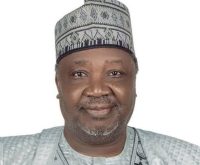
At the centre of this unfolding institutional story is the leadership of Prof. Faruk Rashid Haruna, the pioneer substantive Vice-Chancellor of the university.
His emergence as Vice-Chancellor is particularly significant against the backdrop of his longstanding relationship with the institution. Having served as Provost of the Federal College of Education, Kontagora, from April 2018, he witnessed and drove important phases of its institutional development before its eventual elevation to university status.
His appointment as the first substantive Vice-Chancellor, and subsequent assumption of office on Nov. 10, 2025, therefore represents a seamless continuation of an institutional journey in which he has played a prominent administrative role.
Nineteen Projects, One Institutional Vision
The 19 projects lined up for commissioning offer a compelling picture of an institution investing strategically in the essential pillars of modern university education. They cut across library development, central governance, faculty administration, digital infrastructure, laboratory facilities, lecture theatres, undergraduate and postgraduate accommodation, healthcare, agriculture, entrepreneurship and institutional services.
At the heart of the academic and administrative expansion is the Sa’idu Namaska Library Complex, a vital addition to the university’s knowledge infrastructure.
Complementing this academic hub is the Muhammad Barau Mu’azu II Registry Complex, which anchors the university’s central governance and administrative coordination.
Alongside this central facility, the university is strengthening its faculty-level structures with the Faculty of Arts and Social Sciences Administrative Block and the Faculty of Sciences Administrative Block.
Another notable intervention is the Early Childhood Care and Primary Education Complex, which underscores the university’s responsibility to strengthen the foundation of Nigeria’s educational system through the preparation of competent teachers for foundational and primary education.
*Technology, Vocational Education and Practical Enterprise*
Perhaps one of the most strategic aspects of the projects is the investment in technology-driven education, practical skills development and self-sustaining agricultural enterprise.
The Abdullahi Idris Garba (Mai Solar) 1,000-capacity ICT Building represents a significant commitment to expanding digital learning opportunities and strengthening technological capacity among students.
Similarly, the Sabi Abdullahi 500-capacity Laboratory Complex, for the Faculty of Vocational and Technical Education, is designed to provide a conducive environment for practical training, experimentation and technical instruction. The Mohammed Umaru Bago 1,000-capacity Lecture Theatre, also dedicated to the Faculty of Vocational and Technical Education, further reinforces this commitment.
Extending this practical focus into agricultural and food production training is the newly established Fish Hatchery. Beyond serving as a hands-on research and training facility for students in agricultural education and vocational studies, the hatchery positions the university to contribute to local food security, aquaculture development and internally generated revenue.
The Abubakar Sani Bello Home Economics Laboratory Complex is another important addition, providing specialised facilities for practical instruction and professional training. Also worthy of mention is the newly renovated Language Laboratory, which strengthens the university’s capacity for language teaching, communication skills development and practical language instruction.
Taken together, these projects reflect a deliberate shift away from purely theoretical classroom instruction towards a practical, technology-enabled and competency-based approach to university education.
*Student Welfare, Postgraduate Growth and Institutional Expansion*
A university’s development cannot be adequately assessed by the quality of its academic buildings alone. The welfare, accommodation, health, civic engagement and general learning conditions of its students at both undergraduate and postgraduate levels are equally vital.
It is against this background that the Male Students’ Hostel, the Post Graduate Hostel and the University Clinic Extension assume considerable significance.
The 1,000-capacity Multifunctional Hall and the Renewed Hope Experience Hall further elevate the university’s capacity for academic, civic and cultural engagement.
Meanwhile, the university continues to expand its core teaching capacity through the 650-capacity Lecture Theatre for the Faculty of Arts and Social Sciences.
Additionally, the Renovated Career Centre and the Entrepreneurship Centre Complex complete the list of 19 projects, forming a vital bridge between academic life and the world of work.
*The Haruna Factor: A Journey of Administrative Experience*
Prof. Faruk Rashid Haruna is a Professor of Exercise and Sports Science, trained at Ahmadu Bello University, Zaria. According to the institution’s published profile, he began his academic career as an Assistant Lecturer at Ahmadu Bello University in 1989 and rose through the academic ranks to become a Professor in 2007.
His administrative experience includes serving as Director of Sports at Ahmadu Bello University and Provost of the Niger State College of Education, Minna, for eight years before his appointment as Provost of the Federal College of Education, Kontagora, in April 2018.
More importantly, the elevation of the former Federal College of Education to university status in October 2024 marked a defining transition in the institution’s history.
*Beyond Bricks and Mortar*
While the 19 projects scheduled for commissioning deserve commendation, their ultimate value will be determined by how effectively they serve the university’s academic and developmental mission.
Modern buildings must translate into improved teaching and learning. Laboratories and agricultural facilities like the Fish Hatchery must be adequately equipped, staffed and maintained. ICT infrastructure must provide reliable access to digital knowledge.
Equally important is the need for sustained investment in academic staff, non-teaching personnel, research funding, international collaboration and student welfare. These are the institutional ingredients that transform impressive physical infrastructure into enduring academic excellence.
*A Milestone and a Legacy in Progress*
The Nov. 28 convocation ceremony will undoubtedly provide a historic occasion for the university community and its stakeholders to celebrate the commissioning of these 19 projects. Yet beyond the ceremony, the moment invites deeper institutional reflection.
From its establishment as a teacher-training institution in 1978, through its decades as a Federal College of Education, to its emergence as the Federal University of Education, Kontagora, the institution has travelled a remarkable path.
For Prof. Faruk Rashid Haruna, they constitute a defining milestone in a leadership journey that has transitioned from college administration to steering a newly established university.
Ultimately, the true measure of his leadership will not rest solely on the number of buildings commissioned, but on the quality of graduates produced, the research contributions generated, the opportunities created for young people and the institutional standards sustained long after his tenure.
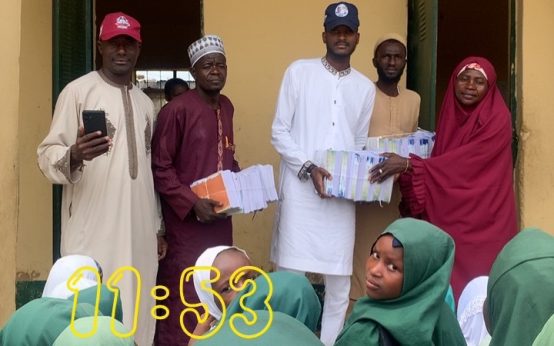 Dual 4 Movement Donates Textbooks to Pupils in Zaria
 NBAIS Releases 2026 SAISSCE Results, Records 86% Credit Pass Rate
 KANO LEADS AGAIN How Sustained Investment in Education Is Expanding Opportunity and Improving Learning Outcomes
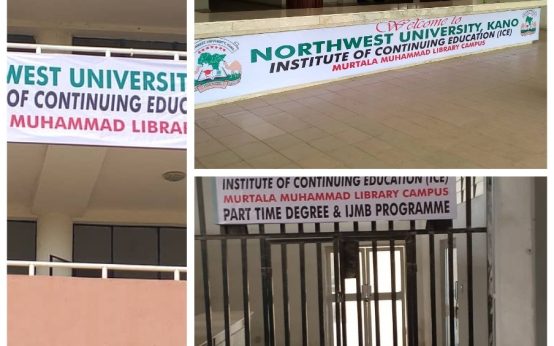 Transferring the Ownership of Murtala Muhammad Library Complex to Northwest University Kano: A Rational Decision by the Kano State Government
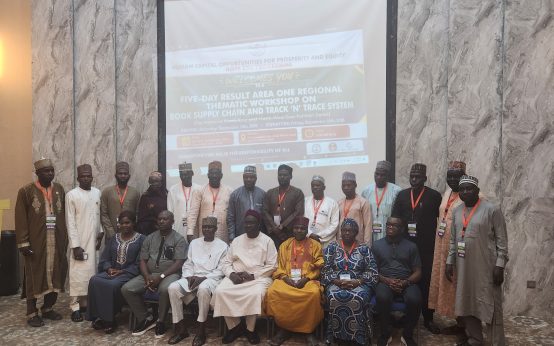 HOPE- EDU :UBEC Tasks States on Timely Delivery of Learning Materials
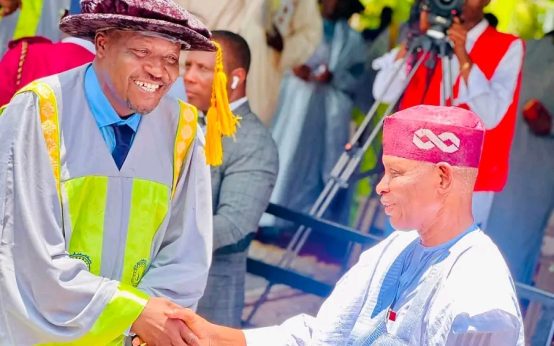 Why We Established Al-Istiqama University in Rural Kano, by Kawu Sumaila
 Nigeria, Russia Strengthen Customs Cooperation to Optimise Trade Facilitation, Information Exchange
 NCoS Promotes 132 Officers in Kano, Controller Charges Beneficiaries on Professionalism
 Senator Kawu Sumaila Commends Kano Drug Task Force, Donates ₦5m to Operatives, Supports Rescued Children
 Nigeria’s Education System Needs Policy Consistency, Effective Implementation – Prof. Faruk Rashid Haruna
 BPSR trains 660 federal officers on post-retirement productivity
 Police Arrest Two Ekpo Masquerades Over Alleged Roadblock, Extortion in Akwa Ibom