
 Admin
Admin
By Abdullahi Kabir
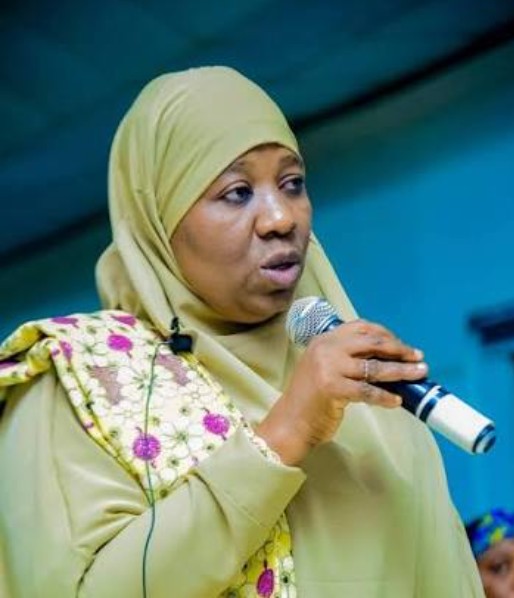
Hajiya Hadiza Umar Namadi, the First Lady of Jigawa State, has continued to strengthen her advocacy for girl-child education through a series of targeted initiatives that are reshaping access to learning, empowerment, and security for young girls across the state. In a state where cultural and socio-economic barriers still limit opportunities for many children, her interventions are beginning to make measurable impact.
Over the past months, Hajiya Hadiza has intensified community sensitisation campaigns, partnering with traditional and religious leaders to address misconceptions around educating the girl child. These engagements, according to her aides, have led to increased school enrolment in several rural communities.
Through her pet project, the Future Assured Initiative of Jigawa, the First Lady has launched several support programmes for girls in basic and secondary schools. These include scholarship schemes, provision of learning materials, and support for girls from economically disadvantaged households.
Teachers and school administrators across the state say the impact of these interventions is already visible. In communities such as Kaugama, Buji, Guri and Kiyawa, enrolment figures for girls have risen significantly within the past academic year.
One of the major policy fronts the First Lady has championed is the reduction of school drop-out rates among adolescent girls. She has consistently advocated for improved sanitation facilities in schools, especially the provision of separate toilets for girls—an intervention experts say encourages retention.
Hajiya Hadiza has also been at the forefront of campaigns against early marriage, a practice that remains prevalent in some parts of the state. In collaboration with the Ministry of Women Affairs and the Ministry of Education, she has supported programmes aimed at educating parents on the long-term benefits of delaying marriage and prioritising education.
In addition to awareness campaigns, her office has implemented empowerment programmes for mothers, under the belief that educated and economically empowered women are more likely to keep their daughters in school. Thousands of women have benefited from vocational skills training, financial literacy workshops, and micro-grants to support small businesses.
The First Lady has also extended her advocacy to the health sector. Recognising the link between girls’ wellbeing and their academic performance, she has championed school-based health screenings, menstrual hygiene support, and nutritional interventions for children in vulnerable communities.
Her office recently partnered with international development agencies to promote digital literacy among girls. Pilot centres have been established in Dutse and Hadejia, where young girls are trained in basic computing skills, coding, and internet safety—preparing them for opportunities in the evolving digital economy.
Civil society organisations in Jigawa have commended her commitment to inclusiveness, particularly for girls living with disabilities. Special learning materials, mobility aids, and support teachers have been provided to selected schools to ensure no girl is left behind.
Hajiya Hadiza’s approach, analysts observe, is rooted in sustainability. Instead of running short-term interventions, her programmes are designed to integrate into the broader education policies of the state government, ensuring continuity beyond her tenure.
A major highlight of her recent activities is the Girl-Child Leadership and Mentorship Summit, which brought together hundreds of students from across Jigawa. At the event, successful female professionals, including engineers, doctors, and public administrators, mentored young girls and shared stories of perseverance.
The First Lady also used the platform to challenge stakeholders—parents, teachers, and policy makers—to prioritise the education of girls, describing it as the most effective path to breaking cycles of poverty.
In many rural schools, her visits have sparked renewed interest in education. Teachers recount how girls become more motivated after meeting her, seeing her as a symbol of what education and determination can achieve.
Beyond the state capital, her advocacy tours have taken her to remote communities, some accessible only through long, rough terrain. During these visits, she engages directly with families, listens to their challenges, and offers solutions tailored to the needs of each locality.
Her commitment to accountability has also gained attention. She regularly publishes updates on her initiatives and invites community monitors to report the progress of projects implemented in their areas.
Development experts describe her efforts as a model for other states, noting that Jigawa’s steady improvement in girl-child enrolment indicators is closely linked to her sustained advocacy and hands-on leadership.
While challenges remain—such as poverty, cultural resistance, and infrastructural deficits—the First Lady maintains that the progress recorded so far is a sign that change is possible when government, communities, and parents work together.
Looking ahead, Hajiya Hadiza Umar has outlined plans to establish a Centre for Girl-Child Development and Advocacy in Dutse. The centre will focus on research, mentorship programmes, and community engagement to address emerging challenges.
As Jigawa State continues to witness improvements in its educational outcomes, observers believe the First Lady’s initiatives will leave a lasting legacy—one that ensures every girl has the opportunity to learn, grow, and fulfil her potential.
Through consistent effort, strategic partnerships, and unwavering commitment, Hajiya Hadiza Umar is not only transforming the lives of Jigawa girls today but also shaping the future of the state for generations to come.
 Dr. Halima Suleiman Zakari – The Emerging Female Voice in Jigawa Politics
  Emir Bamalli: A Modern Monarch Steering Zazzau’s Renewal
  World Tuberculosis Day: Dr. Amina Umar Namadi Calls for Collective Action Against TB
  KADRARA DG Commends Gov. Uba Sani on Ramadan, Praises Development Strides in Kaduna
  Does the North Have a Future? The Almajiri Conundrum
  Dr Amina Umar Namadi Bags Award of Excellence 2026 for Women Empowerment
  Ambassador Dr. Amina Umar Namadi: A First Lady Defined by Compassion, Service, and Humanity
  Police Rescue Abducted Three-Day-Old Baby, Arrest Two Suspects in Nasarawa
  Governor Yusuf Mourns Alhaji Nuhu Dantani
  ADC Leaders Reject INEC Decision, Vow to Resist, Mobilise Support in Otukpo
  Police Disburse ₦9.26m to Families of Fallen Officers in Kano