

 Admin
Admin …Reaffirms Commitment To Transparency, Modern Reforms
The Nigeria Customs Service (NCS) has firmly rejected a series of allegations bordering on smuggling, revenue leakage, recruitment impropriety and succession manipulation, describing the claims as a misrepresentation of the Service’s operational and administrative realities.
The allegations, contained in an investigative report published by SaharaReporters on August 7, 2026, claimed that smuggling activities had intensified along the Seme, Idiroko, Ilaro, Ipokia and Igbeti-Kishi corridors in Ogun and Oyo States, and alleged that weaknesses in Customs valuation procedures, particularly around the “846” Extended Procedure Code used for vehicles with non-standard Vehicle Identification Numbers, were being exploited to under-declare and undervalue imported vehicles at the Apapa, Tin Can Island and PTML Area Commands.
Responding on behalf of the Service, the National Public Relations Officer (NPRO), Deputy Comptroller of Customs Abdullahi Aliyu Maiwada, said the claim of a “surge” in smuggling along the affected land border corridors did not reflect the true state of enforcement operations. He noted that the frequency and volume of seizures recorded along these corridors, routinely displayed at media briefings hosted by respective Area Controllers, contradicted the notion of unchecked movement of vehicles and trucks into the country. The Service, he said, remained committed to enforcing extant Federal Government restrictions and prohibitions while facilitating the movement of legitimate trade.
On the contentious 846 valuation code, the Service clarified that it is an established digital tool within the Customs portal designed specifically for vehicles with non-standard or non-compliant VINs, such as specialised heavy equipment, classic models, customised vehicles and vintage builds, which cannot be automatically assessed through the standard VIN-Valuation database.
DC Maiwada explained that standard vehicles are processed automatically through a system tied directly to global manufacturer specification databases, removing human discretion, while non-standard 846 applications are subject to mandatory secondary approval by designated Valuation Officers and Area Controllers. He added that “discrepancies uncovered during post-clearance audits routinely trigger Demand Notices for the recovery of short-collected duties and the suspension of offending clearance licences”, and noted that revenue collection at Apapa, Tin Can Island and PTML had in fact hit historic highs under the current framework of digital oversight.
On allegations that the recently released Assistant Superintendent of Customs II (ASC II) recruitment list was published without statutory approval, the Service maintained that the entire exercise, from application through computer-based testing, physical screening and final shortlisting, was conducted under the direct supervision and authorisation of the Nigeria Customs Service Board, in line with the Nigeria Customs Service Act, 2023 and Federal Character Commission guidelines. The published list, it clarified, reflects candidates granted provisional offers of appointment, subject to further medical verification, background checks and formal acceptance.
Addressing questions on a recent leadership training programme for Deputy Comptrollers, the Service described human capital development as a key pillar of its strategic vision, aimed at modernising trade operations, strengthening intelligence management and preparing officers for executive leadership. It stated that official training courses and international exposures, whether delivered locally at the Nigeria Customs Command and Staff College, Gwagwalada, or abroad, are funded through approved budgetary allocations from the Federal Government or formal bilateral technical assistance arrangements with partner institutions such as the World Customs Organisation.
On claims that the current leadership was manipulating succession by favouring particular officers or groups, including allegations that officers recruited in 1994, 1995 and 1997 were being sidelined in favour of the 2009 intake, the Service described the allegations as baseless. It explained that succession and promotion within the NCS are governed strictly by the Public Service Rules, the Nigeria Customs Service Act, 2023, and established career progression structures anchored on seniority, merit as demonstrated in promotion examinations, and the availability of establishment vacancies, rather than personal preference. The Service said promotion exercises under the current leadership had been made regular, transparent and prompt, with no qualified officer denied elevation on account of their year of recruitment.
On calls by stakeholders for independent investigation by the Presidency, the Economic and Financial Crimes Commission, the National Assembly and the Office of the National Security Adviser, the Service reiterated that it operates under the statutory oversight of the Federal Ministry of Finance and remains subject to scrutiny by the National Assembly, the Office of the Auditor-General for the Federation and relevant anti-graft agencies. It said it does not fear, evade or oppose legitimate scrutiny, and regularly cooperates with parliamentary committees, the EFCC, the ICPC and the ONSA.
“The management maintains a firm, intolerant posture toward corruption, revenue leakage, or administrative misconduct. Any officer or stakeholder found complicit in unethical activities will face institutional disciplinary procedures and prosecution under the law,” the Service stated, adding that it would welcome and fully cooperate with any investigation initiated by statutory oversight or anti-corruption bodies.
 Self Help Africa Disburses N70m to 33 Youth Innovators in Kano
 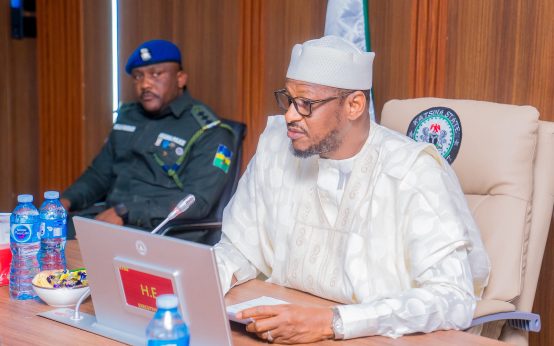 EDUCATION: Governor Radda Receives Report on Regulation, Standardization of Tahfeez Schools
 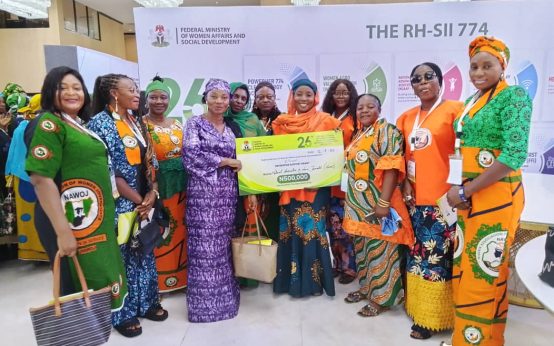 Taraba NAWOJ Receives ₦500,000 Grant at 26th National Council on Women Affairs
  Gombe 2027: Elections Are Won at the Polls, Not on Social Media
  Sokoto ADC chieftain Madugu defects to APC
 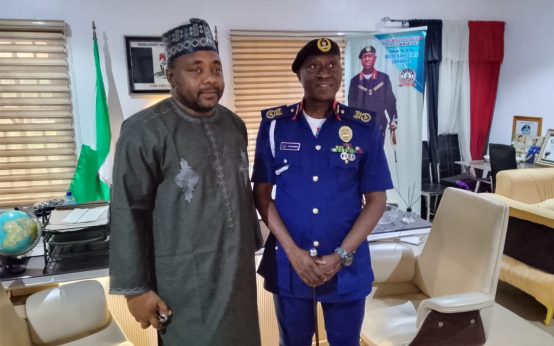 Kano Drug Abuse Task Force Seeks NSCDC Support to Combat Illicit Trafficking
  Self Help Africa Disburses N70m to 33 Youth Innovators in Kano
  EDUCATION: Governor Radda Receives Report on Regulation, Standardization of Tahfeez Schools
  Taraba NAWOJ Receives ₦500,000 Grant at 26th National Council on Women Affairs
  Gombe 2027: Elections Are Won at the Polls, Not on Social Media
  Sokoto ADC chieftain Madugu defects to APC
  Kano Drug Abuse Task Force Seeks NSCDC Support to Combat Illicit Trafficking