
 Admin
Admin By Abba Anwar
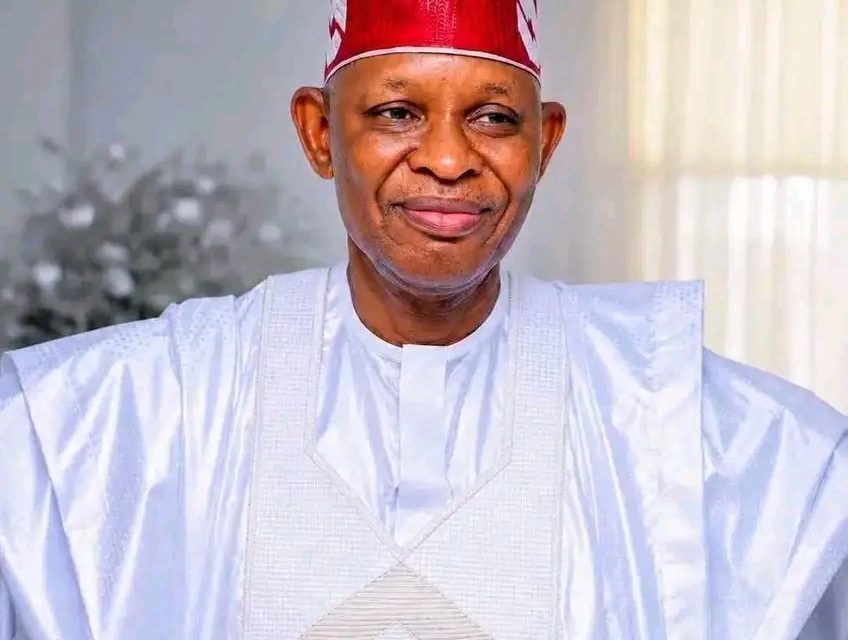
For many years, OGP was just another fine acronym in Nigeria. You saw it on workshop banners, you heard it in donor meetings, and then nothing happened on the ground. That story is changing in Kano. Under Governor Abba Kabir Yusuf, OGP is no longer a slogan. It is becoming an institution.
That institutionalization is deliberate. Governor Yusuf understands that for OGP to survive beyond press releases, it must be anchored in government structure, in people, and in process. It cannot thrive on rhetoric. It needs intention, it needs commitment, and it needs follow-through.
What has happened since 2023 is what some governance people call institutional renewal. Kano OGP moved from being a donor-driven programme to a state-owned governance architecture. The focus is simple: transparency, accountability, and citizens participation.
Two things made this possible. First, political will that is practical, not just spoken. Second, a Secretariat that knows how to convert that will into structure and that structure into results. That is why result-driven engagement is now the language in Kano OGP.
The difference between this administration and past ones is clear. Before, a lot of time and donor money went into talking shops. Today, the emphasis is on building structures. The shift is from statements to structures. Other states talk about open government. Kano is building the mechanisms to enforce it.
How did the Governor do it?
First, he appointed a Senior Special Assistant on OGP, Comrade Musaddiq Kabir Adam. As far as we know, this is the first dedicated SSA on OGP at sub-national level in Nigeria. Bureaucratically, it gave OGP a direct line to the highest level of government. Politically, it sent a message that transparency has a seat at the table. This became even clearer with the inclusion of Commissioners in the process.
Second, he made a smart bipartisan move. He appointed Comrade Nura Iro Ma’aji, a well-known civil society activist who is also Commissioner for Public Procurement, Projects Monitoring and Evaluation, as Government Co-Chair of OGP. This brought credibility and continuity. It helped bridge the old suspicion between government and civil society. It rebuilt trust.
Third, he broadened ownership inside government. Today, five Commissioners, four Permanent Secretaries and a Director sit on the OGP Steering Committee. OGP is no longer seen as a civil society project that reports to government. It is now a whole-of-government responsibility. Government is assessing itself, evaluating itself, and reporting on itself. That ownership matters.
Fourth, and this is the most important for sustainability, the administration established Integrity and Compliance Desk Officers, ICDOs, in all MDAs. Every ministry now has a person and an office responsible for integrity and compliance. That is how accountability stops being a slogan. If you look at why Governor Yusuf is today counted among the most prudent governors in the country, this is one of the reasons. I stand to be corrected, but the facts and the records are there.
For anyone who wants to understand how the structure works, a look at the Steering Committee will help. Kano OGP follows the standard OGP co-creation principle of 50/50 between government and non-state actors.
Under Governor Yusuf, the Steering Committee has 20 members. Ten from government, ten from civil society. It is equality in composition and equity in operation.
The government side is chaired by Government Co-Chair Comrade Nura Iro Ma’aji, Commissioner for Public Procurement, Projects Monitoring and Evaluation. The other members include four other Commissioners, the Solicitor General of Kano State, the Secretary and Legal Adviser of the Public Complaints and Anti-Corruption Commission, PCACC, Permanent Secretaries, Directors, and Musaddiq Kabir Adam, who many in Kano know as a committed civil society person, now serving as SSA on OGP, Head of Secretariat and Secretary of the Steering Committee.
The non-state actors side has 10 members. They were elected on August 6, 2026. The team has Comrade Abdurrahman Abdu as Co-Chair and lead for Anti-Corruption, Hassan Ibrahim Gama for Service Delivery, Peter Hassan Tijjani for Access to Information, Mustapha Chiroma for Fiscal Transparency, Barrister A. A. Haruna Ayagi for Access to Justice, Dr. Kabiru Hamisu Kura for Climate Change, Zuwaira Omar Muhammad for Citizens Engagement, Abdulrahman Uba Daushe for Persons with Disabilities, PWDs, plus one member from Labour and one from a professional body.
Together, the committee takes decisions jointly. Their work covers seven thematic areas. These are anti-corruption, fiscal transparency, service delivery, citizen engagement, access to information, access to justice, and climate change.
Add to this the sustained work on implementing and reviewing the Kano State Action Plan, and you will see why a platform that used to meet once in a while is now systemic. The work has moved from screen to script, and from script to action.
We must also talk about the civil society space itself. For a long time, that space had its own problems. There were leadership tussles, representation disputes, and competing interests. At some point it was pure conflict of interest. Many partnerships in Nigeria collapse at this stage. I have been in the civil society circle since 1998, with special interest in good governance, so I speak from experience.
Under State Coordinator Musaddiq Kabir Adam, the Secretariat took a different approach. Instead of directives, it chose dialogue. Instead of partisanship, it chose neutrality. Instead of convenience, it chose strict adherence to OGP principles. Rather than take sides in the disagreement, it institutionalized the process of resolving it.
This is why the Governor’s choice of Musaddiq was strategic. It was careful, well-thought-out, and based on information, not speculation. It was not by accident.
One of the biggest results of this approach is the renewal of the non-state actor structure. We now have a broader, more inclusive, and more legitimate platform. Old and new organizations now sit on the same table. The rules of engagement are clear to everyone. Confidence has returned, and without confidence, no multi-stakeholder platform can work.
Once that table was fixed, participation grew. In the last one year alone, over 290 CSOs from across the country have engaged with Kano OGP. That is a vote of confidence in the new direction. It is also a morale booster for the national open government movement.
From that repair work came what I want to call One Kano OGP. It is a simple but powerful idea. OGP does not belong to government alone. It does not belong to civil society alone. It belongs to both, plus citizens, the media, youth, and development partners, all co-creating reforms in one common space. A space built on hard work, goodwill, and genuine commitment to the people.
This idea is now being implemented through initiatives like the Open School Initiative, which explains governance to students, and through citizen observation and voter education programmes. The plan is to expand platforms for youth and media participation. The goal is to take OGP from hotel conference halls to classrooms, markets, and wards.
That local credibility has brought back global confidence. Today, the Secretariat, working with the indispensable Steering Committee — I call it indispensable because of how the Governor restructured it — has re-engaged strategic partners. These include the United Nations system, ROLAC and UNODC, International IDEA, and the European Union. These engagements are not ceremonial jamborees. They are structured around six critical pillars: institutional capacity building, anti-corruption and accountability, citizen participation, youth and gender inclusion, digital governance, and technical support for OGP commitments.
This commitment has changed Kano’s standing nationally. Today, on the national OGP dashboard, KANO IS RATED HEALTHY WITH A 90% SUBNATIONAL PERFORMANCE SCORE. That is one of the strongest turnarounds among OGP states in Nigeria. Kudos to Governor Yusuf, bravo to Musaddiq, and viva to the Steering Committee.
There is also the forward-looking side. Kano OGP is embracing technology and Artificial Intelligence, in line with Governor Yusuf’s modernization agenda. But AI is not being used as a buzzword. It is being positioned as a tool to track service delivery, improve citizen feedback, and deepen transparency. That means more inclusion and better service for the citizen.
So what has changed the most? It is not a document or a workshop. It is institutional restoration. That is the real achievement.
Kano now has a credible, inclusive, and functioning multi-stakeholder platform where government and citizens can disagree, co-create, and co-implement. That platform did not exist two years ago. Today it exists because there is a captain steering the ship, and that captain is the Governor himself.
Two things made this restoration possible. One, the political will of Governor Yusuf, who decided to make transparency a pillar of governance, not just a PR statement. Two, the quiet, strategic, and methodical coordination of the Secretariat under Musaddiq.
The challenge now is to turn these institutional gains into real benefits that people can feel. A trader in Kantin Kwari market, a farmer in Gwarzo, a student in Dawakin Kudu — they should all feel the difference when they interact with government. That is transparency reloaded.
The foundation has been laid by Musaddiq and the Steering Committee, with close monitoring from the Governor. The structure is standing. What Kano does with this joint effort in the next two years will decide whether this becomes the national model for sub-national open governance.
For now, the lesson is clear. Open government does not grow on workshops and talkshops. It grows on political will. And in Kano, that will has been provided.
Anwar writes from Kano
Tuesday, 22nd September, 2026
 SEN. SANI MUSA HAILS REMI TINUBU AT 66
  Kano Police Arrest Suspected Kidnapper, Recover Drone
  Former Kano lawmaker mourns death of Sani Lawan Kofar Mata
  NCoS, Prison Fellowship graduate 90 inmates from restorative justice programme in Kano
  DAVID MARK MOURNS FORMER KOGI GOVERNOR, IBRAHIM IDRIS
 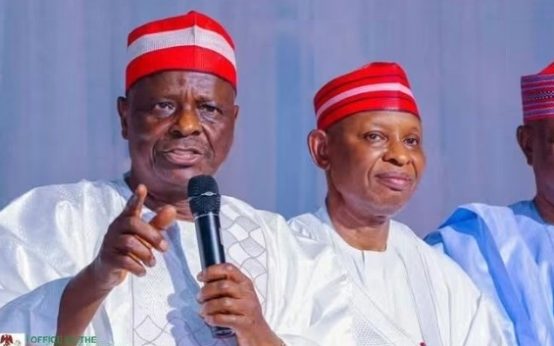 Kwankwaso willing to reconcile with Kano Gov. Yusuf
  SEN. SANI MUSA HAILS REMI TINUBU AT 66
  Kano Police Arrest Suspected Kidnapper, Recover Drone
  Former Kano lawmaker mourns death of Sani Lawan Kofar Mata
  NCoS, Prison Fellowship graduate 90 inmates from restorative justice programme in Kano
  DAVID MARK MOURNS FORMER KOGI GOVERNOR, IBRAHIM IDRIS
  Kwankwaso willing to reconcile with Kano Gov. Yusuf