
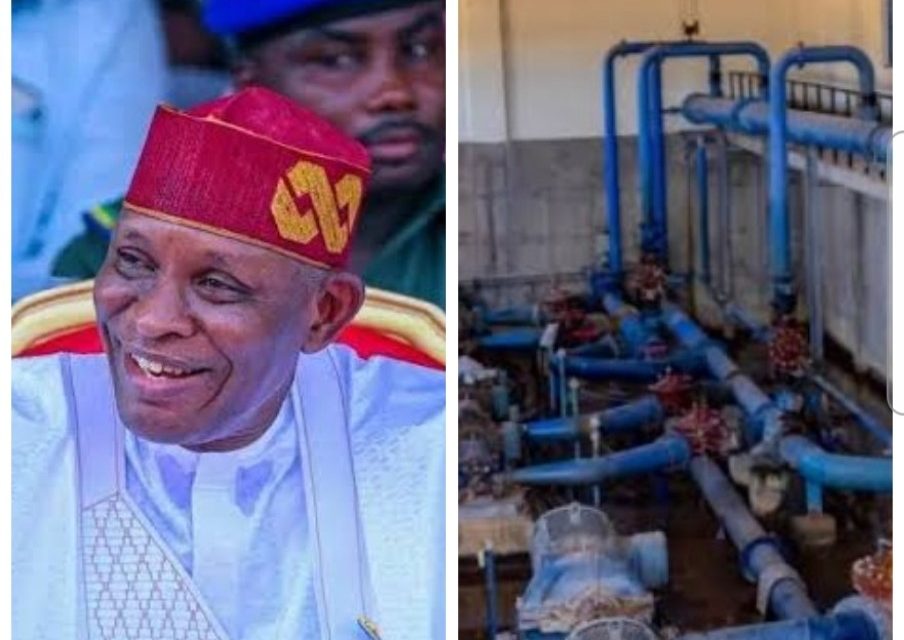
 Admin
Admin …….How rehabilitation of major waterworks, regional schemes, solar-powered boreholes and expanded distribution networks are reshaping Kano’s response to water scarcity
By Abdullahi Kano
For many residents of Kano metropolis, the sound of water flowing from a household tap has, over the years, become something to hope for rather than something to take for granted.
Across several communities, families have had to depend on boreholes, water vendors and public water points to meet their daily needs. For households with limited resources, the cost of buying water has added another burden to an already challenging economic environment.
But behind the familiar story of dry taps and long queues at water points is another story—one of rehabilitation, renewed investment and an attempt by the Kano State Government to rebuild a water supply system weakened by years of inadequate maintenance and ageing infrastructure.
Since assuming office, Governor Abba Kabir Yusuf has placed water supply among the areas receiving government attention, deploying interventions that range from emergency repairs and provision of pumping equipment to rehabilitation of major treatment plants, regional water schemes and development of new sources.
The strategy reflects an understanding that Kano’s water crisis cannot be solved by a single project.
The backbone of Kano’s water supply
At the centre of the state’s urban water system are the Tamburawa and Challawa water treatment facilities.
For years, the condition of these facilities has affected the quantity and regularity of water reaching residents.
Recognising the importance of restoring their capacity, the Yusuf administration has embarked on rehabilitation and upgrading programmes aimed at returning the major treatment plants to more efficient operation.
The state government has approved billions of naira for the rehabilitation of the two facilities, with the intervention covering critical infrastructure required to improve water production and distribution.
The focus is not merely on repairing buildings or replacing isolated components. It includes the electromechanical systems, pumps, pipelines and other infrastructure needed to move treated water from the plants to communities.
For Kano, this is crucial.
A treatment plant may have the capacity to produce water, but without functioning pumps and distribution pipelines, that water cannot reach the people who need it.
Tamburawa: strengthening an existing system
Tamburawa remains one of the most important water facilities serving Kano metropolis.
The administration has therefore taken steps to strengthen its operation, including the procurement of heavy-duty submersible pumps and other equipment.
The intervention is aimed at increasing the plant’s operational reliability and restoring production capacity.
But government officials have also acknowledged that the challenge goes beyond equipment.
Water plants require electricity, diesel, chemicals, maintenance and other operational inputs.
Consequently, the state government has also committed funds towards settling electricity and fuel obligations associated with the operation of major water facilities.
The message from the intervention is clear: infrastructure rehabilitation must be supported by sustained operational funding if residents are to enjoy continuous water supply.
Challawa gets a new lease of life
Another major chapter in the state’s water recovery effort is the rehabilitation of Challawa Water Treatment Plant.
The historic facility has suffered years of deterioration, affecting its ability to contribute effectively to the state’s water supply.
The government’s decision to rehabilitate the plant is therefore expected to restore an important component of Kano’s water infrastructure.
When fully operational, the combined capacity of rehabilitated facilities can strengthen the supply network and reduce pressure on other sources.
For residents of Kano metropolis, the significance is straightforward: more functional treatment infrastructure means greater potential for water to reach areas that have experienced irregular supply.
Looking beyond the metropolis
Governor Yusuf’s water intervention has not been restricted to Kano city.
Across the state’s local government areas, communities have also faced challenges in accessing potable water, particularly areas that are far from major treatment plants.
This has encouraged the government to pursue a dual approach—major waterworks for urban communities and smaller, decentralised schemes for rural areas.
Through the Rural Water Supply and Sanitation Agency, the administration has pursued solar-powered borehole projects under the “Abba Ruwa Gida-Gida” initiative.
The concept is simple but significant: take potable water closer to the people.
Solar-powered systems can also reduce dependence on conventional electricity and diesel-powered pumping, particularly in communities where electricity supply remains unreliable.
Reviving forgotten water schemes
Another important aspect of the administration’s strategy is the rehabilitation of existing schemes that had been abandoned or rendered ineffective.
Recent rehabilitation efforts have included regional water schemes such as Thomas, Joda, Guzu-guzu, Magaga and Faɗa.
The Thomas Water Treatment Plant, for example, had reportedly remained out of operation for several years before the current rehabilitation effort.
The plant serves communities beyond the immediate Kano metropolis, meaning its revival has implications for thousands of residents who depend on regional water infrastructure.
The reported progress towards trial testing represents another example of the administration’s attempt to recover value from infrastructure that had remained dormant.
Rather than allowing abandoned facilities to continue deteriorating, the government is seeking to restore them to productive use.
Tiga and the search for new solutions
The administration has also been looking at alternative ways of supplying communities that face particular geographical or infrastructural challenges.
In Rano and surrounding areas, government officials have explored the possibility of utilising water from Tiga Dam while also investigating underground water sources.
Such interventions demonstrate that Kano’s water challenge requires different solutions for different locations.
A strategy suitable for Kano metropolis may not necessarily be appropriate for a rural community several kilometres away.
This explains the emphasis on a combination of major treatment plants, regional schemes, boreholes and alternative water sources.
The human side of the water crisis
Behind every water project is a human story.
When a household has no reliable water supply, somebody must spend time looking for it.
In many homes, the responsibility falls heavily on women and children, who may have to queue at public water points or wait for water vendors.
For schools, inadequate water can affect sanitation and hygiene.
For hospitals and health centres, reliable access to clean water is indispensable.
For businesses such as restaurants, laundries, food processors and car washes, water is an economic necessity.
This makes the government’s water intervention more than an infrastructure programme.
It is also an investment in public health, education, household welfare and economic activity.
Infrastructure is only half the battle
While the scale of the government’s interventions is substantial, the long-term success of the programme will depend on sustainability.
Kano’s water infrastructure requires continuous maintenance.
Pipelines need to be protected. Pumps need servicing. Treatment plants require regular technical attention. Electricity and other operational costs must be consistently provided for.
There is also the need to ensure that expansion of water production is matched by expansion and rehabilitation of the distribution network.
This is particularly important in a rapidly growing metropolis where population expansion continues to increase demand.
From projects to service delivery
The Yusuf administration has therefore entered an important phase.
The announcements, approvals and rehabilitation works are significant steps, but the ultimate measure of success will be what residents experience.
If treatment plants operate consistently, regional schemes return to service, new boreholes function effectively and distribution networks reach more communities, the impact will become visible in everyday life.
Residents will spend less money buying water.
Women and children will spend less time searching for it.
Schools and health facilities will have more dependable access.
Businesses will operate with greater certainty.
And communities that have lived with water scarcity for years could begin to experience a more dependable public supply.
A long road, but a strategic shift
Governor Abba Kabir Yusuf’s response to Kano’s water challenge is unfolding through multiple interventions rather than one single flagship project.
From Tamburawa to Challawa, from Thomas to rural boreholes, and from urban distribution networks to the exploration of alternative water sources, the administration is attempting to address different components of the problem simultaneously.
The challenge remains formidable, and many of the interventions are still at various stages of implementation.
But the direction is increasingly clear: rebuild what has deteriorated, revive what has been abandoned, expand where necessary and bring water closer to communities.
For Kano residents who have lived with dry taps for years, the real measure of this renewed effort will eventually be simple.
Turn on the tap—and find water.
That is the point at which billions of naira in investment, kilometres of pipelines, rehabilitated treatment plants and government promises become something tangible: potable water flowing into the homes and communities of Kano.
Abdullahi Kano writes from Kano.
namamaoga799@gmail.com
 Muhuyi’s Assignment, Abba’s Edge: How Anti-Drug War Reshapes Kano’s 2027 Race.
 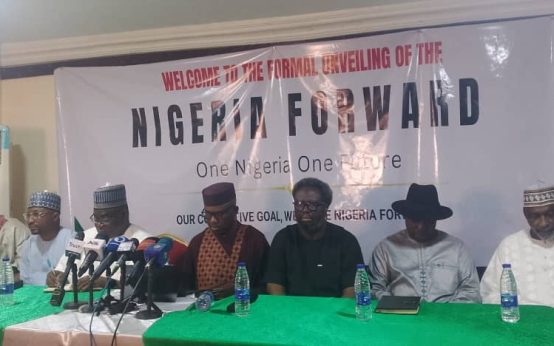 Waiya Unveils Nigeria Forward in Abuja to Mobilise Support for Tinubu’s Reforms
  Investing in Minds, Building Kano’s Future: Abba Kabir Yusuf’s Human Capital Development Drive
  Ibrahim Kabiru Masari: The Political Strategist Shaping a New Northern Conversation
  Abba Yusuf and the Politics of Realignment: How Kano’s New APC Coalition Could Reshape 2027
  Kano 2026 Hajj: Dignity on the Journey, Excellence in Leadership
  Former Kano lawmaker mourns death of Sani Lawan Kofar Mata
  NCoS, Prison Fellowship graduate 90 inmates from restorative justice programme in Kano
  DAVID MARK MOURNS FORMER KOGI GOVERNOR, IBRAHIM IDRIS
  Kwankwaso willing to reconcile with Kano Gov. Yusuf
  Al-Istiqama University confers posthumous honorary doctorate on late Dantata
  Kano Water Facilities Near Trial Testing as Goron Dutse Rehabilitation Advances — Official