
 Admin
Admin By Abdullahi Kano
In Nigeria’s complex political landscape, influence is not always measured by the office a politician occupies. It can also be reflected in relationships across political constituencies, connections between leadership and grassroots structures, and the ability to navigate difficult conversations with discretion.
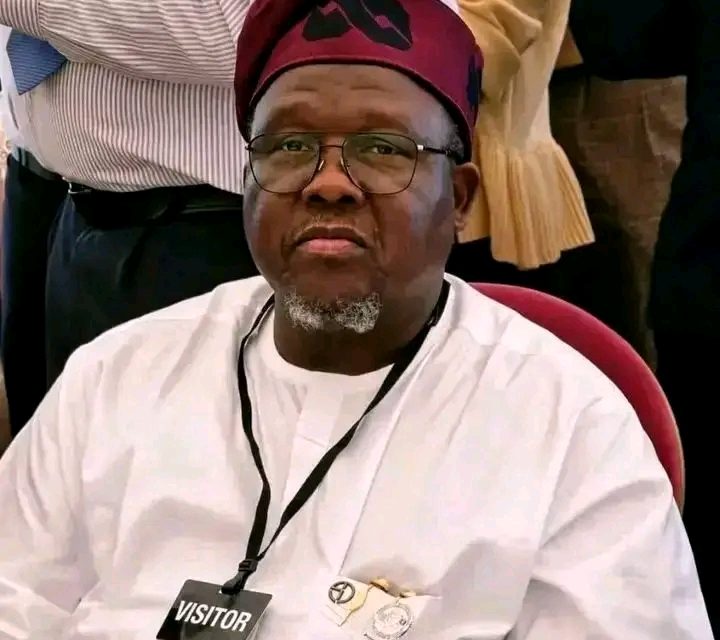
One figure who has attracted attention in this regard is Alhaji Ibrahim Kabiru Masari, the Katsina-born politician and Special Adviser to President Bola Ahmed Tinubu on Political Affairs.
Masari’s elevation from Senior Special Assistant to Special Adviser in March 2026 formally expanded his responsibilities within the Presidency. According to the State House, he had served as Senior Special Assistant on the same portfolio since 2023, after previously serving as Welfare Secretary of the All Progressives Congress during Adams Oshiomhole’s tenure as national chairman.
His political journey has also been shaped by his association with President Tinubu. Before the 2023 presidential election, Masari was named the APC’s placeholder running mate to Tinubu before Senator Kashim Shettima was selected as the substantive running mate. The episode placed him at the centre of a closely watched moment in the APC’s presidential campaign and highlighted his role within the party’s national structure. It does not, by itself, establish the extent of his broader political influence.
A Northern Political Connector
Masari’s supporters and political associates describe his approach as grounded in consultation, relationships and organisational discipline. They say he has helped connect the Presidency, party leaders, elected officials and grassroots actors, particularly across Northern Nigeria. These claims are attributed to supporters and associates; no independent evidence presented here quantifies his grassroots reach or demonstrates the effect of those connections.
Political commentator Dr Bashiru Ibrahim Kurfi, quoted by BBC Hausa, described Masari as someone regarded as having the confidence of members of the Tinubu administration. Kurfi also noted that some observers believe Masari’s role extends beyond the formal responsibilities of his office. Those remarks represent the views attributed to Kurfi and other observers, rather than independently verified findings.
His experience in party administration has given him familiarity with stakeholder engagement, internal processes and grassroots mobilisation. That background is documented, but the claim that it has produced a corresponding increase in national influence remains an interpretation rather than an established fact.
The Quiet Operator
Masari’s public image is relatively low-profile. Rather than frequently appearing at the centre of political disputes, he has often been associated with meetings and consultations. A recent profile described him as a “quiet strategist,” while supporters call him a “bridge-builder” who facilitates communication between political leaders and grassroots members. These descriptions are opinions or characterisations by commentators and supporters, not independently verifiable assessments of his effectiveness.
A senior APC stakeholder, speaking on condition of anonymity, said:
“Masari understands that politics is not only about occupying an office. It is about maintaining relationships, listening to people and ensuring that the concerns of the grassroots reach the appropriate level.”
His tenure as APC Welfare Secretary exposed him to party structures beyond Katsina State and enabled him to interact with leaders across the country. That experience became relevant when he joined the Presidency in 2023 as Senior Special Assistant on Political Affairs. Three years later, his elevation to Special Adviser signalled a formal expansion of his role. The Presidency said he would work alongside Alhaji Yau Darazo, another Special Adviser on Political Affairs appointed in 2023.
For his supporters, the promotion reflects confidence in his political experience. The appointment confirms an expanded official responsibility, but it does not independently verify claims about his influence over party structures or grassroots actors.
“His elevation is a recognition of the value of experience, loyalty and political coordination,” another APC supporter said.
A Broader Northern Role
Northern Nigeria remains a critical component of the country’s political structure, with its large population, extensive networks and diverse interests. Against this background, Masari’s growing visibility has attracted attention, particularly around the APC’s organisation and preparations for the 2027 contest. His official position and party history are verifiable; claims that he plays a decisive role across the region require evidence beyond his title and associations.
The Guardian, in a September 2026 interview, reported Masari’s view that the APC should not take elections for granted. The report also said he expressed confidence in the party’s organisational capacity and discussed issues surrounding the 2027 contest. These statements document his public position, not the party’s actual electoral strength or his ability to shape it.
Although his political roots are in Katsina State, his responsibilities extend beyond his home state. Commentators have cited his interactions with stakeholders in other Northern states as a factor in his profile, though the extent, frequency and impact of those relationships have not been independently established.
“Masari is not simply a Katsina politician anymore,” said a political associate. “His responsibilities at the Presidency require him to understand the political dynamics of the entire country, particularly the North, while maintaining relationships with stakeholders in other regions.”
The statement reflects the associate’s assessment. It should not be read as proof that Masari has acquired a nationally decisive role or that he represents political interests across the North.
The Road Ahead
The emerging narrative around Masari is less about political flamboyance than organisational and stakeholder engagement. His supporters argue that the North needs political actors who can communicate with both the political establishment and ordinary party members, pointing to his APC experience and continued presence within the Presidency. That argument is a political opinion, not a verified measure of his grassroots reach.
For a politician operating close to federal power, however, the real measure of influence will depend on tangible outcomes, the quality of stakeholder relationships and his ability to manage competing interests. At present, the available information establishes his appointments, party roles and public statements more clearly than it establishes the scale of his influence.
As Nigeria moves toward another major electoral cycle, Masari will face increased scrutiny. Whether his approach translates into lasting influence will depend on party structures, relationships among Northern leaders, grassroots expectations and the broader national environment. Any assessment should therefore distinguish between his formal responsibilities, supporters’ claims and demonstrable political outcomes.
What is clear is that Ibrahim Kabiru Masari has moved from a relatively behind-the-scenes party role to a nationally recognised position within the Presidency. His supporters see him as an experienced political adviser and organiser, while critics and independent observers will continue to assess the extent of his influence against measurable political developments. The available record supports the description of his official national position; it does not, on its own, substantiate broader claims that he commands extensive grassroots support or exercises decisive influence across Northern or national politics.
As the political conversation intensifies, particularly in Northern Nigeria, Masari’s name is likely to remain part of it. The significance of that role, however, remains a matter for evidence and continuing observation.
Abdullahi Kano writes from Kano.
namamaoga799@gmail.com
 Abba Yusuf and the Politics of Realignment: How Kano’s New APC Coalition Could Reshape 2027
  Kano 2026 Hajj: Dignity on the Journey, Excellence in Leadership
  When Healthcare Becomes Hope: How Governor Yusuf Is Transforming Kano’s Health Sector
  Prof. Gwarzo: Building Africa’s Education Future Through Institutions, Philanthropy
  From Dependence to Enterprise: How Yusuf’s Empowerment Drive Is Changing Lives of Kano Women, Youths
  Roads That Changed Lives: 23 Kaduna Rural Communities Feel New Lease of Life
  Police, Military Neutralise Terrorists, Recover Arms in Kebbi
  Kano Sharia Commission Launches 30,000 Copies of Islamic Calendar
  PDP Affirms Muhammad Abacha as Kano Governorship Candidate
  OCCEN Sensitises Kano Stakeholders on Foreign Information Manipulation
  Kebbi NUJ Mouns Death of Former NAN’s Staff, AUWALU YUSUF BIRNIN KUDU
  NCoS, PRAWA Empower Eight Non-Custodial Clients in Kano