

 Admin
Admin
Prof. Adamu Abubakar Gwarzo, founder of the MAAUN Group of Universities, has been described as one of the emerging figures shaping the future of private higher education and human-capital development in Africa.
Gwarzo, who hails from Gwarzo Local Government Area of Kano State, has built an educational enterprise spanning Nigeria and Niger Republic, with institutions including Maryam Abacha American University of Niger (MAAUN), Maryam Abacha American University of Nigeria, Franco-British International University, Kaduna, and Canadian University of Nigeria, Abuja.
His educational philosophy centres on making quality education accessible while equipping young people with knowledge, skills, leadership capacity, entrepreneurship and exposure to emerging technologies. His institutions have consequently positioned education not only as a means of obtaining academic qualifications, but as a platform for employment, innovation and social mobility.
The professor’s academic background cuts across French, linguistics and higher education. He holds a Bachelor’s degree and Master of Arts in French, as well as doctoral qualifications in French Linguistics and Higher Education. His academic accomplishments subsequently earned him recognition as a professor in Modern European Languages and Leadership.
Beyond the classroom, Gwarzo has extended his intervention through the Adamu Abubakar Gwarzo Foundation, which has supported scholarships, healthcare, youth and women empowerment, skills acquisition, water projects, educational infrastructure and assistance to vulnerable communities.
Through the foundation, more than 100 boreholes have reportedly been constructed in communities in Kano, Maradi and other parts of Africa, while healthcare outreach programmes have reached thousands of people with medical services and support for medical bills.
The foundation has also supported educational institutions with transportation and learning facilities, including buses for universities and colleges in Kano, Kaduna, Niger Republic and other locations. Beneficiary institutions include Bayero University Kano, Aliko Dangote University of Science and Technology, Wudil, Saadatu Rimi College of Education and other tertiary institutions.
One of the major areas of intervention has been scholarships and educational assistance. The foundation says more than 4,000 students have benefited from scholarship opportunities, while other beneficiaries have received support with school and examination fees, learning materials and other educational needs.
The impact of such interventions, according to the foundation, has extended beyond immediate beneficiaries. Some scholarship beneficiaries who completed postgraduate programmes have returned to support disadvantaged students, demonstrating what it described as a cycle of giving and empowerment.
Gwarzo’s intervention also places emphasis on preparing young people for the changing demands of the labour market. Training programmes associated with his institutions and foundation have focused on leadership, professionalism, problem-solving, digital skills, entrepreneurship and emerging technologies.
In 2026, the foundation also supported capacity-building for civil-society and community-based organisations, with more than 120 participants from 45 organisations reportedly benefiting from proposal-development training designed to strengthen their ability to mobilise resources and implement development projects.
His role in African higher education extends beyond his universities, with his leadership of the Association of African Private Universities providing a platform for promoting collaboration, quality assurance, research and institutional development among private universities across the continent.
The foundation’s interventions have similarly expanded beyond education to include water, healthcare, transportation, community infrastructure and humanitarian assistance, reflecting Gwarzo’s stated belief that educational development cannot be separated from the broader social and economic conditions affecting learners and their families.
His supporters argue that the significance of his work lies not only in the number of institutions established, but also in the opportunities created for students, academics, professionals and communities.
They say his investments demonstrate how private-sector participation in education can contribute to human-capital development, employment generation, entrepreneurship, innovation and local economic growth.
Gwarzo’s vision is also increasingly linked to the future of technology-driven education, as Africa faces growing demand for expertise in artificial intelligence, digital transformation, biotechnology, renewable energy, financial technology and other knowledge-intensive sectors.
With an educational footprint extending from Niger Republic to different parts of Nigeria, his activities have acquired a Pan-African dimension, particularly through efforts to promote cross-border academic cooperation and African-led solutions to the continent’s development challenges.
His contributions have attracted recognition from national and international organisations. In 2025, Morgan State University recognised him for scholarship, leadership and edupreneurship, while the International Association for Quality Assurance in Pre-Tertiary and Higher Education awarded him an Honorary Fellowship for his contributions to education and institutional development.
For Gwarzo, however, the ultimate measure of his work is not the number of awards, campuses or buildings, but the lives transformed through access to education, healthcare, skills, water, transportation and other opportunities.
His long-term ambition of contributing to the education of one million people underscores his broader campaign against illiteracy and his belief that Africa’s youthful population can become its greatest development asset if properly educated, skilled and empowered.
Observers say the combination of institution building, philanthropy and human-capital development places Gwarzo among a growing generation of African education entrepreneurs seeking to address the continent’s development challenges through home-grown institutions and opportunities.
As Africa confronts the twin challenges of expanding access to quality education and preparing millions of young people for a technology-driven economy, Gwarzo’s model represents an attempt to link education with employability, innovation, entrepreneurship and social responsibility.
His story, therefore, goes beyond the establishment of universities. It is increasingly about creating an ecosystem in which education produces skills, skills create opportunities, and opportunities enable individuals and communities to contribute to sustainable development.
 From Dependence to Enterprise: How Yusuf’s Empowerment Drive Is Changing Lives of Kano Women, Youths
 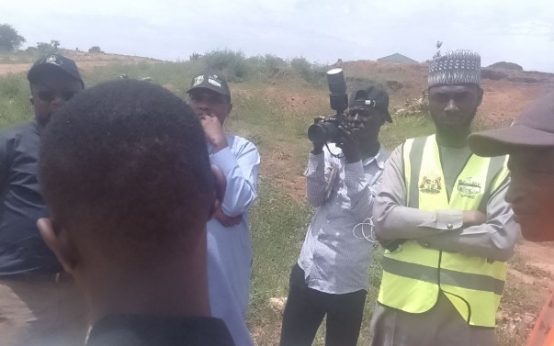 Roads That Changed Lives: 23 Kaduna Rural Communities Feel New Lease of Life
  Abdullahi Waiya: Repositioning Kano Information Ministry, Changing the Narrative Through Innovation
  Kano Rising: How Abba Yusuf’s Road Revolution Is Reshaping the Ancient City
 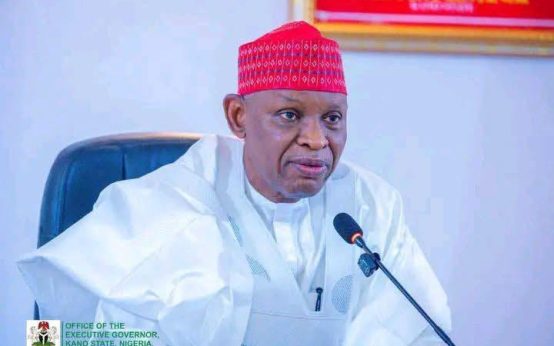 Kano Diphtheria: Investigation Confirms Two Deaths, Says Reported 50 Mortalities Unsubstantiated
 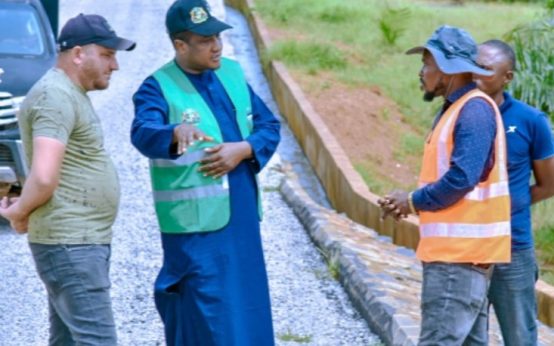 Beyond the Roads: How KADRAAMP Is Reconnecting Kaduna’s Rural Communities to Opportunity
  City Boy Movement Targets 10m Votes for Tinubu in 2027
  MUHAMMAD GARBA Redeems Pledge, Donates Smart TV to Kano Correspondents’ Chapel
  Governor Radda: Strong Enterprises Will Grow Katsina’s Economy, Strengthen Security
  Governor Yusuf welcomes Senator Rufai Hanga into APC
  Yusuf, Defectors Mobilise Support for Tinubu, APC in Kano
  Kano Water Resources Commissioner Enrols 160 Children in Primary Schools Under Back-to-School Initiative