
 Admin
Admin By Abdullahi Kano
There was a time when moving through Kano at peak hours was less a journey than a test of patience.
From Dan’Agundi to Tal’udu, from the metropolitan roads to the growing outskirts of the city, motorists routinely confronted bottlenecks, long queues and deteriorating road surfaces.
For a commercial city whose economy depends heavily on the movement of people and goods, the consequences were significant.
Today, parts of Kano are beginning to tell a different story.
Across the metropolis, the landscape is changing with the construction and rehabilitation of major roads, modern flyovers, overhead bridges and other critical transport infrastructure.
At the centre of this urban renewal is the administration of Governor Abba Kabir Yusuf, which has made road development one of the most visible pillars of its infrastructure agenda.
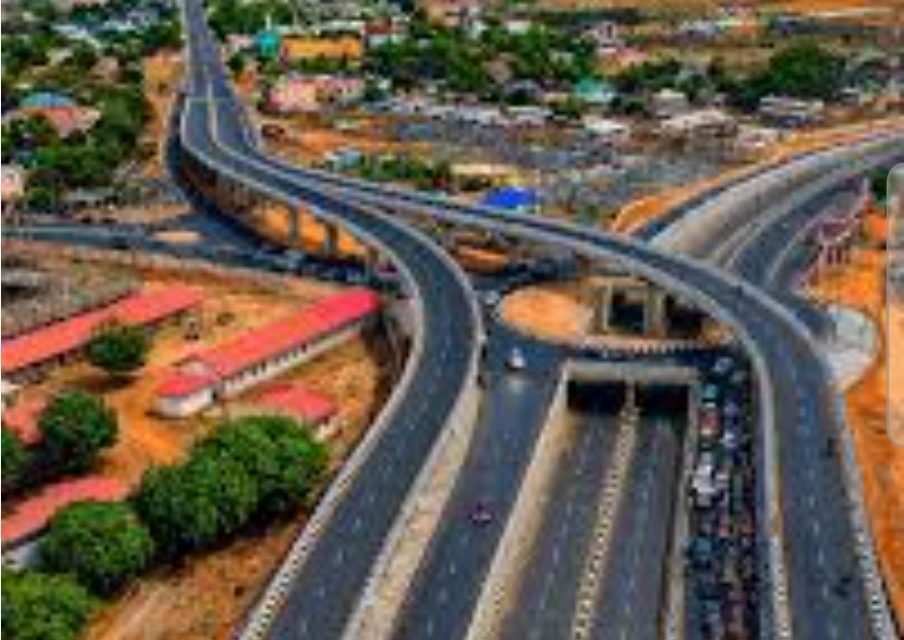
Perhaps nowhere is the change more striking than at major intersections where modern flyovers are emerging to tackle persistent traffic congestion.
The Dan’Agundi and Tal’udu flyovers have become symbols of an administration seeking to move Kano beyond conventional road construction and towards infrastructure designed for the demands of a rapidly expanding metropolis.
The significance of these structures goes beyond their concrete pillars and elevated carriageways.
Every minute saved on a congested road has an economic value. For traders transporting goods, commercial drivers making several trips a day, workers commuting to offices and residents travelling to schools and hospitals, a functional road network can mean the difference between productivity and wasted hours.
Kano’s importance as a major commercial centre makes the issue even more critical. The city serves as a meeting point for traders, manufacturers, farmers, transporters and consumers from different parts of Northern Nigeria and beyond. When roads fail, the impact is felt not only by motorists but across the entire chain of commerce.
The Yusuf administration’s road intervention has therefore been presented as more than an exercise in beautification.
It is an investment in mobility and economic activity, connecting communities while opening up routes that had previously suffered from neglect or inadequate capacity.
The rehabilitation and construction of roads across the metropolis have also given renewed attention to neighbourhoods that depend on reliable access to major commercial and administrative centres.
Improved connectivity means easier movement of agricultural produce, access to markets and better links between residential communities and places of employment.
But perhaps the strongest argument for the projects lies in their potential to change the daily experience of ordinary Kano residents.
For the commuter, it could mean spending less time trapped in traffic. For the commercial driver, fewer hours lost on the road.
For the trader, faster movement of goods. For emergency services, better access to communities. And for businesses, a more predictable transportation environment.
This is where infrastructure becomes more than statistics and project figures. A road is ultimately measured by what it enables people to do.
The emerging infrastructure landscape also reflects the changing demands of Kano itself. The ancient city has grown far beyond its historic core, with new residential areas, expanding commercial districts and increasing vehicular traffic placing unprecedented pressure on existing infrastructure.
The challenge, however, does not end with commissioning new roads and bridges. The sustainability of the investment will depend on regular maintenance, effective drainage, proper traffic management and disciplined use of public infrastructure.
There is also the wider question of whether road construction will be matched with comprehensive urban planning. As Kano continues to grow, authorities will need to anticipate future traffic patterns rather than simply respond to existing congestion.
For Governor Abba Yusuf, the road projects could ultimately become one of the defining features of his administration. Political administrations come and go, but roads and bridges remain visible long after the officials who commissioned them have left office.
That is why the emerging skyline of flyovers and the expanding network of rehabilitated roads carry significance beyond the immediate relief they provide.
They represent an attempt to prepare Kano for the future — a future in which a historic commercial city must accommodate a growing population, expanding businesses and increasingly complex transportation needs.
From the crowded junctions of yesterday to the modern flyovers taking shape today, Kano is undergoing a physical transformation that is increasingly difficult to ignore.
The ultimate verdict on the road revolution will not be written in government documents or project commissioning speeches. It will be written on the roads themselves — in shorter journeys, smoother movement, safer crossings, stronger commerce and a city that works better for the millions who depend on it every day.
Abdullahi Kano Writes from Kano.
namamaoga799@gmail.com
 Kano Diphtheria: Investigation Confirms Two Deaths, Says Reported 50 Mortalities Unsubstantiated
  Beyond the Roads: How KADRAAMP Is Reconnecting Kaduna’s Rural Communities to Opportunity
  Empowering the Vulnerable:H E Dr Amina Namadi’s Lifeline for Garki Widows, Orphans’ Parents
  Jamilu Isyaku Gwamna: Experience, Competence and the Promise of a New Leadership Era in Gombe
  When Marriage Becomes Public Policy: The Economics and Social Security Behind Kano’s Mass Wedding Scheme
  Prof. Yahuza Suleiman Imam: The Reformer Repositioning NBAIS for a Digital Future
  Kano NLC Backs FG’s IPPIS Audit to Weed Out Ghost Workers
  NAPTIP Rescues 180 Children After Investigative Journalism Exposes Trafficking
  Gov Yusuf vows decisive action after bandit attacks in four Kano LGAs
  Gwamna Recomits to Human Capital Development, Youth Mentorship
  Maulud: Best Choice Specialist Hospital Congratulates Kano Governor, Muslims Globally
  Kano’s N1tr Metro Rail Dream: How Yusuf-Tinubu Partnership Could Reshape the Ancient Commercial City