
 Admin
Admin 
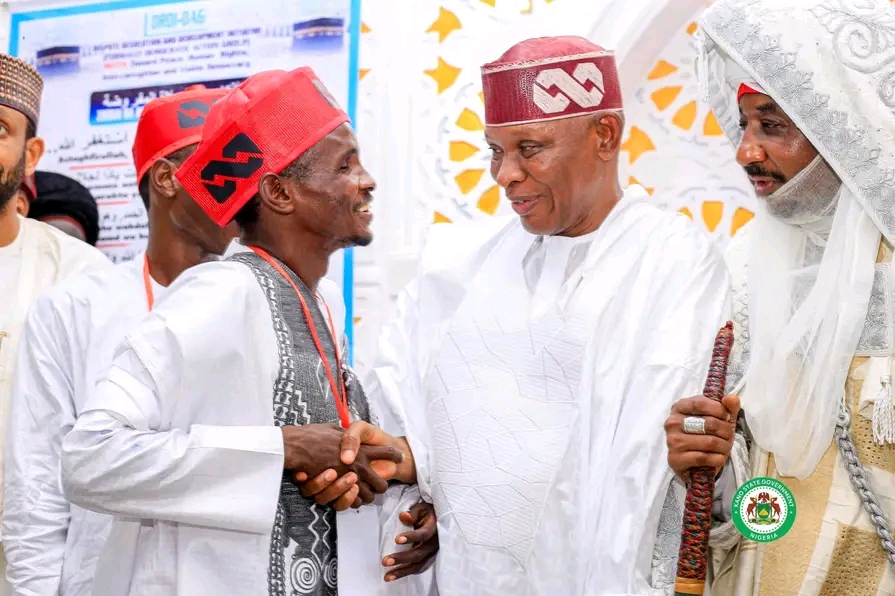
The gathering of thousands of young men and women for mass weddings in Kano may appear, at first glance, to be another colourful social ceremony. But beneath the wedding gowns, traditional attire, photographs and celebrations lies a much deeper question: why has marriage become an issue requiring direct government intervention?
For Kano State, the answer is closely connected to the changing economic realities facing young people. The cost of establishing a household has risen considerably, with accommodation, food, clothing, furniture and other necessities placing increasing pressure on prospective couples and their families. For young people with limited income, the dream of marriage can consequently become a prolonged financial struggle.
 It is against this background that the state government’s mass wedding programme assumes significance. The intervention is not simply about bringing couples together; it is an attempt to reduce some of the financial barriers associated with marriage and provide vulnerable young people with an opportunity to establish legitimate households.
In a society where marriage occupies an important position in religious and cultural life, the programme also carries a strong social dimension. Islamic teachings encourage marriage and responsible family formation, while Kano’s traditional institutions have historically regarded marriage as a foundation of community continuity. Government support for the process therefore reflects both religious expectations and the cultural importance attached to family life.
But there is another side to the initiative that deserves greater attention: social security. A stable family can serve as the first line of support for its members. Husband and wife can share responsibilities, care for children and provide mutual assistance during periods of economic difficulty. Strong families, in turn, can contribute to stronger communities.
This makes the programme potentially more significant than a conventional welfare intervention. By helping young people overcome one of the initial financial obstacles to marriage, government is effectively investing in household formation. The long-term expectation is that these households will become productive units rather than dependants on government.
The economic implications are equally compelling. Every new household creates demand for goods and services. Furniture makers, tailors, food suppliers, traders, transporters, artisans and other small businesses stand to benefit from the economic activities generated by newly established families. In a state dominated by small and medium-sized enterprises, such demand can have a multiplier effect.
The programme therefore offers an opportunity to connect social policy with local economic development. If beneficiaries are deliberately linked with Kano-based producers and service providers, government support for marriage could also become a channel for strengthening indigenous businesses. The money circulating around the programme would then remain within the local economy for longer periods.
Women’s economic empowerment is another area with considerable potential. Marriage should not necessarily mean withdrawal from productive activity. Beneficiaries could be connected to vocational training, cooperatives, entrepreneurship programmes and access to small-scale financing. A woman who acquires a skill and generates income can strengthen her household while contributing to the wider economy.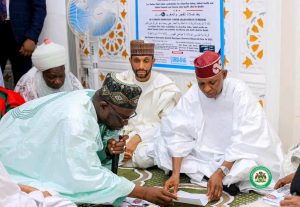
Young men, too, require economic support beyond the wedding day. Marriage increases responsibilities, particularly the expectation to provide accommodation, food and other basic necessities. Linking the programme with employment initiatives, vocational skills and entrepreneurship support could help newly married men build sustainable sources of income rather than depend solely on government assistance.
There is also a potential security benefit. While marriage cannot be presented as a cure for unemployment, poverty or insecurity, meaningful opportunities for young people can reduce some of the conditions associated with social vulnerability. A young person who has a family responsibility, a livelihood and a stake in the community may have stronger incentives to pursue stability and productive engagement.
Yet, the real measure of the programme should come after the wedding ceremony. Government can successfully organise thousands of marriages, but the deeper question is whether those marriages survive economic pressures. Couples need more than wedding packages; they need the capacity to maintain homes, manage income, resolve disagreements and raise children responsibly.
This is where a structured post-marriage support mechanism could make the programme more sustainable. Newly married couples could receive access to financial-literacy programmes, family counselling, vocational training, health information, agricultural opportunities and entrepreneurship schemes. Such measures would transform the programme from a one-day intervention into a long-term social investment.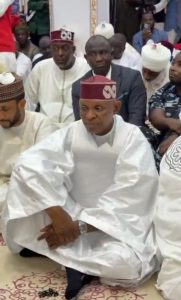
There is also room for greater participation by the private sector. Banks, microfinance institutions, manufacturers, telecommunications companies, agricultural organisations and other businesses could develop products specifically designed for newly established households. This would reduce pressure on government while creating a market around a growing population of young families.
The programme should therefore be viewed not merely through the number of couples married, but through the lives built afterwards. Its success should be reflected in stable households, economically active families, empowered women, productive young men and children growing up in secure environments. Periodic assessment of beneficiaries could help determine whether the intervention is achieving these broader objectives.
Kano’s mass wedding initiative consequently presents an unusual intersection between religion, social protection and economic policy. What begins with a marriage ceremony can potentially end in stronger households, increased economic activity and greater social cohesion. The real opportunity before the state is to ensure that the government’s support does not stop at helping couples say “I do,” but continues until they are capable of saying, through their livelihoods and family stability, “we can stand on our own.”
In the final analysis, the most important product of a mass wedding programme is not the wedding itself. It is the family that emerges from it. If Kano can successfully connect marriage support with economic empowerment, social protection, skills development and responsible family life, the programme could become more than a welfare scheme. It could become a strategic investment in the state’s most valuable resource—its people.
 Jamilu Isyaku Gwamna: Experience, Competence and the Promise of a New Leadership Era in Gombe
  Prof. Yahuza Suleiman Imam: The Reformer Repositioning NBAIS for a Digital Future
  Dr. Amina Umar Namadi: A Quiet Force Behind Philanthropy and Social Transformation in Jigawa State
  GOVERNOR NASIR IDRIS AND THE EMERGENCE OF A NEW REVOLUTIONARY GOVERNANCE TEMPLATE IN KEBBI STATE.
  Kogunan Sokoto commends Gov Aliyu on township roads rehabilitation
  Bauchi Guber Race: North West Bauchi Citizens Support Suphi
 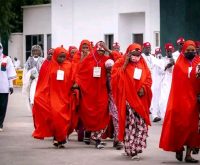 Kano Mass Wedding: Gov. Yusuf Urges Newlyweds to Build Marriages on Love, Patience
  Customs Foils Major Security Threat, Seizes Over 140 Arms Components, ₦373.8M Drug Cargo
  Kano Pilgrims Board Sets Aug 25 Deadline for Passport Submission Ahead of 2026 Hajj
  Forum Endorses Dr Gwamna, Mobilises Statewide Support.
  Gwamna’s Governorship Aspiration Gains Momentum as Another Pantami Adviser Resigns, Declares Support.
  Zaria Coalition of Groups, Opposition Members Endorse Abbas Tajudeen for Another Term