
 Admin
Admin …….As lawmakers inspect projects, the Rural Access and Agricultural Marketing Project strengthens the bridge between farms, markets and livelihoods
By Editor
For many rural communities, a road is much more than a stretch of asphalt or compacted earth. It is the difference between getting farm produce to market on time and watching it perish.
It determines whether a pregnant woman can reach a health facility, whether children can get to school during the rainy season and whether farmers can connect with buyers beyond their immediate communities.
It is against this backdrop that the work of the Kaduna Rural Access and Agricultural Marketing Project, KADRAAMP, is increasingly attracting attention as efforts intensify to improve rural connectivity and unlock the economic potential of farming communities across Kaduna State.
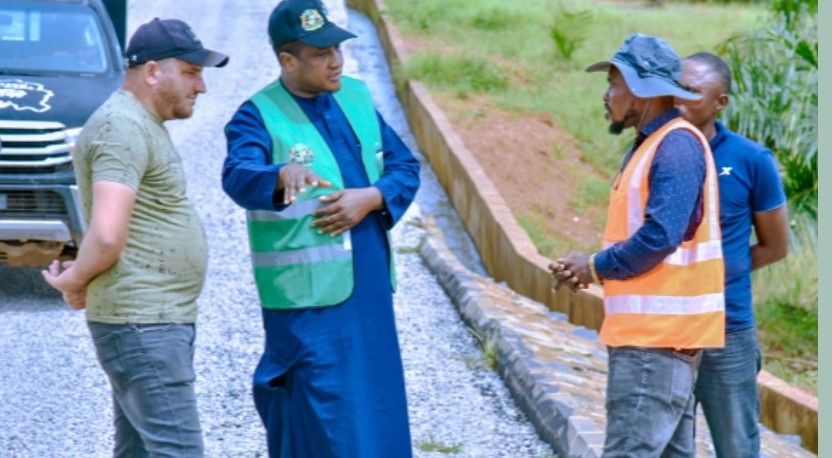
Recently, members of the Kaduna State House of Assembly embarked on a week-long oversight exercise of KADRAAMP projects across the state, inspecting ongoing road construction works and engaging with project stakeholders and host communities.
Far from being a routine inspection, the exercise offered an opportunity to examine how investments in rural infrastructure are translating into improved connectivity and creating the conditions for stronger agricultural activities and better livelihoods.
The lawmakers assessed the progress of projects while paying particular attention to quality, accountability, value for money and compliance with approved standards and specifications.
At the heart of KADRAAMP’s mandate is a simple but powerful objective: to improve transport conditions and provide sustained access to rural populations through the rehabilitation and maintenance of key rural transport infrastructure in selected areas of Kaduna State.
The importance of that mandate cannot be overstated in a state where agriculture remains central to the livelihood of thousands of households.
For farmers, producing food is only one part of the challenge. Getting that produce from the farm to the market efficiently is equally important. Poor rural roads can increase transportation costs, reduce the bargaining power of farmers and contribute to post-harvest losses.
By improving rural access routes, KADRAAMP is helping to address one of the critical links in the agricultural value chain — the connection between where food is produced and where it is consumed or sold.
The recent legislative oversight further demonstrated the importance of accountability in ensuring that such investments deliver the desired results.
Leading the lawmakers during the exercise was Hon. Al Hassan Mohammed, Chairman of the House Committee on RAAMP, KADRA and RARA, representing Ikara Constituency.
Other members who participated included Hon. Nasir Idi Kano, representing Sabon Gari Constituency; Hon. Danlami Stingo, representing Kajuru Constituency; Hon. Shehu Abubakar (NULGE), representing Giwa West Constituency; Hon. Baban Halima, representing Giwa West Constituency; and Hon. Abdullahi Mohammed Bello, representing Soba Constituency.
Their presence on project sites provided an additional layer of public scrutiny and reinforced the principle that development projects funded or supported through public resources must be subjected to effective oversight.
For KADRAAMP, such engagement is also an opportunity to receive direct feedback from the communities expected to benefit from the infrastructure.
Road construction can easily be viewed through statistics — kilometres completed, contracts awarded and projects commissioned. But for rural residents, its real value is often measured in much simpler terms: how long it takes to reach the market, whether vehicles can access the community during the rainy season and how much it costs to transport farm produce.
This is why community engagement remains an important component of sustainable rural infrastructure development.
The week-long oversight also underscored the growing recognition that rural roads should not be regarded merely as transport infrastructure. They are economic infrastructure.
A functional rural road can connect farmers to markets, traders to producers, communities to essential services and local economies to wider commercial networks.
In that sense, the work of KADRAAMP goes beyond the physical construction of roads. It is about creating an enabling environment in which rural communities can participate more effectively in economic activities.
The project’s emphasis on sustainable rehabilitation and maintenance is equally significant. Building a road is only the beginning; ensuring that it remains functional and continues to serve communities over time is what ultimately determines its development value.
The involvement of the State House of Assembly in monitoring implementation therefore adds another dimension to the sustainability agenda by ensuring that project execution remains subject to scrutiny and established standards.
As Kaduna continues to pursue development across its urban and rural areas, initiatives such as KADRAAMP demonstrate why infrastructure investment must extend beyond major cities and highways.
For communities that have historically struggled with difficult access, a rehabilitated rural road can open doors to opportunities that previously seemed distant.
It can mean a farmer reaching a better-paying market, a trader expanding the volume of goods handled, a young person travelling more easily between communities or a family accessing essential services without the difficulties associated with poor roads.
The recent oversight exercise has consequently placed the spotlight not only on the physical progress of KADRAAMP projects but also on the broader development possibilities that rural connectivity creates.
For the project, the message is clear: roads must serve people, connect communities and strengthen economic activity.
And as lawmakers, project stakeholders and host communities continue to work together, KADRAAMP is positioning rural infrastructure as a practical instrument for agricultural development, economic inclusion and improved livelihoods.
Ultimately, the success of a rural road project is not measured only by the road itself.
It is measured by what happens after the road is built — the markets that become accessible, the produce that reaches consumers, the businesses that emerge, the journeys that become easier and the communities that gain a stronger connection to opportunity.
That is where the real story of KADRAAMP lies: not simply in building roads, but in building connections between rural people and the opportunities they need to prosper.Suggested newspaper caption:
Members of the Kaduna State House of Assembly inspecting an ongoing KADRAAMP rural road project during their week-long oversight visit across the state.
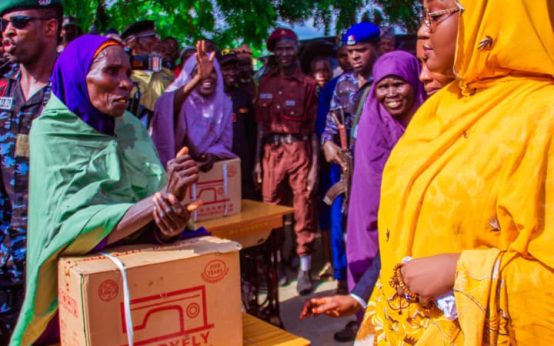 Empowering the Vulnerable:H E Dr Amina Namadi’s Lifeline for Garki Widows, Orphans’ Parents
 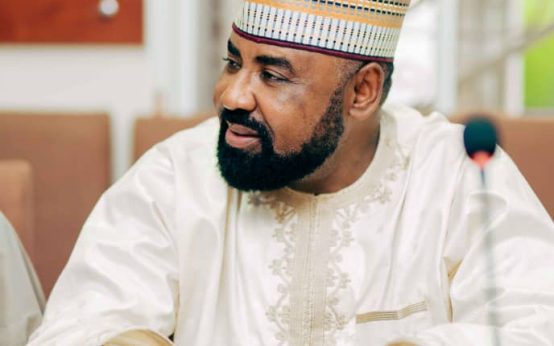 Jamilu Isyaku Gwamna: Experience, Competence and the Promise of a New Leadership Era in Gombe
  When Marriage Becomes Public Policy: The Economics and Social Security Behind Kano’s Mass Wedding Scheme
  Prof. Yahuza Suleiman Imam: The Reformer Repositioning NBAIS for a Digital Future
 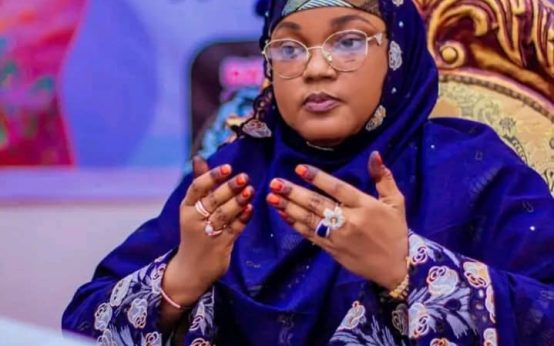 Dr. Amina Umar Namadi: A Quiet Force Behind Philanthropy and Social Transformation in Jigawa State
  GOVERNOR NASIR IDRIS AND THE EMERGENCE OF A NEW REVOLUTIONARY GOVERNANCE TEMPLATE IN KEBBI STATE.
  AFAN Mourns Former National President, Architect Kabiru Ibrahim
  Bello Sharada: A Great Writer, A Bookish Soul, Gone Too Soon
  Navy Inaugurates Special Intervention Impact Projects in Gaya LGA, Kano
  Kano govt debunks report of diphtheria killing 50 children in Rano
  Katsina Executive Council Approves N828.6bn 2027 Budget Proposal
  Kano Health Care Forum Supports Gov. Yusuf’s 2027 Re-election Bid