
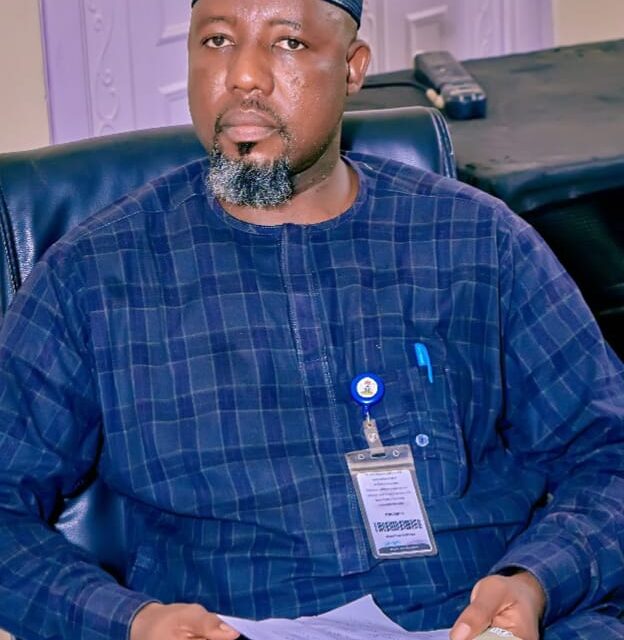
 Admin
Admin
By
Abubakar Ibrahim
Nigeria has for years been battered by violence from extremist groups, bandits and communal clashes. That pain affects many communities — Christians and Muslims alike. Yet in recent months a simple, dangerous slogan has been repeated online and in some corners of the media: that Nigerian Christians are victims of an organised, nationwide “genocide.” This claim is misleading. It flattens a complex security picture, risks politicising individual tragedies, and obscures very real attacks on Muslim worshippers and mosques that deserve urgent attention.
First, facts matter. Independent human-rights monitors, international press organisations and credible news agencies document a wide range of violent incidents across regions and years — including many attacks with Muslim victims and mosques deliberately targeted. Large terrorist organisations (notably Boko Haram and its offshoots) and armed “bandit” gangs have repeatedly attacked places of worship, markets and villages, killing civilians without regard to religion.
These atrocities are part of a broader collapse of security in several parts of the country.
Second, concrete examples. August 11, 2013 – Konduga, Borno State: Boko Haram gunmen opened fire on worshippers during dawn (Fajr) prayers at the Konduga Central Mosque, killing approximately 44–46 people and injuring about 22–30 more.
This mass shooting was Boko Haram’s first large-scale attack inside a mosque, reportedly carried out in retaliation against villagers who had organized vigilantes against the insurgents. November 3–4, 2014 – Potiskum, Yobe State: A suicide bomber (suspected Boko Haram) targeted a Shia Muslim Ashura procession in Potiskum. The attacker, disguised as a worshipper, detonated explosives among the crowd, killing at least 15 people and injuring about 50 others. November 28, 2014 – Kano City, Kano State: Boko Haram militants attacked the Central Mosque in Kano during packed Friday prayers and set off three huge bombs inside the courtyard and then opened fire on fleeing worshippers. At least 81 people were killed (witnesses counted more than 200) and over 100 injured. July 17, 2015 – Damaturu, Yobe State: On the morning of Eid al-Fitr, two Boko Haram-linked suicide bombers – an elderly woman and a 10-year-old girl – detonated explosives among crowds gathered for Eid prayers in an open-air prayer ground in Damaturu. Initial local reports indicated a toll of up to 50. October 15, 2015 – Maiduguri, Borno State: Two suicide bombers attacked a mosque in the western suburbs of Maiduguri during evening prayers. One bomber blew himself up inside the mosque and, as rescuers gathered, the second detonated outside, causing additional casualties. Witnesses counted 42 dead bodies at the scene. November 27, 2015 – Dakasoye, Kano State: A suicide bomber infiltrated a Shia Muslim Arba’een procession en route from Kano to Zaria. The bomber, a young man, detonated amidst the marchers, killing at least 21 people and injuring many more. An accomplice was caught and confessed they were sent by Boko Haram. March 16, 2016 – Molai-Umarari, near Maiduguri, Borno State: Two female suicide bombers struck the Molai-Umarari village mosque during dawn prayers. One woman blew herself up inside the mosque, and the second waited outside and detonated as survivors fled. The attack killed at least 24 worshippers (only the imam reportedly survived inside) and wounded 18 others. January 16, 2017 – Maiduguri, Borno State: An attack hit the University of Maiduguri’s mosque during morning prayers. A 12-year-old girl suicide bomber slipped into the small mosque and detonated an IED, killing four people (including a university professor) and injuring 15 others. November 21, 2017 – Mubi, Adamawa State: A teenage male suicide bomber (suspected Boko Haram) detonated explosives inside the Madina Mosque in Mubi during morning prayer. The blast collapsed the building’s roof and killed at least 50 people, with others succumbing to injuries later. May 1, 2018 – Mubi, Adamawa State: Twin suicide bombings struck the town of Mubi in the early afternoon. The first bomber blew himself up inside a mosque around 1:00pm as worshippers gathered for Zuhr prayer, and a second bomber detonated about 200 meters away, targeting people fleeing the first blast. At least 27 people were killed and 56 injured. July 23, 2018 – Konduga, Borno State: A male suicide bomber entered a community mosque in Konduga during early morning prayers and detonated his device among the worshippers, killing 11 people on the spot and injuring at least 8 others. July 27, 2019 – Nganzai LGA, Borno State: Boko Haram fighters ambushed mourners returning from a funeral near Gajiram, killing 65 people on the spot. October 25, 2021 – Mazakuka, Niger State: Armed bandits stormed a village mosque in Mazakuka during dawn prayers, killing 18 people — 17 worshippers and the chief imam — and injuring at least 4 others. October 5, 2021 – Yasore, Katsina State: Bandits attacked a mosque in Yasore village during evening prayers, shooting dead 10 worshippers and wounding others. November 5, 2023 – Funtua area, Katsina State: Armed bandits attacked a Maulud celebration, killing at least 20 people and kidnapping several others. August 19, 2025 – Unguwan Mantau, Katsina State: Armed bandits invaded a village mosque during Subh prayers, killing at least 27 people and injuring dozens. In February 2025 in Zamfara, bandits kidnapped an imam and 30 others from a village, and in June 2025 Boko Haram (ISWAP faction) launched attacks in Borno. The above list is not exhaustive. All deaths are serious, but these are some of the most heinous ones. We condemn killings and terror against all faiths and in all ramifications.
These incidents — carefully reported by international and local media and verified by rights organisations — make it clear that violence against Muslims, including killings inside mosques, has occurred repeatedly and must be treated as seriously as attacks on any other religious group. To present a single-faith “genocide” narrative ignores evidence and distracts from the practical steps needed to stop the bloodshed.
Labeling the situation as an organised “Christian genocide” across Nigeria implies an intentional, state-level or uniformly coordinated campaign targeting Christians because of their faith alone. Available evidence does not support that description. Instead, Nigeria’s deadly violence comprises multiple drivers: Islamist extremist groups, armed bandit gangs, intercommunal clashes, and local revenge attacks. All these forms of violence produce suffering — but they are not the same as a coordinated, single-actor genocide. Misusing that term risks polarising communities, undermining careful investigations, and allowing perpetrators to escape accountability while political actors exploit victims for propaganda.
Every attack on a place of worship or community must be investigated promptly, with findings made public and suspects prosecuted under the law. Families deserve truth and justice regardless of the victim’s religion. Religious leaders and civic figures should speak truthfully about the facts and condemn all attacks on civilians, whether in churches, mosques or public spaces. They should promote joint interfaith statements to show solidarity with all victims and work with security agencies to provide community intelligence and prevent escalation.
Nigeria’s tragedy is not a single-thread story. Christians and Muslims have each suffered brutal attacks. Accurate reporting shows that Muslims have been among the victims in multiple deadly attacks on mosques and worshippers, and these events deserve full attention. Exaggerating or inventing a one-sided “genocide” narrative harms justice and peace. The way forward is rigorous investigations, evenhanded protection, and sustained interfaith leadership. The government must do the needful — protect every citizen, prosecute perpetrators, and build trust that can break Nigeria’s cycle of revenge and fear. The world should be told the full truth: violence in Nigeria is complex, brutal and ongoing — and it demands unity of purpose from all Nigerians and their leaders.
This article acknowledges the contributions of Barrister Abba Hikima, whose documentation has helped preserve factual accuracy and historical record.
Abubakar Ibrahim can be reached via:
habuibrahim76@gmail.com
+2348084441295
+2348098454956
 Dr. Halima Suleiman Zakari – The Emerging Female Voice in Jigawa Politics
  Emir Bamalli: A Modern Monarch Steering Zazzau’s Renewal
  World Tuberculosis Day: Dr. Amina Umar Namadi Calls for Collective Action Against TB
  KADRARA DG Commends Gov. Uba Sani on Ramadan, Praises Development Strides in Kaduna
  Does the North Have a Future? The Almajiri Conundrum
  Dr Amina Umar Namadi Bags Award of Excellence 2026 for Women Empowerment
  Why All Hues, Cries Against Garo?
  Ambassador Dr. Amina Umar Namadi: A First Lady Defined by Compassion, Service, and Humanity
  Police Rescue Abducted Three-Day-Old Baby, Arrest Two Suspects in Nasarawa
  Governor Yusuf Mourns Alhaji Nuhu Dantani
  ADC Leaders Reject INEC Decision, Vow to Resist, Mobilise Support in Otukpo