
 Admin
Admin
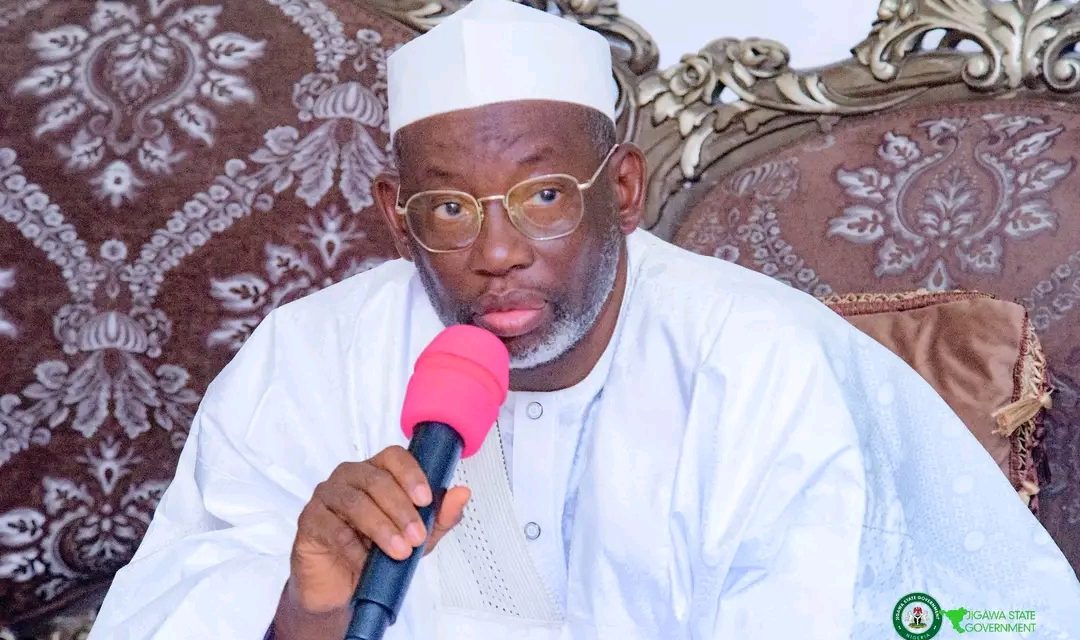
In the political history of Jigawa State, few leaders have left as profound an imprint on governance and development as Governor Umar A. Namadi.
Supporters of the governor argue that his record of achievements across education, healthcare, agriculture, and infrastructure has placed him in a unique category among contemporary Nigerian leaders.
They contend that finding another governor with a similar developmental footprint, not only in Jigawa but across Nigeria, may prove difficult.

One of the most celebrated milestones of the Namadi administration is the establishment of Khadija University, Majiya, a project reportedly funded with an investment of about ₦11 billion.
The university is widely viewed as a strategic intervention aimed at expanding access to higher education, creating opportunities for young people, and positioning Jigawa as a growing centre of academic excellence.
For many residents, the institution represents a long-term investment in human capital and a symbol of the administration’s commitment to educational advancement.
Healthcare has emerged as another defining pillar of the governor’s agenda. In a move described as unprecedented in the state’s history, the administration introduced large-scale health insurance and free medical care programmes targeting vulnerable populations.
Nearly 200,000 rural residents have reportedly benefited from government-sponsored healthcare services.
More recently, Governor Namadi launched a free healthcare initiative designed to serve about 143,500 indigent residents, including the elderly, children, and patients suffering from chronic illnesses such as HIV/AIDS, hypertension, and diabetes.
The programme extends to all 287 political wards in the state, with 500 low-income beneficiaries registered from each ward to receive free medical treatment and medication.
Development experts note that the initiative reflects a growing emphasis on inclusive healthcare and social protection, particularly for citizens who would otherwise struggle to access quality medical services.
The administration has also invested heavily in healthcare education and workforce development. Nearly ₦5 billion has been earmarked for the construction of a permanent site for the School of Nursing and Midwifery in Hadejia.
In addition, the Nursing and Midwifery Council of Nigeria has approved the commencement of midwifery training at the institution, a development expected to strengthen the state’s capacity to train skilled healthcare professionals.
Beyond human healthcare, Governor Namadi has demonstrated a commitment to supporting livestock farmers and strengthening veterinary services.
In Garbau, Miga Local Government Area, the governor launched 135 Mobile Veterinary Clinics distributed across the state’s 27 local government areas.
The initiative is aimed at improving animal health services, boosting livestock productivity, and supporting rural livelihoods in a state where agriculture remains a key economic activity.
Technology-driven reforms have also featured prominently in the administration’s healthcare transformation programme.
Under the World Bank-supported IMPACT initiative, the state government distributed 291 computers to health records officers serving primary healthcare facilities.
The project seeks to modernise data management, improve patient record-keeping, strengthen health monitoring systems, and enhance the accuracy of healthcare information across the state.
The IMPACT programme has supported broader improvements in primary healthcare infrastructure, including water supply systems, solar-powered electricity, maternal health interventions, staff training, disease prevention programmes, perimeter fencing for health facilities, and the construction of accommodation for midwives.
These investments are aimed at reducing maternal mortality and improving healthcare delivery in rural communities.
Jigawa’s healthcare sector has recorded additional gains through the establishment of free dialysis centres in Hadejia, Ringim, Gumel, Kazaure, and Dutse.
The government has also awarded contracts for the construction of new general hospitals in Ringim and Kafin Hausa while recruiting more than 1,000 healthcare workers to strengthen service delivery throughout the state.
Educational reforms have extended beyond university development. The state government allocated nearly ₦2 billion for the upgrading of the College of Health Technology in Jahun and invested over ₦5 billion in nursing education infrastructure.
Efforts have also been made to increase student admission quotas at the state’s three nursing and midwifery schools located in Birnin Kudu, Hadejia, and Babura, helping to address the growing demand for trained healthcare personnel.
Supporters of Governor Namadi argue that these initiatives collectively represent a comprehensive development strategy focused on improving the quality of life for ordinary citizens.
From expanding educational opportunities and healthcare access to modernising public institutions and supporting agricultural livelihoods, the administration has sought to tackle multiple development challenges simultaneously.
As Jigawa continues its development journey, many residents view Governor Umar Namadi’s tenure as a period marked by ambitious reforms and significant public investments.
Whether measured by infrastructure, social welfare programmes, healthcare expansion, or educational development, his administration has become a major reference point in discussions about governance and sustainable development in the state.
Written by Abdullahi Kabir,
Can be reached via email..namamaoga799@mail.com
08056120907
 Governor Radda Warns Against Diversion of 100,800 Bags of Fertilizer Under Renewed Hope FISP
  Former Head of State Calls for National Unity to Tackle Insecurity in Nigeria
  Hon. Christopher Audu Manship Wins Second-Highest National Award in Abuja, Dedicates Honour to Gov. Mutfwang, Constituents
  Massive Voter Turnout Marks Peaceful Dawakin Kudu/Warawa House of Representatives
  Over 13,000 Sickle Cell Patients Receive Free Healthcare Under Abba Care Scheme in Kano
 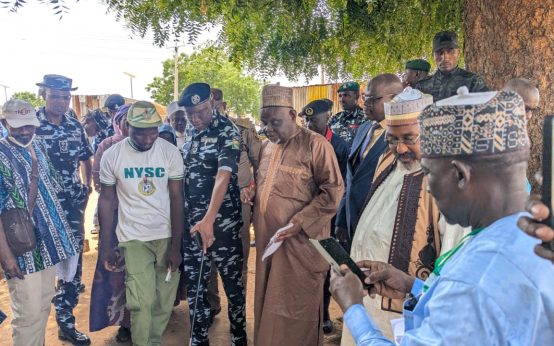 Kano Police, INEC Monitor Dawakin Kudu/Warawa By-Election
  Governor Radda Warns Against Diversion of 100,800 Bags of Fertilizer Under Renewed Hope FISP
  Former Head of State Calls for National Unity to Tackle Insecurity in Nigeria
  Hon. Christopher Audu Manship Wins Second-Highest National Award in Abuja, Dedicates Honour to Gov. Mutfwang, Constituents
  Massive Voter Turnout Marks Peaceful Dawakin Kudu/Warawa House of Representatives
  Over 13,000 Sickle Cell Patients Receive Free Healthcare Under Abba Care Scheme in Kano
  Kano Police, INEC Monitor Dawakin Kudu/Warawa By-Election