

 Admin
Admin Dr. Auwalu Halilu
Co-Chair (CSOs)
Kano State Accountability Forum on Education (K-SAFE)
68,159
2025 candidates with ≥5 credits incl. English & Mathematics
74,413
2026 candidates with ≥5 credits incl. English & Mathematics
+9.2%
Approximate year-on-year increase
The release of the 2026 Senior School Certificate Examination results by the National Examinations Council (NECO) provides an important moment for reflection on the direction of education in Kano State. For the second consecutive year, Kano recorded the largest absolute number of candidates nationwide who obtained at least five credits, including English Language and Mathematics.
In 2025, Kano recorded 68,159 candidates meeting this benchmark. In 2026, the figure increased to 74,413 – an additional 6,254 successful candidates, representing approximately 9.2 per cent year-on-year growth. The 2026 figure placed Kano ahead of Lagos, with 72,496 candidates, and Oyo, with 55,543 candidates.
This achievement deserves celebration, but it also deserves careful analysis. The relevant comparison is the number of successful candidates; Kano has one of Nigeria’s largest school-age populations and examination cohorts. The significance lies in the scale, tens of thousands of young people are attaining a credential that can open pathways to tertiary education, technical and vocational education, employment and further training.
Educational outcomes are rarely produced by a single intervention. They emerge from the interaction of financing, teachers, infrastructure, learning materials, school leadership, assessment, family support, community participation and accountability. Kano’s recent performance should therefore be viewed within the wider pattern of sustained education investment and reform.
One of the defining decisions of the current administration was the declaration of a State of Emergency on Education in June 2024. The declaration acknowledged deep structural challenges including inadequate classrooms, teacher shortages, overcrowding, poor learning environments, large numbers of out-of-school children and shortages of teaching and learning materials.
The education emergency created a platform for accelerated interventions in classroom construction and renovation, teacher recruitment, school furniture, textbooks and learning materials, school uniforms, examination support and system strengthening. Its importance lies not only in individual projects but in the political signal that education is a central development priority.
Kano’s budgetary pattern is one of the clearest indicators of the priority attached to education. In 2024, education accounted for approximately 29.95 per cent of the state budget. In 2025, the allocation rose to about N168.35 billion, representing roughly 31 per cent of the budget. For 2026, approximately N405.35 billion was allocated to education, again around 30 per cent of the state’s overall spending plan.
Consistency across successive budget cycles matters. Education transformation requires predictable financing because children remain in school for many years, teachers require continuous professional development, infrastructure requires maintenance and learning reforms take time to mature.
However, budget allocation must not be treated as the final measure of success. Sustainability requires transparent reporting on releases, actual expenditure, procurement, outputs and learning outcomes. Kano should increasingly publish the full chain from budget commitment to classroom-level impact.
For low-income families, examination fees can determine whether a young person completes secondary education with a recognised credential. The government’s examination sponsorship therefore represents both an education intervention and a social-protection measure.
In 2025, the state approved more than N3 billion for examination registration support covering approximately 141,000 students across qualifying examinations, including WAEC, NECO, NABTEB and NBAIS. Additional support was provided to eligible students in community and voluntary schools.
In 2026, the intervention expanded substantially, with approximately N4.4 billion committed to examination fees for more than 150,000 students. By absorbing these costs for eligible learners, government reduces the risk that poverty will become the final barrier between years of schooling and an examination certificate.
The policy is particularly important in a state with a very large population and significant numbers of economically vulnerable households. Examination sponsorship should therefore be viewed as an equity measure: it widens participation and helps ensure that a student’s family income does not alone determine access to final certification.
Classrooms and learning materials are essential, but teachers remain the human engine of the education system. Kano has pursued large-scale teacher recruitment and absorption as part of its reforms.
In September 2025, the state announced the absorption of 4,315 former BESDA volunteer teachers into permanent and pensionable employment. In July 2026, appointment letters were presented to 8,588 teachers, comprising 4,900 newly recruited and trained teachers and 3,688 BESDA teachers.
These numbers matter because teacher shortages affect class size, subject coverage, instructional time and learning outcomes. Recruitment, however, must be matched by effective deployment. Rural communities, underserved LGAs, girls’ schools and schools with shortages in English, Mathematics, science and technology subjects require particular attention.
Continuous professional development is equally important. Kano’s work around the revised competency-based basic education curriculum should be sustained so that teachers are equipped to develop critical thinking, creativity, digital literacy, entrepreneurship, civic values and problem-solving rather than relying only on rote learning.
The condition of a school shapes attendance, dignity, safety and concentration. Kano has therefore invested in classroom renovation, construction, furniture and other school-level inputs.
Reported interventions include more than N1.9 billion for renovation of primary school classrooms and approximately N2.925 billion for additional classroom construction. In 2024, the government also announced the distribution of 73,800 three-seat desks across the 44 local government areas.
Large-scale provision of school uniforms has complemented these investments. Reports indicated distribution of hundreds of thousands of uniforms to pupils, while a further N1.148 billion was approved in 2025 for free uniforms for Primary One pupils in the 2025/2026 academic session.
These apparently simple inputs matter. A uniform, a desk, a textbook or a safe classroom can be decisive for a child from a low-income household. The next challenge is to ensure that infrastructure and materials are equitably distributed, properly maintained and connected to measurable improvements in attendance and learning. Kano’s education challenge is too large for state resources alone. Sustainable transformation requires effective collaboration with federal institutions, development partners, civil society, communities and the private sector.
UBEC-supported interventions have contributed classrooms and teacher support across Kano, while programmes such as the UK-supported Partnership for Learning for All in Nigeria (PLANE), UNICEF, Plan International, Save the Children have supported education planning, foundational literacy and numeracy, teacher development, data generation and teaching and learning materials.
The most sustainable partnerships are those that strengthen government systems rather than create parallel structures. As externally funded programmes close, Kano should institutionalise effective approaches, retain trained personnel, budget for successful interventions and preserve the data and monitoring systems developed through partnerships.
The movement from 68,159 successful candidates in 2025 to 74,413 in 2026 represents 6,254 additional young people meeting the five-credit benchmark including English and Mathematics. That is approximately 9.2 per cent growth in one year. These are not merely examination statistics. Each number represents a student, a family, teachers, school leaders and communities. At Kano’s population scale, even modest improvements in system effectiveness can affect tens of thousands of young people.
Education policy in Kano must therefore be understood not only as social-sector spending but as human-capital investment, poverty reduction, economic development and social stability. A young population becomes a demographic dividend only when young people acquire knowledge, skills, values and opportunities.
NECO performance is an important indicator, but examination success should not become the final objective of education. Kano needs young people who can read with comprehension, use mathematics, think critically, communicate effectively, solve problems, use technology, work collaboratively, create enterprises and participate responsibly in society.
The education strategy should therefore connect basic and secondary education more deliberately with technical and vocational education, tertiary education, entrepreneurship, digital skills, innovation and labour-market opportunities. The long-term test of education investment is not only how many candidates pass an examination, but how effectively graduates convert education into productive lives and social contribution.
Governor Abba Kabir Yusuf’s education policies have received national recognition, including awards citing budgetary prioritisation, the education emergency, school renovation, learning materials and teacher recruitment. Such recognition can encourage public leadership. The strongest evidence of reform is children reading with comprehension, improved numeracy, girls remaining in school, children with disabilities accessing inclusive education, competent and motivated teachers, safe schools, reduced out-of-school numbers and graduates possessing useful knowledge and skills.
Recommendations for Sustainability
Kano State Government should develop a medium- and long-term financing framework that protects education investment while shifting attention from allocation alone to releases, expenditure efficiency and value for money.
Ministry of education should publish an annual Kano education performance report by LGA on enrolment, attendance, retention, transition, completion, learning outcomes, teachers, infrastructure, WASH, school safety, gender, disability inclusion, examinations and financing.
Government should also analyse NECO results beyond absolute numbers to track percentage pass rates, LGA and school performance, subject-level outcomes, gender gaps, urban-rural differences and year-on-year trends.
Government should also protect examination sponsorship for indigent learners so as to retain the programme with transparent eligibility criteria and a digital beneficiary database to improve targeting, prevent duplication and track progression.
Strengthen teacher quality as well as teacher numbers as institutionalize continuous professional development, mentoring, classroom observation and data-driven deployment, particularly for underserved rural communities and critical subjects.
Create incentives for rural teacher deployment , consider accommodation, transportation support, career incentives and other measures that make difficult-to-reach postings more attractive and sustainable.
Always measure learning before the final examination by supporting the qualifying examination as a regular state-level assessments in literacy, numeracy, science and other competencies at key stages so learning gaps are detected and corrected early.
Create a preventive maintenance culture which require simple school maintenance plans involving education authorities, school leadership, SBMCs and communities so renovated facilities remain functional.
Strengthen and support SBMCs to contribute to enrolment, attendance, safeguarding, maintenance, school safety and local accountability.
Intensify action on Out of school children by using ward- and household-level data to identify who is out of school, why they are out, where they live and what tailored intervention is required.
Prioritize girls education through sustain scholarships, re-entry opportunities, safe learning environments, WASH, female teacher deployment and community engagement to address gender-specific barriers.
Strengthen school safety and resilience b institutionalizing early-warning systems, school safety teams, safeguarding, emergency preparedness, community intelligence and collaboration with relevant security institutions.
Deepen digital education by expanding access to devices, connectivity, digital learning resources and teacher digital competence, including in rural schools.
Expand credible TVET and skills pathways to ensure secondary-school leavers have strong pathways into technical education, apprenticeships, entrepreneurship and employable skills.
Establish an education research and innovation hub to connect government, universities, civil society and development partners to evaluate reforms, generate evidence, test innovations and translate research into policy.
Strengthen independence accountability by Supporting civil society, professional bodies, media and platforms such as K-SAFE, CSACEFA, OGP, GEP to monitor commitments, expenditure and outcomes constructively.
Government, Ministry of education and its parastatals should celebrate teachers, students and schools by recognizing academic excellence, professional commitment, integrity and innovation to build a culture that values educational achievement.
In Conclusion the emerging Kano education story is encouraging. In 2025, 68,159 candidates obtained five credits and above including English and Mathematics in NECO. In 2026, the number rose to 74,413 – 6,254 additional successful young people in one year. Behind the figures is a wider pattern of public investment education receiving around 30 per cent of successive budgets; billions of naira committed to examination sponsorship; thousands of teachers recruited or absorbed; classrooms renovated and constructed; desks, uniforms and learning materials provided; and partnerships strengthened with federal institutions and development organisations.
These investments provide an enabling environment for improved participation and learning outcomes. At the same time, the NECO result should not be attributed to any single intervention or individual. Students, teachers, parents, school leaders, communities, education agencies, federal institutions and development partners all contribute to educational outcomes.
The stronger lesson is that sustained political prioritisation and public investment can create conditions in which progress becomes possible. Governor Abba Kabir Yusuf and the Kano State Government deserve recognition for placing education prominently within the state’s development agenda, while teachers, parents, communities and, above all, the students deserve recognition for converting opportunity into achievement.
The second consecutive NECO achievement should therefore send two messages. celebration that progress is being recorded, and responsibility to sustain and deepen that progress.
Kano’s ambition must ultimately be larger than leading a national table in absolute candidate numbers. It should be a state where every child enters school, every child learns, every learner is safe and included, every teacher is competent and supported, and every young person leaves education with the knowledge, character and skills needed to build a productive life.
Education transformation is not achieved in one budget year, one examination cycle or one administration. It is a generational project. When a society consistently invests in its children, strengthens its teachers, supports its schools and holds its institutions accountable, it is not merely funding education , it is investing in its future. Congratulation KANAWAS
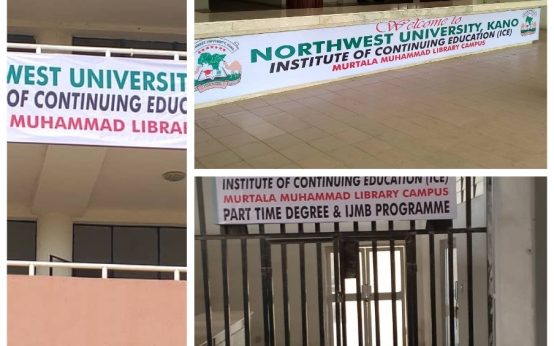 Transferring the Ownership of Murtala Muhammad Library Complex to Northwest University Kano: A Rational Decision by the Kano State Government
 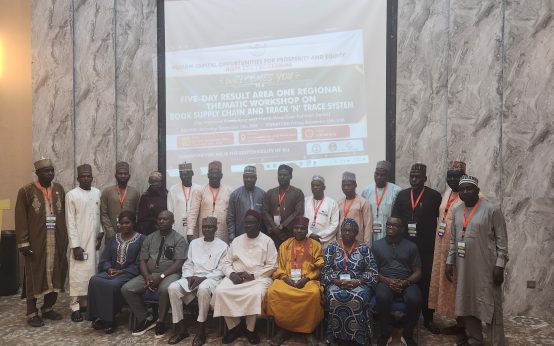 HOPE- EDU :UBEC Tasks States on Timely Delivery of Learning Materials
 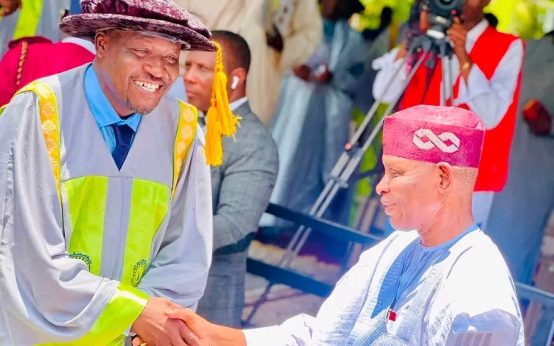 Why We Established Al-Istiqama University in Rural Kano, by Kawu Sumaila
  FG Sets Nov. 15 Deadline for States on HOPE-EDU Deliverables
  Kaduna Government Reaffirms Commitment to Education
  Prof Gwarzo Nominated for Lifetime Achievement Award in Education, University Development and Philanthropic Impact by The iDevPro-African Institute
  Rabid dog bites 18 in Kano community
  FGN/IFAD- VCDP, Taraba govt. move to boost personal hygiene for people with special needs
  Kano Govt Suspends Durbar, Horse-Riding Activities Over Security Concerns
  Guwor: Tinubu’s Reforms Attracting Support Across Nigeria
  Jigawa Hisbah Arrests Eight Over Alleged Homosexual Acts
  Kano Govt Approves N144bn For Development Projects