

 Admin
Admin
By DIG Mohammed Usaini Gumel,(Rtd)
The renewed national debate on state policing has sparked intense discussions. Supporters see it as a solution to Nigeria’s worsening security challenges. Critics, however, fear political abuse and threats to national unity. Given these differing views, it is important to understand the true constitutional position in the current proposals before the National Assembly.
An examination of the Constitution of the Federal Republic of Nigeria (Sixth Alteration) Bill, 2026 (SB. 1055), along with the Policy and Legal Advocacy Centre (PLAC) analysis of the earlier House Bill (HB. 617), shows that the proposed framework is neither a full transfer of policing powers to the states nor a continuation of the current centralized system. Instead, it introduces a cooperative federal policing model.
This model balances state autonomy with national standards and constitutional safeguards.
The first key point is that the Federal Police will not be abolished. The proposal creates a Federal Police Service and allows State Police Services to operate alongside it. The Federal Police will continue to handle federal responsibilities.
These include counter-terrorism, cybercrime investigations, border security, organized crime, inter-state offences, and the protection of federal institutions and assets.
It is also important to note that state policing is not compulsory. States that lack the financial or institutional capacity to establish their own police services can continue to rely entirely on the Federal Police Service.
In simple terms, the amendment gives states a choice, not an obligation, to create their own police organizations.
The proposed framework sets strict conditions before a State Police Service can begin operations.
A state must pass its own enabling law, establish the required institutions, and obtain certification that it meets nationally defined minimum standards. These standards will cover recruitment, training, vetting, discipline, firearms management, use of force, accountability systems, and criminal information management.
One of the most debated issues is the possibility of federal interference in state policing. The Senate Bill addresses this concern by limiting federal intervention to exceptional situations. Such intervention may occur if there is an actual or imminent breakdown of public order. It may also happen if a governor requests assistance, if a State Police Service becomes unable to function, if there is evidence of widespread violations of fundamental rights, or if threats extend beyond state borders and affect national security.
Any federal intervention must be temporary, necessary, and proportionate. It must also be open to judicial review. The President must authorize it in writing.
Notice must be given to the Governor, the State House of Assembly, the National Police Council, and the National Assembly. In addition, such intervention cannot dissolve a State Police Service or suspend democratic institutions, except as allowed by existing constitutional provisions.
The framers of the Bill have also addressed concerns about possible misuse by governors. The proposed safeguards clearly prohibit governors from directing State Commissioners of Police to target political opponents, parties, associations, or groups outside the law.
Commissioners who believe a directive is unlawful or violates national standards can seek review through the appropriate Police Service Commission or the courts.
To strengthen institutional independence, the proposed amendments provide security of tenure for both the Inspector-General of Police and State Commissioners of Police.
Their removal would require clear reasons and a fair hearing. It would also need recommendations from the National Police Council and approval by a two-thirds majority of the relevant legislature. These measures reflect widely accepted international standards in democratic policing.
Another important feature of the framework is the clear limit on federal control over State Police Services. While the National Assembly will set national minimum standards, it cannot exercise routine control over appointments, promotions, transfers, suspensions, dismissals, or operational decisions within State Police Services.
The only exception is during constitutionally approved interventions. This approach preserves state autonomy while ensuring consistent professional and ethical standards nationwide.
The fantastic PLAC analysis correctly notes that the proposed model does not create a fully independent state policing system. Instead, it includes elements of federal oversight. These elements address concerns about funding, accountability, human rights protection, and potential political misuse.
The goal is to decentralize policing without weakening national unity or constitutional order.
Viewed objectively, the proposed amendment aims to balance local responsiveness with national integrity. It seeks to bring policing closer to communities while maintaining safeguards against abuse.
It also protects the shared security interests of the Federation.
In essence, Nigeria is not moving toward two competing police systems. Rather, it is moving toward a cooperative federal policing arrangement. This model recognizes the need for local control of security issues while preserving constitutional mechanisms that protect democracy, human rights, and national unity.
The success of this initiative will depend not only on constitutional provisions but also on the strength of institutions. It will also depend on commitment to professionalism and the political will to uphold the rule of law. Like any major reform in a democratic society, state policing should be judged not only by fears but also by the safeguards in place and the practical benefits it can bring to the security and welfare of Nigerians.
 From Corruption to Cannabis: As Governor Yusuf Puts Muhiyi, Anti-Graft Czar, in Charge of Kano Drug Crackdown
 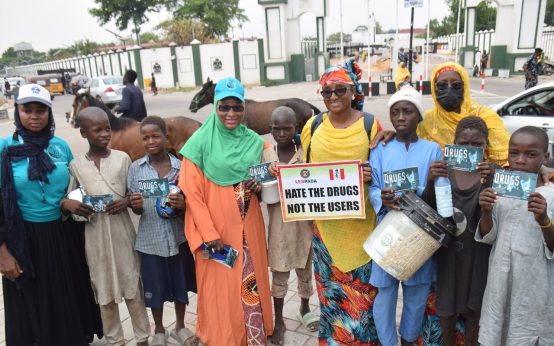 NAWOJ, NGOs take anti-drug campaign to Kano streets
  Katsina Secures Fresh $8m World Bank Support
  MEMBER SUMAILA/ TAKAI DESCRIBES GOVERNOR ABBA KABIR YUSUF AS A WORKAHOLIC LEADER
  Investing in Community Health Key to Northern Nigeria’s Development – Expert
  Sen. Mohammed Sani Musa Present as Senate Passes Landmark State Police Bill for Second Reading
  From Corruption to Cannabis: As Governor Yusuf Puts Muhiyi, Anti-Graft Czar, in Charge of Kano Drug Crackdown
  NAWOJ, NGOs take anti-drug campaign to Kano streets
  Katsina Secures Fresh $8m World Bank Support
  MEMBER SUMAILA/ TAKAI DESCRIBES GOVERNOR ABBA KABIR YUSUF AS A WORKAHOLIC LEADER
  Investing in Community Health Key to Northern Nigeria’s Development – Expert
  Sen. Mohammed Sani Musa Present as Senate Passes Landmark State Police Bill for Second Reading