
 Admin
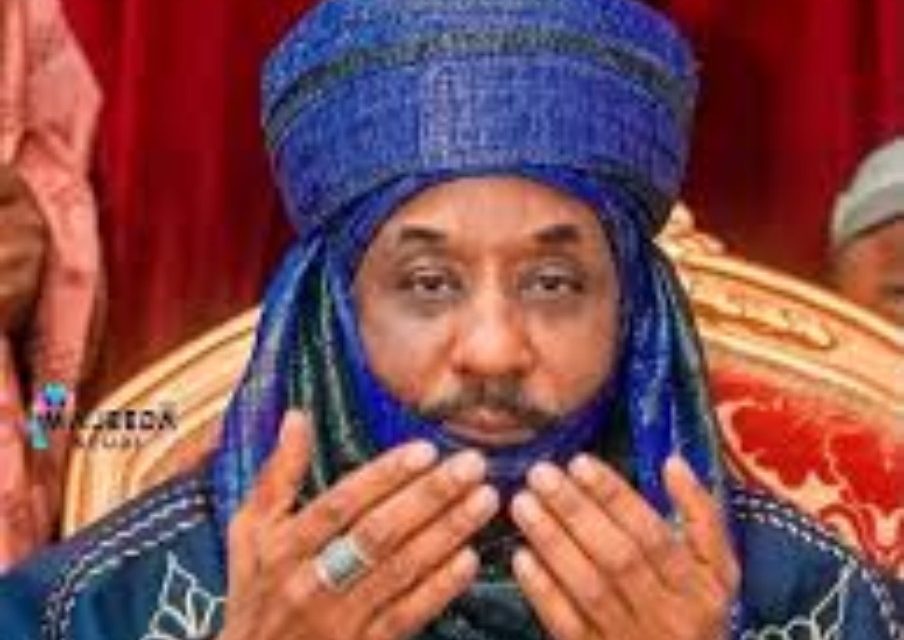
Admin Prof. Farooq Kperogi’s insightful intervention, Sanusi and the betrayal of El-Rufai,” presents a compelling defense of the Emir of Kano against popular accusations of ingratitude. Kperogi’s central thesis—that “you cannot sensibly demand symmetrical repayment from people situated in radically asymmetrical circumstances”—is both sociologically sound and political realistic.
However, an analysis of Emir Sanusi II’s extemporaneous address at the Second Liberty Symposium in Abuja (June 16, 2026) reveals that the premise of Sanusi’s complete “silence” or total retreat into self-preservation is factually flawed.
Sanusi has not been silent. Rather, he has spoken in the precise currency available to a traditional sovereign: through institutional critique, public intellectual pushback, and systemic warnings regarding state overreach.
An examination of the 5-point thesis delivered by Emir Sanusi II at the Shehu Musa ’Yar’adua Center exposes the flaw in the “ingratitude” narrative, demonstrating how Sanusi’s public posture aligns with, yet transcends, El-Rufai’s immediate travails.
Kperogi notes that El-Rufai stood by Sanusi in March 2020 using the full, unyielding weight of gubernatorial immunity and executive power. Yet, Sanusi’s address highlights that his critique of Northern governance—and his refusal to bow to executive vanity—was already a shared, high-risk endeavor between both men long before the current crisis.
Recalling the 2020 forum in Kaduna celebrating El-Rufai’s 60th birthday, Sanusi stated: “North needs to tell itself the truth and be honest enough to listen to the truth. Leaders in the North are used to sycophancy… no Northern leader should be happy because of the state of the Northern states, of out-of-school children, maternal mortality, etc. Weeks later, el-Rufa’i went to the Villa and was told that he’s given a platform to me to abuse the President.”
Sanusi highlights a fundamental structural disease in Nigerian governance: the culture of courtier sycophancy. By explicitly comparing appointed ministers to praise-singers (“There’s no difference between ministers and Rarara”), Sanusi reminds the political class that his refusal to play the silent sycophant is not a personal betrayal of El-Rufai, but a lifelong intellectual stance. El-Rufai himself bore the political heat at the Presidential Villa for creating a platform for Sanusi’s candor in 2020. Expecting Sanusi to suddenly adopt the obsequious silence of a courtier now would violate the very intellectual ethos that bound the two men together in the first place. He notes: “ the day I stopped telling the truth is the day I’m dead.”
The core of Kperogi’s argument rests on the assumption that Sanusi cannot challenge the federal apparatus currently prosecuting El-Rufai because Sanusi holds “no executive power.” While Sanusi cannot issue an executive order or drive to an ICPC facility to break El-Rufai out, his Liberty Symposium address proves that he has used his symbolic pulpit to launch a direct, highly sophisticated critique against the federal government’s use of judicial machinery.
“In 1940, Gramsci… [argued that] CSOs, the judiciary, police, religious leaders, traditional rulers, and the press have roles to play. The moment you want to be a hegemonic state, these elements must be part of the state.
All stakeholders must be on board. The concept of checks and balances disappears. Today, if the executive asks the legislature to jump, they would ask how high. The judiciary is gradually…”
This is not the posture of a quietist hiding behind royal robes. Sanusi publicly diagnosed the exact mechanism being deployed against El-Rufai: the co-optation of judicial and investigative bodies to construct a totalizing, uncheckered executive hegemony. By naming the erosion of judicial independence, Sanusi attacked the legitimacy of the legal architecture holding El-Rufai, fulfilling the maximum duty an intellectual monarch can perform without stepping directly into party politics.
The most fatal blow to the claim that Sanusi has “abandoned” El-Rufai lies in Sanusi’s direct, unvarnished mention of El-Rufai’s case during his June 16 address—a detail omitted from popular social media commentary.
Sanusi stated explicitly before the national media: “el-Rufa’i is not being tried for murder, treason, or coup. He’s entitled to freedom until proven guilty.”
This statement is a direct public rebuke of the oppressive bail conditions and prolonged remand imposed on the former governor. For an Emir whose throne was restored through delicate state political alignments (and whose governor, Abba Kabir Yusuf, formally aligned Kano with the ruling APC in January 2026), making this statement in Abuja was a high-wire political act.
Sanusi utilized his platform to demand fundamental rights for El-Rufai, explicitly challenging the state’s attempt to treat administrative/financial probes as capital offenses.
Kperogi correctly highlights the existential precarity of Sanusi’s throne, noting that “if Sanusi were to be deposed this time… there would be no El-Rufai to save him.” Sanusi himself is acutely aware of this transience, but rather than letting it muzzle him, he turned it into a philosophical warning directed at the current custodians of federal power:
“Look at the past and people who have acted that way; and the way they ended. There’s God. Today it is el-Rufa’i, tomorrow it is Sanusi; and the next day it will be you. People will leave that office whether they like it or not. So, the idea of a hegemonic state has a limit. People become law unto themselves.”
Here, Sanusi establishes a moral equivalence between El-Rufai’s current plight and the inevitable fate awaiting today’s power brokers. By declaring “Today it is el-Rufa’i, tomorrow it is Sanusi; and the next day it will be you,” the Emir contextualized El-Rufai’s detention not as an isolated personal tragedy, but as part of a recurring cycle of state high-handedness that eventually consumes its own authors.
Prof. Kperogi is correct in asserting that public sentiment wrongly expects symmetrical, executive-style intervention from a non-executive, politically vulnerable monarch. However, the transcript of the Second Liberty Symposium demonstrates that Emir Sanusi II has not retreated into cowardly self-preservation.
El-Rufai’s rescue of Sanusi in 2020 was an act of executive power, performed from the safety of gubernatorial immunity. Sanusi’s defense of El-Rufai in 2026 is an act of moral authority, performed from the edge of a precarious throne.
Sanusi did not offer El-Rufai empty praise or political theater; he offered him the only defense that truly matters in a constitutional republic: a public, intellectual, and theological indictment of the hegemonic state. To confuse Sanusi’s refusal to engage in partisan brawling with “ingratitude” is to misunderstand both the nature of traditional authority and the specific, high-risk courage of the speech he delivered in Abuja
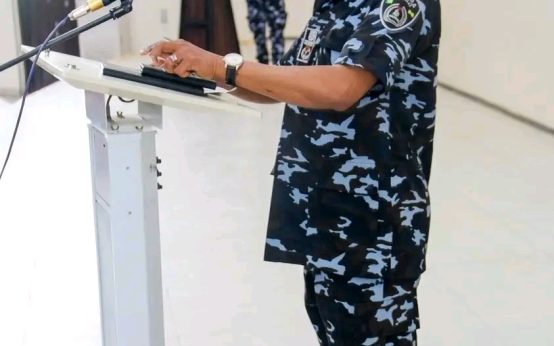 AIG CHARGES POLAC GRADUATING CADETS TO RESPECT HUMAN RIGHTS, RULE OF LAW
 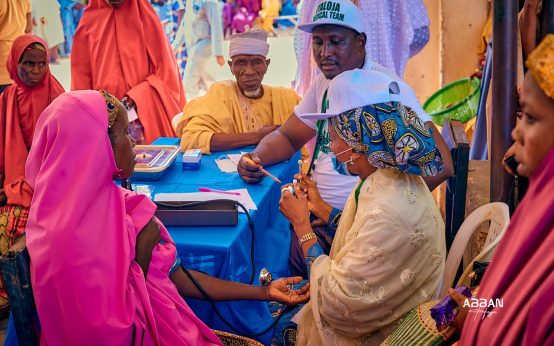 Medical outreach benefits 2,000 residents in Katsina
  Senator Uba Sani Dual 4 -DG KADRARA Distributes 2,100 Books to 700 Pupils in Zaria
  2027: Arewa Fully Ready To Re-elect Tinubu – Musa Illiyasu Told TSG
  Sen. Barau loses key supporters to NDC in Kano
  Gombe 2027: Dr Jamil Gwamna Ready for Debate, Says Spokesman
  Gov. Yusuf Mourns former MD KNARDA Malam Sani Shawai, condoles with Family
  Azman Group Set to Commission New Filling Station in Abuja
  CITAD trains women to tackle cyber threats
  Troops capture terrorist commanders linked to killing of Maj.-Gen. Rabe in Katsina
  Court nullifies Pantami’s ticket, orders fresh PDP gov’ship primary in Gombe
  Firm Prosecution of Drug Offenders Key to Curbing Social Vices, Says JIBWIS Chairman Abdullahi Pakistan