
 Admin
Admin
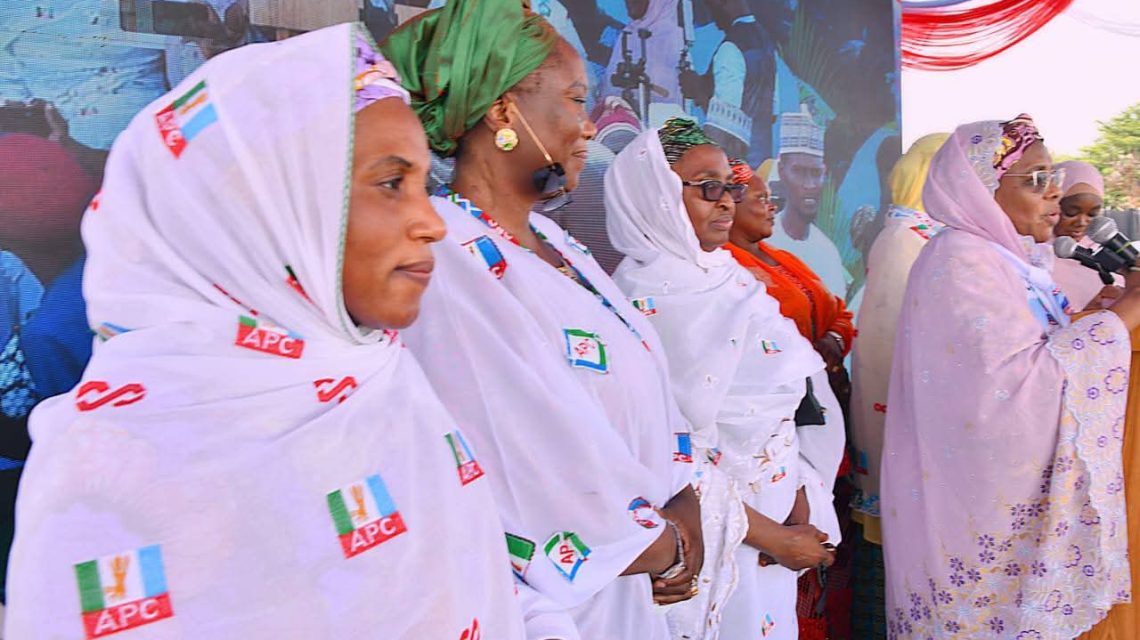
For thousands of women in Gombe State, the Gombe Women’s Unity and Progress Summit was more than an afternoon gathering. No doubt, it offered a platform for reflection, connection and a renewed conversation about the place of women in the social and economic future of the state.
At the heart of the gathering was Dr Zaynab Gwamna, founder and chief executive of the Family Trust and Care Foundation, whose initiative brought together more than 6,000 women from across the state under the theme, “Stronger Voice, United Women, Greater Impact.”
Interestingly, the scale of the gathering underscored an increasingly important reality in Gombe: women constitute a formidable social force whose contribution to the state’s development cannot be treated as peripheral.
For Gwamna, however, the summit was not simply about numbers. It was an opportunity to create a space where women could articulate their aspirations, examine the obstacles confronting them and consider how collective action could translate their resilience into tangible progress.
Dr Zaynab Gwamna described the gathering as a defining moment for discussing where Gombe women want to be in the years ahead, stressing that the future of the state must also be measured by the opportunities available to its women and girls.
Her message was particularly directed at young women, whom she urged to envision futures beyond the limitations imposed by circumstance. She also drew attention to widows and other vulnerable women who, she said, require more than sympathy but meaningful opportunities to rebuild their lives with dignity.
“We want a Gombe for our daughters where their voice matter,” she said, capturing the broader philosophy behind the initiative.
Gwamna’s intervention also sought to challenge a mindset she identified as one of the barriers to women’s advancement—the perception that another woman’s success represents a threat rather than an opportunity for collective growth.
She urged women to replace rivalry with solidarity, arguing that the progress of one woman should become a source of encouragement and a pathway for another.
“Women must help each other, mentor others,” she said, while calling on participants to build relationships that could extend beyond the summit and produce practical support for women within their communities.
For Gwamna, such solidarity must also be rooted in values. She reminded the women that faith should be expressed through genuine compassion and service to others rather than treated merely as an identity or profession.
Her appeal was therefore as much about changing attitudes as it was about securing material opportunities. Women, she suggested, must refuse to allow fear to dictate the boundaries of their ambitions.
“Women must refuse to allow fear define their future,” she said.
The message resonated with the broader work associated with the Family Trust and Care Foundation, which has positioned community support and the empowerment of vulnerable groups as important components of its intervention efforts.
Rather than presenting women as passive recipients of assistance, Gwamna’s approach placed emphasis on their capacity to become agents of change—women capable of identifying those in need, extending a helping hand and creating opportunities for others to discover their own potential.
She urged the participants to connect with one another, identify vulnerable people around them and look for practical ways of supporting them, insisting that every woman possesses the ability to open a door for someone else.
That philosophy gives the summit significance beyond the event itself. If sustained, the network created among thousands of women could become a platform for mentorship, mutual support, entrepreneurship and community mobilisation.
The gathering also drew goodwill from prominent figures, including United Nations Deputy Secretary-General Amina Mohammed, who encouraged Gombe women to translate their God-given potential into meaningful contributions to nation-building.
Her message reinforced one of the central themes of the summit: that empowering women is not merely a question of individual advancement but an investment in families, communities and the wider society.
Gombe State Commissioner for Humanitarian Affairs, Hajiya Aishatu Ahmed, said no fewer than 6,000 women were invited to the summit, reflecting the breadth of the initiative.
She also encouraged the women to build bridges and remain supportive of the governing political structure, expressing optimism that further benefits would come from the administration of President Bola Ahmed Tinubu and Governor Inuwa Yahaya.
For Gwamna, the success of the gathering was also connected to the environment in which women are allowed to organise, speak and pursue opportunities. She acknowledged the support of Governor Yahaya and his wife, as well as her husband, Dr Jamilu Isiyaku Gwamna, for enabling her to pursue initiatives aimed at touching lives.
Yet, the summit was not without political controversy. The controversy notwithstanding, the dominant narrative emerging from the gathering was the renewed emphasis on women’s solidarity and agency.
For Gombe, where women remain central to family welfare, informal commerce, agriculture, education and community life, initiatives that place their aspirations at the centre of public discussion could have consequences far beyond the walls of a conference venue.
Gwamna’s intervention is therefore notable not simply because thousands of women attended her summit, but because of the question she placed before them: what kind of future do Gombe women want, and what are they prepared to do collectively to build it?
The answer, judging from her message, cannot rest entirely on government or political leaders. It must also emerge from women themselves—through mentorship, compassion, enterprise, courage and the willingness to create opportunities for others.
The summit may eventually be remembered less for the speeches delivered that afternoon than for the relationships and initiatives that grow from it.
For Gwamna, the real measure of the intervention may ultimately lie in whether a young woman finds the confidence to pursue her career, whether a widow regains economic independence, whether one woman mentors another, or whether a vulnerable person receives help from someone who otherwise might have looked away.
That is the larger promise embedded in the idea of a stronger voice and a more united generation of women: that individual progress can become collective impact, and that the empowerment of women can increasingly become part of the development story of Gombe State.
 Police Arrest Two Suspects Over Fatal Stabbing in Kano
  Kaduna State Tertiary Institutions’ Unions Demand 30% Outstanding CONPCASS/CONTEDISS, Other Allowances
  Waiya Inaugurates Tinubu/Abba Grassroots Mobilisation Association in Kano
  Governor Radda Flags Off CCT, School Grants for 5,075 Beneficiaries, 66 Schools in Katsina
  45 Days. 200 Raids. 200 Convictions. Gov Abba, Muhiyi Set National Benchmark
  Kano Task Force on Drugs Secures Nine-Year Jail Terms for Suppliers of Intoxicants to Underage Children
  Police Arrest Two Suspects Over Fatal Stabbing in Kano
  Kaduna State Tertiary Institutions’ Unions Demand 30% Outstanding CONPCASS/CONTEDISS, Other Allowances
  Waiya Inaugurates Tinubu/Abba Grassroots Mobilisation Association in Kano
  Governor Radda Flags Off CCT, School Grants for 5,075 Beneficiaries, 66 Schools in Katsina
  45 Days. 200 Raids. 200 Convictions. Gov Abba, Muhiyi Set National Benchmark
  Kano Task Force on Drugs Secures Nine-Year Jail Terms for Suppliers of Intoxicants to Underage Children