
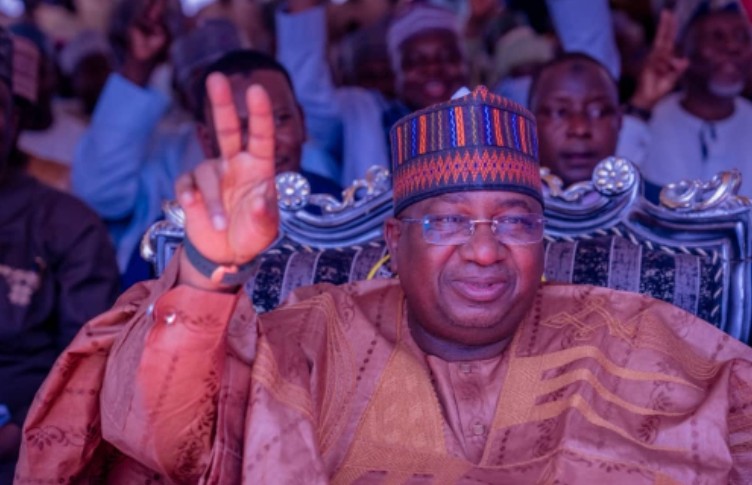
 Admin
By Ibrahim A. Jombali
Naturally, leadership goes beyond taking a position. It Is not about occupying the seat of power. More seriously and more importantly, it is about providing direction, translating promises into tangible results and improving the lives of the people. The true measure of governance lies not in political rhetoric or the celebration of projects, but in the enduring impact of public policies, the strength of institutions and the opportunities created for ordinary citizens.
As Kebbi State approaches the 2027 governorship election, the conversation should go beyond political sentiments and partisan calculations. The more important question is whether the state should sustain its current development trajectory or risk interrupting projects and policies that are still taking shape. For those who believe that continuity is essential to development, the administration of Comrade Dr Nasir Idris, Kauran Gwandu, presents a compelling case for a second term.
Since assuming office on May 29, 2023, Governor Idris has pursued an agenda spanning education, healthcare, infrastructure, agriculture, workers’ welfare, security and economic empowerment. While no administration can reasonably claim to have resolved every challenge confronting its state within a single tenure, the governor’s record provides a basis for assessing the progress made and determining what should follow.
The argument for continuity is not necessarily an endorsement of perfection. It is a recognition that development is a process, not an event.
Kebbi cannot afford to abandon its development ambitions at a time when investments are being made and major projects are underway. Roads take time to connect communities, educational reforms require years to produce measurable outcomes, and economic policies need consistency before their benefits become fully visible. The disruption of such processes can impose costs that go beyond politics.
One area where the administration’s performance deserves attention is workers’ welfare. The implementation of a ₦75,000 minimum wage, alongside payments towards outstanding gratuities, death benefits and other retirement obligations, represents an important intervention in the welfare of public servants.
For a state whose public institutions depend heavily on the commitment of its workforce, these measures are significant. Workers who are adequately motivated are better positioned to deliver effective public services. Government, after all, cannot function efficiently while neglecting those responsible for its daily operations.
Education remains another critical pillar of the administration’s development agenda. Investments in school infrastructure, furniture, instructional materials and digital learning facilities indicate an effort to address longstanding deficiencies in the sector.
The distribution of Android devices to 2,014 head teachers and more than 4,000 tablets, alongside investments in school furniture, reflects an attempt to introduce technology and improve learning conditions.
Yet, the real test of educational reform lies beyond the number of devices distributed or classrooms renovated. Kebbi must confront the fundamental questions of teacher quality, learning outcomes, school attendance and access to education, particularly in rural communities. The desire of the Kaura administration is to ensure practical and functional education throughout the nooks and crannies of the Kebbi State community.
A child who attends school without acquiring the necessary skills has not benefited sufficiently from public investment. The next phase must therefore focus on ensuring that infrastructure and technology translate into improved literacy, numeracy and educational attainment.
This is where continuity becomes important: the opportunity to move from providing facilities to demonstrating measurable educational outcomes.
Infrastructure, too, remains central to Kebbi’s economic prospects. The administration has pursued road projects intended to improve connectivity between communities, facilitate commerce and reduce the isolation of underserved areas.
Roads such as the Kalgo/Bunza Unguwar Jeji–Diggi–Maidahini and Birnin Lafiya–Gulma–Natsini routes underscore the importance of rural connectivity. While some projects have been completed and others remain ongoing, their eventual value will depend on timely completion, quality construction and adequate maintenance.
A road is not simply an engineering project. For a farmer, it is a route to market. For a pregnant woman, it may be the difference between reaching a health facility on time and being stranded. For a trader, it can reduce transportation costs and expand access to customers.
The economic benefits of infrastructure are often understated because they are not always immediately visible. Yet, they are among the most enduring investments a government can make. It is happening positively in Kebbi already.
Agriculture presents an even greater opportunity for Kebbi. The state remains one of Nigeria’s important agricultural centres, with enormous potential in rice production, livestock, fisheries and other agricultural activities.
But agricultural prosperity cannot be sustained through seasonal interventions alone. Farmers require improved seeds, fertilisers, irrigation facilities, storage infrastructure, affordable financing, processing facilities and dependable markets.
The next phase of governance should therefore prioritise agricultural value chains, rural industrialisation and the expansion of opportunities for smallholder farmers. The objective must be to transform agriculture from subsistence activity into a reliable source of wealth, employment and food security.
For a state with Kebbi’s agricultural blessing and advantages, the opportunity is too significant to be neglected.
Healthcare is another sector where continuity of policy and investment is essential. Hospitals, medical equipment, trained personnel and access to essential services are not luxuries. They are fundamental responsibilities of government.
The people of Kebbi deserve a healthcare system in which access to quality medical attention is not determined by where they live or how much money they have. Sustaining investments in health facilities and personnel, while addressing remaining gaps, should remain a priority.
A second term would offer the opportunity to consolidate existing interventions and pursue a more comprehensive approach to healthcare delivery, particularly in rural communities.
Beyond the projects and policies, the governor’s background also provides useful context for understanding his approach to governance.
Comrade Nasir Idris came into public office with a background in education and organised labour. His experience as a former national president of the Nigeria Union of Teachers places him within a tradition of advocacy for workers and educational development.
His transition from labour leadership to executive governance is significant. It represents a movement from demanding policies to taking responsibility for implementing them. The last three and a half years are manifestations of how experience and determination can impact on the governance of a state like Kebbi.
Nevertheless, experience and credentials alone cannot guarantee effective governance. The ultimate test remains the ability to deliver results, address shortcomings and respond to the expectations of the people. The governor has shown huge consciousness and understanding of that enormous responsibility.
This is why the argument for continuity must be accompanied by accountability. A second term should not be interpreted as a licence for complacency or an excuse to lower public expectations. Rather, it should impose a higher responsibility to perform.
Political stability also matters in the development equation. Kebbi is a state of diverse communities and competing interests. Its development requires cooperation, institutional stability and leadership capable of directing political energy towards common objectives. Governor Idris has displayed enough capacity to organise people and galvanise the state to a better tomorrow.
But stability should not be confused with the absence of criticism. A healthy democracy requires opposition, scrutiny and public debate. Continuity is most valuable when it strengthens institutions and encourages better governance, not when it suppresses legitimate demands for accountability.
The case for Nasir Idris’ second term, therefore, is not that Kebbi has completed its development journey. It has not.
Roads remain to be completed. Schools require further investment. Healthcare facilities need strengthening. Employment opportunities must expand, while rural communities continue to demand a fair share of development.
These unfinished tasks are not arguments against continuity. They are reminders of the work that remains, the beautiful works that have been started and the genuine desire and the responsibility to deliver even do more.
For Dr Nasir Idris, the people of Kebbi should expect a government that is more responsive, more transparent and more committed to inclusive development. Every local government area deserves attention, regardless of political affiliation. Public resources must produce public value, and projects must be judged by their impact rather than the publicity surrounding them.
Ultimately, the case for a second term rests on the opportunity to consolidate ongoing projects, complete outstanding commitments, strengthen existing reforms and advance the aspirations of Kebbi Vision 2031. Kaira has set a foundation and he is prepared for consolidation, and the people will definitely give him the second mandate.
A first term may establish direction; a second provides the opportunity to consolidate, correct, accelerate and institutionalise progress. Where foundations have been laid, the task is to build upon them. Where shortcomings exist, they must be addressed. Where expectations have not been met, the answer must be improved performance.
Kebbi is not simply looking for another political season. It is looking for a future in which agricultural wealth translates into prosperity, educational investments produce excellence, infrastructure creates opportunities and public institutions serve the people effectively. That is the foundation of the Kaura administration, and that is what the governor stands for unequivocally.
The 2027 election should therefore be more than a contest of political personalities. It should be a referendum on development priorities, governance performance and the future direction of the state.
For those who believe that the development process initiated under Nasir Idris deserves consolidation, the argument for a second term is one of continuity with accountability, experience with responsibility and ambition with measurable results. The people will be better for it.
Kebbi needs a future built on the lessons of its present. It needs development policies that retain direction, reforms that sustain momentum and leadership that recognises that transforming a state is a long-term undertaking, the type we are experiencing today.
Ultimately, the purpose of leadership is not merely to occupy office or make history through political victories. It is to leave behind a legacy that improves lives and stands the test of time.
That is the argument for continuity. That is the responsibility of a second term. And that is why Kebbi’s 2027 political conversation should place development, rather than disruption, at its centre.
The essence of democracy and governance is to bring goodness to the doors of the people, promote progess, ensure development and make the society better through the provision of the necessary dividends of democracy. In Kebbi State, Governor Nasir Idris came, he saw the people of the state and made Kebbi better, bigger and greater than he met it. We therefore need Nasir Idris again for the next four years so that a careful, caring and experienced pilot can drive Kebbi to the desired destination. If it is the leadership of Kebbi state, It is Nasir Idris ( Kauran Gwandu)
Ibrahim Abubakar Jombali
Special Adviser on Public Enlightenment and Orientation to the Executive Governor of Kebbi State.
 Barau Pledges Sustained Investment in Scholarship Programmes to Boost Education in Kano North
 NDLEA Arrests Ugandan Woman with 1.15kg of Cocaine at Lagos Airport
 Kano Police Arrest Notorious Thug ‘Sankolo’ Over Kidnap of 9-Year-Old Boy
 Kano Task Force Seizes 3.18m Suspected Pregabalin Capsules in Sabon Gari
 CHRICED Unveils Civic Engagement Centre in Kano, Marks 20th Anniversary
 Former Kano NUJ Chairman’s Mother Dies at 91
 GOV. NASIR IDRIS TO INAUGURATE APC CAMPAIGN COUNCIL ON SUNDAY
 Kano Today: The Emerging Modern City
 Akwa Ibom CP Commends Officers, Govt, Residents Over Successful Tinubu’s Visit
 Bandits Burn 13 Family Members to Death in Zamfara
 PCC receives 3,397 complaints in Kano in 9 months – Commissioner
 Jigawa Hisbah Board Strengthens Personnel Capacity Through Training, Community Engagement