
 Admin
Admin
As the world marks International Women’s Day 2026, stakeholders have called for greater inclusion and empowerment of women, particularly women living with disabilities, to ensure sustainable development and stronger communities.
The celebration, observed annually on March 8, is marked this year with the theme “Give to Gain: Empowering Women for a Better World,” which highlights the importance of collective support, investment, and commitment toward advancing the rights and opportunities of women and girls.
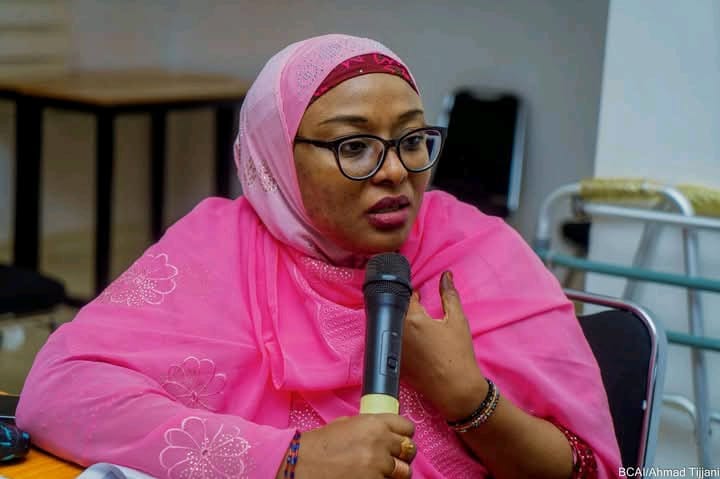
Speaking in commemoration of the day, an Individual Faith and Cultural Champion in Kano State, Bilkisu Ado Zango, emphasized that empowering women should be viewed as an investment that multiplies benefits for society rather than a loss of resources.
According to her, when individuals, organizations, and communities intentionally support women, they help create opportunities that strengthen families, communities, and national development.
She explained that the theme “Give to Gain” underscores the principle of reciprocity, noting that societies that prioritize gender equality and inclusion experience broader social and economic progress. She added that the annual celebration also serves as a platform to intensify efforts toward addressing systemic barriers and biases that women face in both personal and professional spaces.
Zango noted that women continue to play a vital role in shaping communities and driving development outcomes. However, she stressed that women with disabilities often face additional social and structural barriers, including discrimination and limited access to opportunities, which require deliberate policy and community interventions.
She said initiatives such as the Faith and Cultural Champions for Healthy Women and Girls Project are designed to address some of these challenges by promoting health awareness and positive social norms that benefit adolescent girls and young women.
The project, implemented by the Centre for Communication and Social Impact (CCSI) with guidance from the Advisory Faith and Cultural Champions, aims to improve the health and well-being of adolescent girls and young women, including those living with disabilities, in Kano and Kaduna states.
According to her, the initiative engages respected faith and cultural leaders in communities as Individual Faith and Cultural Champions to promote positive behaviours and messages that encourage the well-being of girls and young women. The intervention focuses on raising awareness about key health issues such as antenatal care, delivery in healthcare facilities, and childbirth spacing.
She added that the project is currently being implemented across six Local Government Areas in Kano State, including Kano Municipal, Bunkure, Makoda, Dawakin Tofa, Takai and Madobi, where community mobilization and awareness campaigns are being conducted.
Zango further explained that a key component of the project is the active involvement of persons with disabilities as champions within their communities. She said the programme seeks to remove barriers, combat stigma, and ensure that persons with disabilities have equal opportunities to participate in community development and health-related decision-making.
She noted that International Women’s Day provides an important opportunity to amplify the voices of women with disabilities, many of whom continue to struggle with exclusion and discrimination in society.
According to her, inclusive communities must recognize that women experience barriers differently depending on factors such as disability, culture, age, and social background.
Zango therefore called on governments, community leaders, civil society organizations, and other stakeholders to promote inclusive policies, strengthen community support systems for women and girls, and challenge harmful stereotypes that limit women’s participation in development.
She stressed that inclusion should not be seen as charity but as a fundamental principle of equality and justice.
“Empowering women with disabilities means recognizing their rights, amplifying their voices, and creating opportunities for them to thrive,” she said, adding that collective action remains key to building a more inclusive and equitable society.
She urged communities to use the occasion of International Women’s Day to renew their commitment to ensuring that no woman or girl is left behind in the pursuit of development and social progress.
 FG Assures Nigerians of Stable, Affordable CNG Prices
  Kano Govt Donates Equipment to NDLEA
  FG Commissions 80MVA Transmission Substation in Kano
  Gov. Radda Announces Digital Courts, Judicial Welfare Package
  Abuja-Kaduna-Kano Highway to Boost Trade, Connectivity — Umahi
  Kano Assembly Receives Five Commissioner Nominees from Gov. Yusuf
  FG Assures Nigerians of Stable, Affordable CNG Prices
  Kano Govt Donates Equipment to NDLEA
  FG Commissions 80MVA Transmission Substation in Kano
  Gov. Radda Announces Digital Courts, Judicial Welfare Package
  Abuja-Kaduna-Kano Highway to Boost Trade, Connectivity — Umahi