

 Admin
Admin
How the Spirit of Internal Party Democracy Is Being Subverted Ahead of the 2027 Elections
The recently reviewed Electoral Act was enacted with the noble intention of strengthening democratic values within political parties.
Recognizing that democracy must begin from within the parties themselves, the law expressly provides mechanisms for candidate nomination through democratic means such as direct primaries or consensus arrangements reached through transparent, fair, and voluntary processes.
Unfortunately, what is currently unfolding in Kano State within the ruling political structure represents a disturbing assault on these democratic principles.
Rather than promoting inclusion, consultation, and fairness, the processes being orchestrated appear designed to suppress participation, intimidate aspirants, and concentrate political power in the hands of a single individual.
What should have been a democratic consensus process has gradually transformed into an instrument of political imposition. The alleged “kangaroo consensus” was reportedly stage-managed to ensure that entrenched politicians perpetuate themselves within the political system and, at best, get recycled against the wishes of APC caucuses and party faithful.
From the onset, aspirants reportedly loyal to the Governor were instructed not to purchase nomination forms independently. Instead, they were informed that the State Government would purchase forms only for those who eventually emerged through what was termed a “consensus arrangement.” On the surface, this may appear harmless. In reality, however, it created a dangerous dependency structure where political ambition became subject to executive approval rather than the free will of party members and stakeholders.
To operationalize this arrangement, consensus committees were reportedly constituted across the 44 Local Government Areas of Kano State. These committees were ostensibly established to broker agreements among aspirants and facilitate consensus candidacies. Yet, the process allegedly degenerated into coercion rather than consultation.
Aspirants were allegedly compelled to sign attestation letters agreeing in advance to accept whatever decision the party leadership — or more specifically, the Governor — would ultimately make where unanimity could not be achieved.
Such undertakings effectively stripped aspirants of their democratic rights and transformed the consensus process into a predetermined endorsement exercise.
It was also allegedly designed to negate the aspirants’ right to seek legal redress in cases heavily marred by imposition.
Consensus, by democratic definition, must emerge voluntarily from broad consultation, mutual agreement, and genuine sacrifice among contenders. It cannot be manufactured through intimidation, political pressure, or pre-signed surrender documents.
Once consent is extracted under compulsion, consensus ceases to be democratic and instead becomes political submission.
More troubling is the apparent indication that the entire arrangement was initially structured to secure the Governor’s sole candidacy for the forthcoming 2027 gubernatorial election.
This would represent a clear misuse of party structures to eliminate competition and silence dissenting political voices within the party.
Even more alarming were developments surrounding the senatorial contests in Kano Central, Kano South, and Kano North. Unlike other positions where consensus committees were at least nominally established, there were reportedly no consensus mechanisms whatsoever for these crucial senatorial districts. Instead, candidates were allegedly selected arbitrarily without transparent consultation with party stakeholders, delegates, or aspirants.
In perhaps the most astonishing development, former Governor Ibrahim Shekarau — who never publicly declared interest, sought support from stakeholders, or participated in any recognized consultative process — was suddenly announced as a preferred candidate allegedly “directed by the President.” If accurate, such actions fundamentally undermine the essence of democratic participation and insult the collective intelligence of party members.
Democracy cannot thrive where aspirants are imposed rather than elected. Political legitimacy cannot be manufactured through executive pronouncements or elite arrangements detached from the wishes of party members.
The greatest tragedy in all of this is the dangerous precedent being established. If political parties — the gatekeepers of democratic leadership — become platforms where candidates emerge solely through personal loyalty to powerful individuals, then elections themselves become mere formalities devoid of genuine competition or representation.
The Electoral Act was reviewed precisely to prevent such abuses. The law sought to institutionalize transparency, broaden participation, and reduce arbitrary candidate imposition that has historically weakened Nigeria’s democracy. Yet, what appears to be happening in Kano State threatens to make a mockery of those reforms.
Internal party democracy is not a luxury; it is the heartbeat of constitutional governance. Once it is destroyed, the consequences inevitably spread beyond the party system into governance itself. Leaders who emerge through manipulation rather than competition often feel accountable only to political godfathers rather than the people.
Kano State occupies a central place in Nigeria’s political history.
As one of the most politically conscious states in the federation, its democratic traditions should be protected, not weakened. The state has produced influential political leaders, activists, intellectuals, and reformers who contributed immensely to Nigeria’s democratic evolution. It would therefore be unfortunate if Kano becomes a symbol of democratic regression rather than democratic advancement.u
Party stakeholders, elders, civil society organizations, and democratic institutions must rise to defend the sanctity of internal democracy before the situation deteriorates further. Silence in the face of political injustice only legitimizes authoritarian tendencies.
Democracy survives not merely through periodic elections, but through adherence to fairness, participation, transparency, and respect for the rights of all political actors.
Whenever these values are sacrificed for political convenience, democracy itself comes under siege.
Sadly, in Kano State today, democracy under the APC appears to be under siege more than ever before.
Let it be remembered that the once-dominant PDP — then regarded as the largest political party in Africa, with 26 governors under its control — attempted similar political manipulation during the 2015 electoral process. Yet, it was defeated in the general elections by the then-emerging APC. History often repeats itself.
Whenever a dominant political party under a harsh regime suppresses democratic participation within its own structures, democracy eventually finds expression through alternative political platforms, no matter how small or new they may be.
This historical example is precisely what brought Governor Abba Kabir Yusuf to power. It is important that lessons are learned from this recent political history rather than repeating the mistakes of predecessors that ultimately led to their downfall.
Let it be placed on record that whenever democracy is held hostage by a ruling political party, it creates an opportunity for alternative political movements to gain public support by offering more credible candidates and more inclusive democratic processes.
Democracy is not a commodity to be monopolized by any political party, regardless of its size or influence, within a multi-party democratic system.
The APC must therefore be prepared for the unavoidable consequences that often accompany the suppression of internal democracy: electoral rejection by the people. Recycling old and politically disconnected figures is often a recipe for electoral failure. The warning should be taken seriously, because a stitch in time saves nine.
Musa Garba writes from Gari Local Government Area as an advocate of democratic principles.
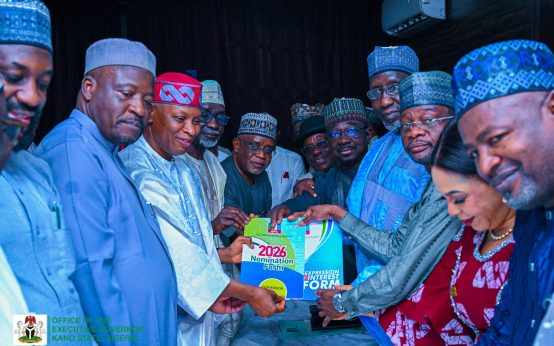 Yusuf Submits Nomination Form as APC Sole Candidate for Kano 2027
  NSCDC Arrests Three Over Vandalism, Tricycle Theft in Kano
  Kano Signs ₦21.29bn Contracts to Rehabilitate Tamburawa, Challawa Water Facilities
  NSSF charges schools on sportsmanship
 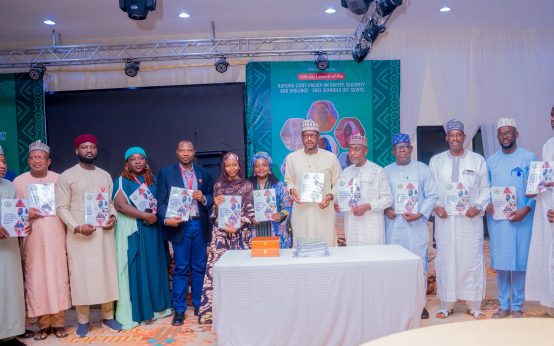 Governor Radda Declares War on School Violence, Launches Protection Policy
 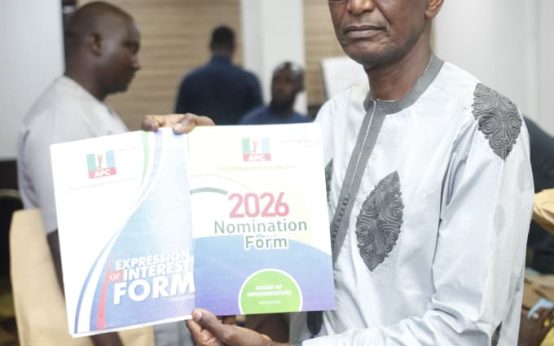 APC Aspirant Gumel Submits Nomination Forms for Reps Seat
  Yusuf Submits Nomination Form as APC Sole Candidate for Kano 2027
  NSCDC Arrests Three Over Vandalism, Tricycle Theft in Kano
  NSSF charges schools on sportsmanship
  Governor Radda Declares War on School Violence, Launches Protection Policy
  APC Aspirant Gumel Submits Nomination Forms for Reps Seat