
 Admin
Admin To all patriotic Northern Elements,
We condemn Kwankwaso’s Ultimate Betrayal: How the Kwankwasiyya Movement’s Alliance With a Political Family That Disrespects Northern Icons Represents the Final Abandonment of Everything the Movement Once Claimed to Stand For
There is a particular kind of political betrayal that is more devastating than the ordinary kind, more wounding than the simple defection of a politician from one party to another, more consequential than the routine abandonment of a campaign promise, and more permanently damaging to a political legacy than the inevitable compromises that governance demands of every leader who takes responsibility for the difficult and imperfect business of running a state. It is the betrayal that strikes at the very identity of a political movement, that contradicts not merely a specific policy position or a particular alliance but the foundational values and the defining cultural commitments that gave the movement its reason for its existence in the first place. It is the betrayal that makes every previous declaration of principle ring hollow, that turns every speech about northern pride and northern dignity into a document of political theatre rather than genuine conviction, and that forces the people who once believed in a movement’s stated mission to confront the uncomfortable possibility that the mission was always, at some fundamental level, about the leader’s personal ambitions rather than the community’s collective aspirations. That is the nature of what Rabiu Musa Kwankwaso has done by formalising his alliance with Peter Obi and the Obidient Movement on the NDC ticket for 2027. And northern Nigeria, whose political memory is long, whose historical sensitivities are deep, and whose tolerance for the gap between stated principle and demonstrated behaviour is, in the final analysis, remarkably limited, deserves to understand it in precisely those terms.
The Kwankwasiyya movement was built, over more than two decades of sustained and genuinely impressive political organisation, on a specific and clearly articulated set of commitments that gave it a cultural identity distinct from every other political movement in northern Nigeria. It was built on the commitment to northern development, northern education, northern economic empowerment, and the unapologetic assertion that northern Nigeria’s people deserved leaders who placed their interests, their dignity, and their advancement at the absolute centre of every political calculation. It was built on the scholarship programmes that took thousands of young northern men and women to universities in the United Kingdom, China, India, and across the world, investing in the human capital of a region that had been systematically underserved by the Nigerian state for decades. It was built on the welfare distribution networks that reached into the poorest communities of Kano State and delivered tangible material support to people whose daily lives were shaped by the consequences of that underservice. And it was built, above all, on the cultural identity of northern pride, expressed through the distinctive red cap and white babban riga that became the movement’s most recognisable symbol, and carrying within that symbolism an implicit claim that Kwankwaso was the authentic custodian of northern political dignity in a national political environment that too often treated the north as an electoral resource to be exploited rather than a community of people to be genuinely served.
That identity, with its deep cultural roots and its powerful emotional resonance among millions of northern Nigerians, was the most valuable political asset Kwankwaso brought to every electoral contest he entered. It was what made the Kwankwasiyya movement genuinely different from the ordinary patronage networks that pass for political organisation in most of Nigerian politics. It was what gave Kwankwaso his claim to represent something more than personal ambition, to embody a cause that was larger than himself and more durable than the inevitable fluctuations of political fortune. And it is precisely that identity, with its specific and non-negotiable cultural content, that his alliance with the Obidient Movement has now placed in direct and irreconcilable contradiction.
Because the Obidient Movement, as the documented public record clearly and unambiguously establishes, is a movement whose relationship with northern history, northern culture, and northern political heritage is one of contempt rather than respect. It is a movement whose verified supporters have described Sir Ahmadu Bello, the Sardauna of Sokoto, as a Fulani aristocrat who inherited power from the jihad, dismissing the life’s work of the man who built Ahmadu Bello University, the Bank of the North, and the Northern Regional Development Corporation as the self-interested manoeuvring of hereditary privilege. It is a movement whose cultural ecosystem has subjected Sir Abubakar Tafawa Balewa, Nigeria’s first and only Prime Minister and one of the most genuine meritocratic achievers in the entire history of Nigerian public life, to the same dismissive treatment, characterising his legacy as the institutional expression of northern political domination rather than the extraordinary personal achievement of a man who rose from modest origins to international statesmanship through nothing but his own brilliance and moral integrity. And it is a movement that has characterised the intellectual and spiritual legacy of Sheikh Usman Dan Fodio, the foundational scholar of the Islamic tradition that defines the cultural identity of millions of northern Nigerians, as the origin mythology of an aristocratic domination system rather than the living expression of a people’s deepest values and most sacred convictions.
The question that Kwankwaso must answer, and that the north has every right to demand his answers clearly, directly, and without the evasion that has so far characterised his public statements on this issue, is this: how does a man who spent thirty years building a political identity on northern pride, northern dignity, and the unapologetic defence of northern interests now stand silently beside a political movement that has publicly denigrated the Sardauna, diminished Tafawa Balewa, and dismissed the legacy of Sheikh Usman Dan Fodio, and expect the communities whose pride, dignity, and interests he once claimed to champion to follow him into that alliance without question? Where is the repudiation? Where is the statement of condemnation? Where is the Kwankwaso who once presented himself as the north’s most authentic champion, the man whose red cap and white babban riga were symbols not merely of personal political style but of a genuine and deeply felt commitment to the dignity and the historical honour of the region he claimed to represent?
The silence that has met these questions is itself an answer. It says that the northern pride Kwankwaso wore so visibly for so long was always more a political costume than a governing conviction, more a mobilisation tool than a genuine commitment to the values it symbolised. It says that the specific cultural and historical content of northern identity, the reverence for the Sardauna, the respect for Tafawa Balewa, the sacred regard for Sheikh Usman Dan Fodio, was politically useful to Kwankwaso when it helped him build a movement but is now politically inconvenient when it stands in the way of the electoral alliance his ambitions require. And it says, most devastatingly, that the man who once positioned himself as the guardian of northern political heritage is prepared to subordinate that heritage to the requirements of a partnership with a political family whose supporters have treated it with documented contempt, provided only that the partnership offers him a sufficiently attractive position on the ticket of a candidate he once refused to support.
The Kano voter who wore the red cap with pride, who attended the Kwankwasiyya rallies, who sent a son or daughter to study abroad on a Kwankwasiyya scholarship, who believed that in Rabiu Musa Kwankwaso the north had found a leader whose commitment to their dignity was genuine and whose defence of their history was real, deserves to know what this alliance actually means. It means that the movement whose identity was built on northern pride has chosen to stand beside a political family that has publicly insulted the north’s most revered icons without repudiation. It means that the man who wore the red cap as a symbol of northern political identity has decided that winning the vice-presidency of Nigeria matters more than defending the honour of the Sardauna of Sokoto. And it means that the Kwankwasiyya movement, which once represented something genuinely distinctive and genuinely important in the northern political landscape, has been reduced, in its leader’s twilight political years, to a transactional instrument in the service of an electoral calculation that has nothing to do with the values it once claimed to embody.
Kwankwaso’s ultimate betrayal is not the betrayal of a party, a platform, or a political alliance. Those betrayals are the ordinary currency of Nigerian political life, unremarkable in their frequency and limited in their lasting damage. His ultimate betrayal is the betrayal of an idea, the idea that northern Nigeria could produce a political leader whose commitment to the region’s dignity, history, and cultural identity was not merely performative but genuine, not merely tactical but principled, and not merely durable until a better offer arrived but permanent in the face of every temptation that personal ambition could generate.
That idea deserved better than what Kwankwaso has given it. The Sardauna deserved better. Tafawa Balewa deserved better. Sheikh Usman Dan Fodio deserved better. And the millions of northern Nigerians who believed in what the red cap once symbolised deserved infinitely better than the silence of the man who wore it longest and loudest in the face of the most direct insult to everything it was supposed to represent.
Kwankwaso now stands as the most leading political embarrassment and disappointment of the Northern Nigeria Region and the ideology of which our forefathers had built the region and died for.
Sign:
Hafiz Garba PhD
Secretary General,
Northern Youth Assembly
(Majalisar Matasan Arewa)
 Bande to chair first UDUS media conference
 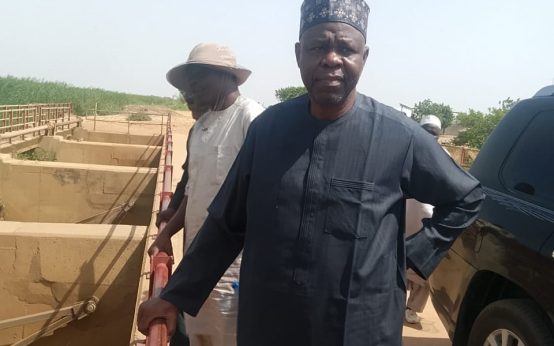 MD Hadejia Jama’are River Basin Orders Repair of Vandalised Canal in Jigawa
  Police Foil Child Abduction ,Rescue Three Children, Arrest Two Suspects in MKPAT ENIN, Akwa Ibom
  Police Confirm Abduction of Six Federal Polytechnic Students in Zamfara
  Return Airlift of Nigerian Pilgrims Begins as Kano Finalises Arrangements for Smooth Homeward Journey
  Jigawa Pilgrims to Benefit from Free Cataract Surgeries, Eye Treatment in Saudi Arabia
  Bande to chair first UDUS media conference
  MD Hadejia Jama’are River Basin Orders Repair of Vandalised Canal in Jigawa
  Police Foil Child Abduction ,Rescue Three Children, Arrest Two Suspects in MKPAT ENIN, Akwa Ibom
  Police Confirm Abduction of Six Federal Polytechnic Students in Zamfara