

 Admin
Admin
By Abdullahi Kano
For years, the story of poverty and unemployment in Kano has often been told through statistics — the number of unemployed youths, vulnerable households and women struggling to sustain their families.
But behind those figures are thousands of individuals whose lives are gradually taking a different direction after receiving skills training, equipment and other forms of support under the administration of Governor Abba Kabir Yusuf.
Since assuming office, the administration has placed women and youths at the centre of its empowerment agenda, with a strategy that seeks to move beneficiaries beyond temporary assistance to sustainable economic activity.
The philosophy is simple: teach people a skill, provide them with the tools to practise it and create an opportunity for them to earn a living.
Across the state, women have been trained in various vocational and entrepreneurial activities and subsequently supported with starter packs to enable them establish small businesses. For many beneficiaries, the equipment has become the missing link between possessing a skill and turning that skill into a source of income.
What distinguishes the intervention is its emphasis on productive capacity.
Rather than limiting empowerment to cash distribution, the government has increasingly adopted skills acquisition and enterprise development as instruments for helping beneficiaries build sustainable livelihoods.
Women trained in areas such as tailoring, food processing, catering, handicrafts, beauty services and other trades can now begin working with equipment provided through the programmes.
The same approach is being extended to young people, many of whom are seeking alternatives to the increasingly competitive formal employment market.
For a young person who has acquired a vocational skill but lacks the money to purchase the necessary equipment, a starter pack can make the difference between remaining unemployed and becoming self-employed.
It is this gap that the administration’s intervention seeks to bridge.
In Kano, where women play a significant role in supporting families through petty trading, agriculture, food processing and other informal economic activities, empowering women has implications beyond the individual beneficiary.
When a woman increases her income, the benefit often reaches the household.
Money earned from a small enterprise can contribute to food, children’s education, healthcare, rent and other family needs. In some cases, successful beneficiaries may also employ or train other women, creating a multiplier effect within their communities.
This makes women empowerment not merely a social intervention but an investment in household economic stability.
For Kano’s large youth population, however, the challenge is more complex.
Many young people possess energy, ambition and willingness to work but lack access to capital, technical training or the tools required to start a business.
The government’s youth empowerment initiatives are therefore aimed at creating pathways through which skills can translate into income.
The objective is to encourage young people to see entrepreneurship and vocational skills as viable alternatives to waiting indefinitely for white-collar employment.
A trained mechanic with the necessary tools, a tailor with a sewing machine, a caterer with basic equipment or an artisan with appropriate working materials has a better chance of becoming economically independent.
The significance of such interventions extends beyond the immediate beneficiaries.
A successful small business contributes to the local economy through the purchase of raw materials, payment for services, employment of assistants and circulation of money within the community.
When thousands of beneficiaries engage in productive activities, the cumulative effect can contribute to household income, reduce dependency and strengthen grassroots economic activity.
For a government facing the twin challenges of poverty and unemployment, such interventions provide an avenue for addressing the problem from the grassroots.
But sustaining the gains will require more than initial empowerment.
Experts and development practitioners have consistently emphasised the importance of follow-up support, access to affordable finance, mentoring, market opportunities and regular monitoring to ensure that empowerment beneficiaries do not return to unemployment after the initial intervention.
This is where the next phase of Kano’s empowerment drive could become even more significant.
The ultimate success of empowerment should not be measured only by the number of people who receive equipment or attend training sessions.
It should also be measured by how many beneficiaries are able to establish businesses, increase their incomes, employ others and eventually become independent of government assistance.
That is the transformation the Yusuf administration is seeking to promote — a movement from beneficiary to entrepreneur, and eventually from entrepreneur to employer.
For the women and youths receiving these interventions, the starter pack is more than a collection of equipment. It represents an opportunity to put knowledge into practice and convert a skill into a livelihood.
The broader message emerging from the initiative is that sustainable empowerment begins when citizens are given the capacity and tools to work for themselves.
As Governor Abba Kabir Yusuf’s administration continues its programmes across Kano, the challenge will be to deepen the interventions, expand their reach and ensure that beneficiaries receive the support required to turn initial opportunities into lasting enterprises.
For thousands of women and youths, however, the journey has already begun — one skill, one piece of equipment and one small business at a time.
And in communities where economic survival is often a daily struggle, that first step can mean the difference between dependence and self-reliance.This version deliberately uses a Daily Trust-style feature structure: human-interest opening, subheadings, socioeconomic context, beneficiaries’ perspective and a balanced “what next?” ending rather than sounding like a conventional government press release.
Abdullahi Kano writes from Kano
namamaoga799@gmail.com
 Roads That Changed Lives: 23 Kaduna Rural Communities Feel New Lease of Life
  Abdullahi Waiya: Repositioning Kano Information Ministry, Changing the Narrative Through Innovation
  Kano Rising: How Abba Yusuf’s Road Revolution Is Reshaping the Ancient City
 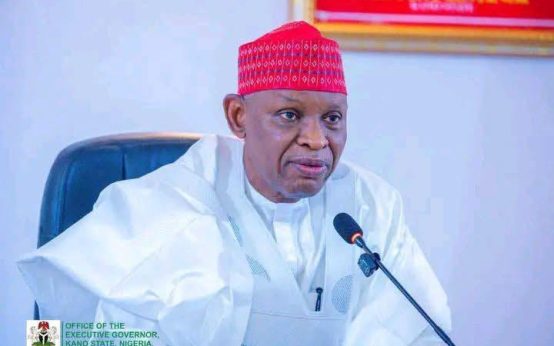 Kano Diphtheria: Investigation Confirms Two Deaths, Says Reported 50 Mortalities Unsubstantiated
 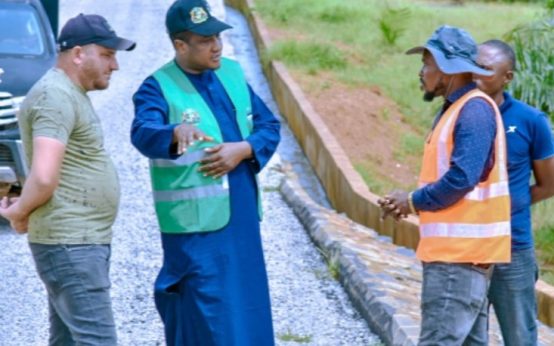 Beyond the Roads: How KADRAAMP Is Reconnecting Kaduna’s Rural Communities to Opportunity
 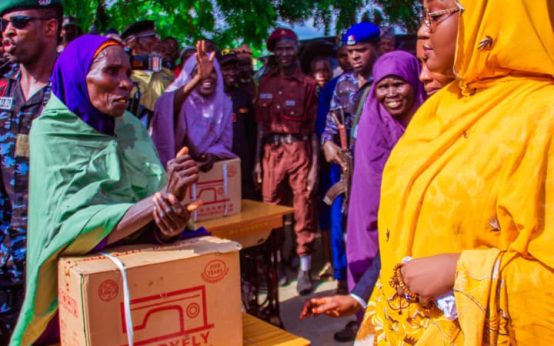 Empowering the Vulnerable:H E Dr Amina Namadi’s Lifeline for Garki Widows, Orphans’ Parents
  MUHAMMAD GARBA Redeems Pledge, Donates Smart TV to Kano Correspondents’ Chapel
  Governor Radda: Strong Enterprises Will Grow Katsina’s Economy, Strengthen Security
  Governor Yusuf welcomes Senator Rufai Hanga into APC
  Yusuf, Defectors Mobilise Support for Tinubu, APC in Kano
  Kano Water Resources Commissioner Enrols 160 Children in Primary Schools Under Back-to-School Initiative
  Customs Generates N88.9bn, Seizes Goods Worth N2.159bn in Kano