
 Admin
By Abdullahi Kano
Leadership is often measured not only by the policies a leader formulates or the projects executed under his administration, but also by the values he demonstrates, the people he respects and his ability to unite a diverse society.
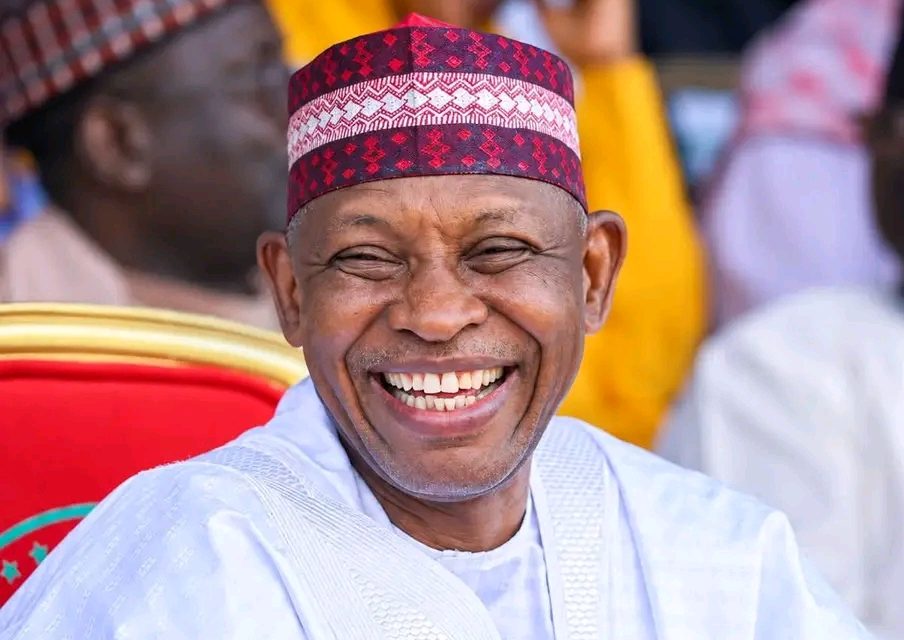
In Kano State, Governor Abba Kabir Yusuf represents a leadership narrative built around respect for elders, concern for the people and the aspiration to place the collective interest of Kano above partisan differences.
A man with a good heart is often recognised by his disposition towards others, especially the elderly, the less privileged and those whose opinions differ from his own.
Respect for elders remains an important cultural value in Kano, where traditional institutions, community leaders and religious scholars play significant roles in maintaining peace and social harmony.
A leader who recognises the importance of these institutions strengthens the bond between government and the people.
Governor Yusuf’s leadership presents an opportunity to reinforce these cherished values while pursuing the broader task of governance.
Beyond political affiliations, the people of Kano share common aspirations for security, economic prosperity, quality education, accessible healthcare, employment opportunities and improved infrastructure.
These are the issues that ultimately determine whether governance makes a meaningful difference in people’s lives.
One of the important responsibilities of a state governor is to bring people together despite their political, ethnic, religious and social differences. Kano, with its rich history, commercial influence and diverse communities, requires leadership capable of building bridges across competing interests.
Political disagreements are natural in a democratic society, but they should not become obstacles to development or peaceful coexistence.
The philosophy of “Kano First”therefore provides a compelling framework for leadership. It suggests that the interests of the state and the welfare of its residents should take precedence over personal ambitions and party loyalty.
Under this principle, public policies should be evaluated by their impact on ordinary citizens rather than by the political advantages they may offer.
For Kano First to become more than a slogan, it must be reflected in practical decisions: fair distribution of development projects, transparent management of public resources, support for small businesses, investment in education and healthcare, and programmes that empower young people and women.
It also requires constructive engagement with political opponents, traditional rulers, religious leaders, civil society organisations and other stakeholders.
Respect for elders and the promotion of unity are particularly important at a time when political competition can sometimes deepen divisions.
A leader who listens to different viewpoints and encourages dialogue helps create an atmosphere in which disagreements can be resolved peacefully.
Such an approach also allows government to benefit from the experience of senior citizens while making room for the energy, ideas and aspirations of younger generations.
Equally important is the need to ensure that the benefits of governance reach communities across the state. Residents of urban centres and rural areas alike deserve opportunities to improve their livelihoods.
Roads, water supply, schools, hospitals, agricultural support and employment initiatives should be pursued in ways that respond to the needs of the people and promote balanced development.
Ultimately, the strength of any administration lies not simply in its political popularity, but in its ability to earn public confidence through service, accountability and measurable results.
Good intentions become more meaningful when they translate into better living conditions, stronger institutions and greater opportunities for citizens.
Governor Abba Kabir Yusuf’s message of putting Kano first can serve as a unifying call for the state’s political leadership and citizens.
Its success will depend on sustained commitment to inclusive governance, respect for democratic principles and a willingness to work across party lines for the common good.
For Kano to move forward, its people must see themselves first as partners in development, regardless of their political differences.
When the welfare of the state takes priority over partisan considerations, unity becomes stronger and development becomes a shared responsibility.
Kano First should therefore remain more than a political expression. It should be a commitment to a united state where respect for elders, compassion for the vulnerable, equal opportunity and development for all define the true meaning of leadership.
Written by Abdullahi Kano.
namamaoga799@gmail.com
08035304623
 Atiku is True Pan-Naigeria Leader ,Deserve 2027 Electoral Victory – ADC-PCC
 The Recurring Nightmare: Will Northern Nigeria Wake Up Before the Next Catastrophe?
 Abba Kabir Yusuf: The North’s Strongest Political Bridge to Tinubu’s 2027 Presidency
 President Tinubu’s Anniversary Speech Capture His Government Journey In Economic Reforms, Prosperous Nigeria, Kwankwaso
 Yankari: Where Nature, Wildlife and a New Vision for Tourism Meet
 Ulama Support Gives Fresh Impetus to Kano Drug Abuse Taskforce
 Police Arrest Suspected Bandit, Recover AK-47, 18 Rounds of Ammunition in Kano
 Gov. Radda Directs Inclusion of All LGA Media Aides, 25 Media Assistants in Tinubu/Dikko 2027 Campaign Council
 Ex-Zaria Rep Sani Sha’aban’s House Demolition Was Against the Law, Counsel Tells Court
 25% tax claim: Kingibe raises alarm over post-2027 election burden
 ADC Presidential Candidate, Atiku Plans Return To Subsidy Will Push Petrol Price to N4,000 Per Litre — Dr Musa Illiyasu Kwankwaso
 THE MIND MAY BE BECLOUDED BUT FACTS ARE STUBBORN THINGS: A REJOINDER TO USMAN ABDULKADIR TALEEKI’S PREMATURE VERDICT OF FAILURE AGAINST GOVERNOR NASIR IDRIS