
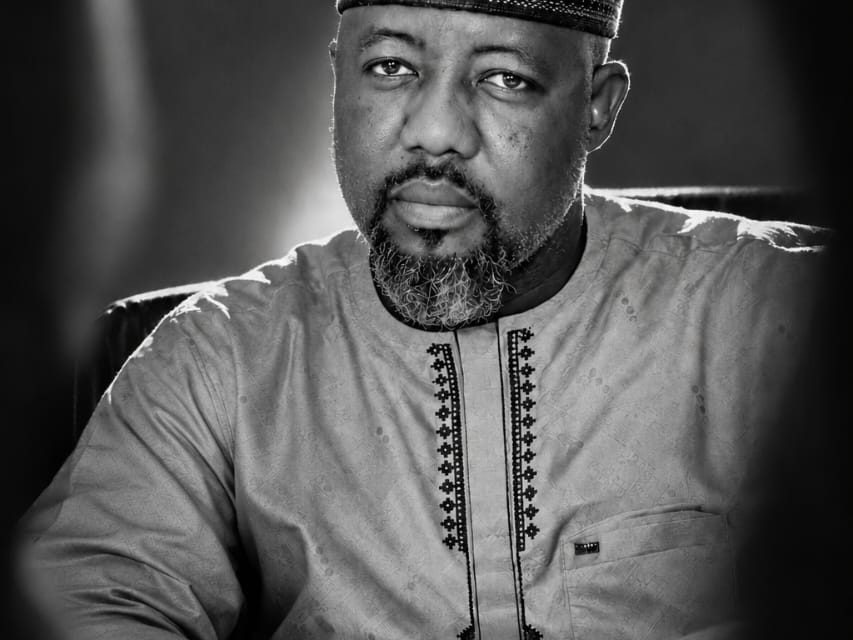
 Admin
Admin By
Abubakar Ibrahim, anipr
There is a tragic irony that haunts the history of Northern Nigeria. It is a cycle defined not by a lack of intelligence or resilience, but by a chronic, almost fatal, delay in reaction. We have watched this movie before, and we know how it ends. Yet, as a region, we seem trapped in a state of deep slumber, waking up only when the house is already engulfed in flames. The question that weighs heavily on the minds of concerned observers is simple: when will the North wake up?
The trajectory of our security and social challenges paints a grim picture of missed opportunities. We saw it in the 1970s and 80s with the Maitatsine uprising. We watched the seeds of extremism take root and waited until they blossomed into a violent insurgency that claimed thousands of lives before we acknowledged the threat. We saw it again with the Boko Haram saga. We dismissed the early warnings as mere political posturing or distant noise. We did nothing until the movement morphed into a monster that has since killed millions, displaced communities, and turned innocent lives into statistics of a seemingly unending war. More recently, we witnessed the emergence of banditry in the Northwest. Once again, we reacted with disbelief and delayed action. Today, kidnapping and banditry have become a daily reality, turning vast swathes of the region into a nightmare where the value of human life has plummeted to zero. But just as we thought we had seen the worst, a new, more insidious threat is emerging—one that carries the potential to make all previous catastrophes look like child’s play.
The new danger is the deliberate, calculated attempt to set the Hausa and Fulani against each other. To the casual observer, this might seem like a minor ethnic squabble. But to those who understand the fabric of Northern society, this is a dangerous mimicry of the Hutu and Tutsi dynamic that led to the Rwandan Genocide. The campaigns being waged in certain corners of the media and social discourse are using the same tone of division and hate. The irony is as disturbing as it is suspicious. Reports and records emerging from social media suggest that the masterminds behind this campaign are often not even Hausa or Fulani, nor are they practicing Muslims. These are external agitators and fifth columnists whose sole aim is to destabilize the North by turning brothers against brothers.
The reality that these agitators ignore is that the Hausa and Fulani are inseparable. They are not just neighbors; they are intertwined by centuries of intermarriage, shared history, and shared blood. Wherever you see a Hausa man, there is often a trace of Fulani lineage in him, and vice versa. They are two sides of the same coin. To attempt to separate them is to attempt to tear the heart out of the North itself. The concern is not just the hate speech, but the commitment of these agitators. If they succeed in driving a wedge between these two inextricably linked tribes, the resulting conflict will be beyond anybody’s control. It will not be a war of distant borders; it will be a war within families, within homes, and within bloodlines. It would be a genocide that does not just kill people, but destroys the very soul of the region. We must ask ourselves: why do we always wait for the fire to start before looking for water? Why do we allow outsiders to write the script for our own destruction?
To prevent the Rwandan nightmare from becoming a Northern Nigerian reality, we must break the cycle of apathy. The social media space is the primary battleground for this new war. Influencers, content creators, and opinion leaders must take this issue seriously. They must refuse to amplify divisive rhetoric and instead use their platforms to flood the digital space with content that celebrates Hausa-Fulani unity, shared heritage, and mutual respect. Those spreading hate must be called out and shamed. We must also actively educate the younger generation about the historical brotherhood between the Hausa and Fulani. The narrative of “us versus them” must be replaced with the narrative of “we.” Community leaders, elders, and educators must step up to remind the people of the shared bonds that have held the North together for centuries.
Security agencies must not wait for the first stone to be thrown. They need to treat the spread of genocidal rhetoric with the same seriousness as terrorism. Anyone caught trying to incite ethnic violence, regardless of their background, should be prosecuted to the fullest extent of the law. The intelligence community must identify and neutralize the external and internal actors funding and fueling this division. The Emirs, chiefs, and religious leaders hold immense moral authority. They must be unequivocal in their condemnation of ethnic profiling and division. Inter-faith and inter-ethnic dialogues should be institutionalized at the grassroots level to ensure that grievances are addressed before they become conflicts. We also need a coordinated, state-sponsored and community-sponsored counter-narrative campaign that boldly exposes the fact that those fanning the flames of Hausa-Fulani conflict are often enemies of the North who have nothing to lose if the region burns.
The North is at a critical juncture. We can either remain in our deep slumber and wake up to the ashes of a second Rwanda, or we can wake up now, stand together, and crush this evil before it takes root. We cannot afford to react after it is too late again. The lives lost in Maitatsine, Boko Haram, and the banditry crisis should serve as a constant reminder of the cost of our complacency. It is time to act. It is time to defend the unity of the North, for if the Hausa and Fulani fall apart, the entire region falls with them.
Abubakar Ibrahim, anipr can be reached via:
+2348098454956
+2348084441295
habuibrahim76@gmail.com
 Abba Kabir Yusuf: The North’s Strongest Political Bridge to Tinubu’s 2027 Presidency
  President Tinubu’s Anniversary Speech Capture His Government Journey In Economic Reforms, Prosperous Nigeria, Kwankwaso
  Yankari: Where Nature, Wildlife and a New Vision for Tourism Meet
  Ulama Support Gives Fresh Impetus to Kano Drug Abuse Taskforce
  Dry Taps Gone, Kano Flows Again: The Abba Yusuf Water Comeback
  Murtala Muhammad Library Complex as Northwest University Kano Campus: A Decision Worth Applauding
  Self Help Africa Sensitises Kano Community on Safe Drinking Water
  Kaduna-Kano-Maradi Rail Line: FG Targets December Train Operations
  Troops Rescue Kidnap Victim, Recover N10m Ransom in Kano
  WHC Solar trains nearly 300 installers to improve solar services in Nigeria
  Gov. Yusuf Celebrates Senator Basheer Lado at 60
  JIGAWA HISBAH BOARD ACKNOWLEDGES MEDIA AS PARTNER IN PROGRESS