
 Admin
Admin By Lamara Garba
Agricultural transformation rarely begins with a seed. It begins with an idea, an invitation, or the decision to place ordinary people in extraordinary rooms.
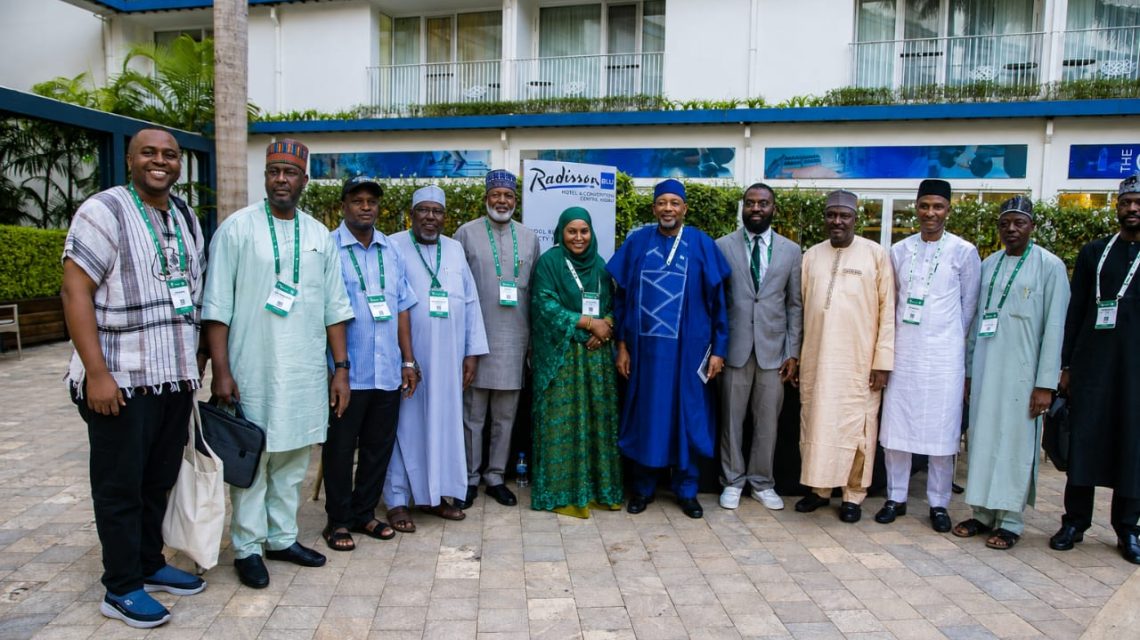
That is what the Women Farmers Advancement Network, WOFAN, did this week in Kigali.
As policymakers, investors, researchers and development leaders gathered for the 2026 Africa Food Systems Forum under the theme, “Investing in Africa’s Agri-Food Systems: Nourishing Nations, Growing Jobs, Building Resilience,” WOFAN brought a substantial delegation of the very people those conversations are meant to serve: rural women, young people and grassroots practitioners.
In a continent where smallholder farmers still produce most of the food, that choice was not ceremonial. It was strategic.
Exposure is an input. Knowledge is capital. A farmer who has never encountered a working innovation is unlikely to demand it. A young person who has never met an agricultural entrepreneur may continue to see farming as a last resort. A woman excluded from networks and knowledge remains locked out of the prosperity she is capable of creating.
WOFAN has long understood this.
It was an investment in people.
It was an investment in exposure.
And it was an investment in the capacity of ordinary people to encounter extraordinary ideas and carry them back to the communities where they are needed most.
For WOFAN, the significance of Kigali was never simply about occupying seats in a conference hall.
It was about connecting farmers, women, young people and agricultural stakeholders with the ideas, innovations and opportunities shaping the future of Africa’s food systems.
On September 3, 2026, WOFAN Founder and Global Advocate, Dr Salamatu Garba, took that story to the Innovation Hub. She spoke of more than one million rural women reached across nine Nigerian states: Kano, Katsina, Kaduna, Jigawa, Bauchi, Yobe, Gombe and Nasarawa, as well as the Federal Capital Territory.
The numbers matter less than what they represent: technology moving from research stations into daily use; productivity gains that turn subsistence plots into enterprises; better quality produce that opens access to higher value markets; and income that travels beyond the farm gate into families and communities.
Rwanda’s Prime Minister, Dr Justin Nsengiyumva, reminded the Forum that agriculture is no longer just what happens in the field. It is also about irrigation, logistics, energy, mechanisation, finance, processing and markets.
WOFAN’s work has always reflected that wider view.
The organisation does not treat the smallholder as a passive recipient of inputs. It sees her as the foundation of any food system that hopes to nourish nations, create jobs and build resilience.
There is a useful lesson here. Development is not a finished product that can simply be imported. Models can be studied and technologies borrowed, but the decisive step lies in translating them into local soil and local hands.
The real value of Kigali is not the conference itself. It is what delegates do when they return: the practices tested, the partnerships formed and the confidence transferred.
Africa’s agricultural potential is frequently celebrated and just as frequently left unrealised. But potential does not feed people. Organised, financed and skilled people do.
When a woman farmer succeeds, the impact rarely stops at her plot.
When young people see agriculture as an enterprise rather than an inheritance, employment follows. When rural communities are connected to knowledge and markets, poverty begins to lose ground.
This explains why WOFAN’s presence carries weight beyond the size of its delegation.
Every participant is a potential bridge between global conversation and village practice, between policy and the farm, and between the Africa that exists and the Africa that is still possible.
Agriculture is not the occupation of those with no other options. It is business. It is industry. It is technology. It is national security.
And when deliberately supported, it remains one of the most powerful instruments of social and economic transformation available to this continent.
The panels will disperse and the statements will be issued. But the quieter work will continue.
One rural woman at a time.
One community at a time.
One opportunity carried home.
That is where the real harvest begins.
_Lamara Garba is Director of Public Affairs at Bayero University, Kano_
 Gombe 2027: Ex-PDP Guber Candidate, Yayari Dumps party, pledges support for APC, Gwamna
  Emir of Gumel Dies After 45 Years on Throne
  H E DR Amina Umar Namadi Mourns Emir of Gumel, Describes Death as Great Loss
  ADF Social Footprints Impactful-MAN, Others
  Shettima @60th: Your Strategic Loyalty, Patient Advance President Tinubu Hopes Agenda For Better Nigeria, Musa Illiyasu Kwankwaso
  Kano NLC Backs FG’s IPPIS Audit to Weed Out Ghost Workers
  Gombe 2027: Ex-PDP Guber Candidate, Yayari Dumps party, pledges support for APC, Gwamna
  Emir of Gumel Dies After 45 Years on Throne
  H E DR Amina Umar Namadi Mourns Emir of Gumel, Describes Death as Great Loss
  ADF Social Footprints Impactful-MAN, Others
  Shettima @60th: Your Strategic Loyalty, Patient Advance President Tinubu Hopes Agenda For Better Nigeria, Musa Illiyasu Kwankwaso
  Kano NLC Backs FG’s IPPIS Audit to Weed Out Ghost Workers