
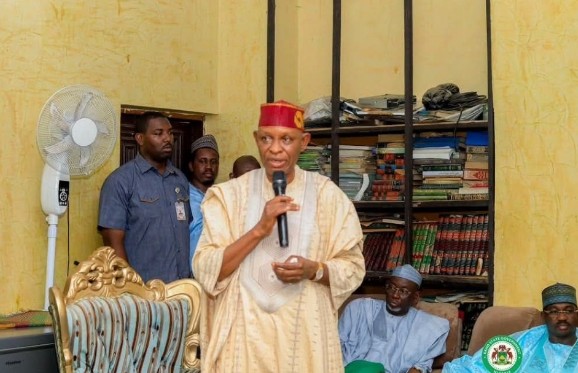
 Admin
Admin
By Abdullahi Kano
As political conversations gradually gather momentum ahead of the 2027 general elections, the performance of Governor Abba Kabir Yusuf of Kano State remains an important subject of public discourse. His administration’s interventions in education, healthcare, agriculture, infrastructure, youth development and women’s empowerment have become central to arguments in favour of continuity in the governance of the state.
For supporters of the governor, the case for his re-election rests on the belief that leadership should be assessed not merely by political promises but by its impact on the lives of ordinary citizens.
They argue that Kano needs sustained policies, consistent implementation of development programmes and a government capable of building on the foundations already laid.
Education: Investing in the Future
Education remains one of the most critical sectors for Kano, a state with a large population of school-age children and a longstanding need to improve access to quality learning. The administration’s interventions, including teacher recruitment and promotion, school rehabilitation and efforts to strengthen basic education, are important elements of its development agenda.
The reported promotion of thousands of teachers and the recruitment of additional personnel reflect the importance attached to improving the education system. Supporters believe that maintaining these interventions will help address teacher shortages, improve classroom learning and create better opportunities for children from disadvantaged backgrounds.
However, the long-term value of these measures will ultimately depend on improved learning outcomes, adequate teaching materials, functional classrooms and sustained investment in schools across the 44 local government areas.
Healthcare: Strengthening Access to Medical Services
Healthcare is another sector in which continuity could play a significant role. For many residents, especially those in rural communities and low-income households, access to affordable and reliable medical services remains essential to improving their quality of life.
Investments in healthcare facilities, medical equipment, personnel and primary healthcare services can help reduce the burden of preventable illnesses and improve maternal and child health outcomes. Supporters of the governor maintain that continued investment in this sector would enable ongoing programmes to mature and expand their benefits to more communities.
A sustained commitment to healthcare financing, staffing, essential medicines and the maintenance of facilities will be necessary to ensure that government interventions translate into measurable improvements in public health.
Agriculture: Supporting Farmers and Food Security
Agriculture provides livelihoods for thousands of households in Kano State and remains vital to food security, employment and economic growth. Strengthening the sector through access to farm inputs, improved farming techniques, irrigation and support for smallholder farmers could increase productivity and improve rural incomes.
The argument for continuity is that agricultural development requires more than seasonal interventions. Farmers need predictable policies, timely access to inputs, better storage facilities, reliable markets and improved transportation networks to move their produce.
If effectively sustained, agricultural programmes could contribute to lower food losses, increased household earnings and a stronger contribution to the state’s economy.
Infrastructure: Connecting Communities to Opportunity
Infrastructure development is another important measure of governance. Roads, water supply systems, public buildings and other essential facilities influence the movement of people and goods, the delivery of public services and the expansion of commercial activities.
The administration’s reported investments in road construction and rehabilitation, water projects and other public infrastructure have featured prominently in its development agenda. Supporters argue that completing ongoing projects and maintaining existing facilities would deliver greater value than repeatedly abandoning programmes whenever political leadership changes.
For Kano, where urban expansion and population growth place increasing pressure on public facilities, infrastructure planning must also be accompanied by effective maintenance, transparent procurement and equitable distribution of projects across communities.
Youth Empowerment: Turning Potential into Productivity
With a large youth population, Kano needs policies that convert its demographic strength into economic opportunity. Skills acquisition, entrepreneurship support, vocational training and access to employment can help young people become productive participants in the state’s development.
Youth empowerment is particularly important in addressing unemployment, poverty and vulnerability to drug abuse and other social problems. Providing young people with practical skills, business support and opportunities for legitimate livelihoods can strengthen community security and social stability.
Supporters of Governor Yusuf believe that sustained investment in youth development would give existing initiatives time to produce lasting results. They also expect such programmes to be transparent, accessible and linked to real employment opportunities.
Women’s Empowerment: Promoting Inclusion and Economic Independence
Women’s empowerment is equally important to inclusive development. Financial assistance, vocational training, business support and access to productive resources can help women improve their livelihoods and contribute more effectively to household welfare.
The administration’s reported interventions involving financial support and empowerment initiatives for women have strengthened the argument that social and economic development should reach groups that often face barriers to opportunity.
To achieve lasting results, such interventions need transparent beneficiary selection, effective monitoring and access to markets and business development services. These measures would help ensure that empowerment programmes move beyond one-off assistance to create sustainable economic independence.
The Case for Continuity
Beyond individual sectors, the argument for re-election centres on whether the administration can consolidate its achievements, address outstanding challenges and deliver better outcomes during another term.
Supporters maintain that development programmes often require time to achieve their full potential. In their view, a second term would provide an opportunity to complete ongoing projects, strengthen public institutions, expand successful programmes and correct weaknesses identified during the first term.
Nevertheless, a credible assessment of the administration must consider both its reported achievements and the concerns of residents. Issues such as the cost of living, unemployment, educational standards, healthcare access, water supply and the quality of public infrastructure remain important benchmarks against which the government should be evaluated.
Transparent reporting, independent assessment of projects and regular engagement with citizens would further strengthen public confidence in the administration.
Conclusion: Let Performance Guide the Decision
Governor Abba Kabir Yusuf’s development agenda covers sectors that directly affect the welfare and future of Kano State. Education, healthcare, agriculture, infrastructure, youth development and women’s empowerment are not isolated policy areas; they are interconnected foundations for economic progress, social stability and improved living standards.
For those who believe that the administration has recorded substantial progress, re-election offers an opportunity to consolidate its programmes and pursue unfinished priorities. Their position is that continuity, when accompanied by accountability and improved performance, can provide a stable platform for long-term development.
Ultimately, the decision belongs to the people of Kano State. Their assessment should be guided by verifiable achievements, the quality of public services, the fair distribution of development projects and the administration’s responsiveness to citizens’ needs.
If the governor can demonstrate measurable progress, address existing shortcomings and sustain an inclusive development agenda, the case for another term will be strengthened by evidence of performance rather than political rhetoric alone.
Abdullahi Kano writes from Kano ,and can be reached via email namamaoga799@gmail.com
08035304623
 Uba Sani Assures APC Members of Justice, Welcomes ADC Defectors
  Musa Illiyasu Kwankwaso Celebrates Senator Lado @60, Says Is A Political Dogma
  NEMA reaffirms commitment to effective disaster management
  Former NPA MD, Aminu Dabo, Resigns From APC in Kano
 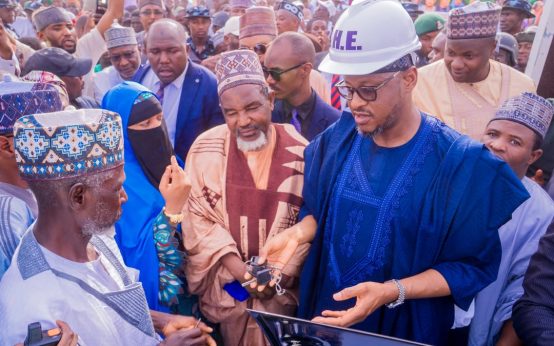 Gov Radda Flags Off 38km Bindawa-Duwan Road Reconstruction
  Group Prays for Quick Recovery of Abdulsalam, Senator Musa
  Self Help Africa Sensitises Kano Community on Safe Drinking Water
  Kaduna-Kano-Maradi Rail Line: FG Targets December Train Operations
  Troops Rescue Kidnap Victim, Recover N10m Ransom in Kano
  WHC Solar trains nearly 300 installers to improve solar services in Nigeria
  Gov. Yusuf Celebrates Senator Basheer Lado at 60