
 Admin
Admin The Agro-Climatic Resilience in Semi-Arid Landscapes (ACReSAL) Project has commenced moves to accelerate the implementation of Strategic Catchment Management Plans (CMPs) in the Hadejia-Jama’are Basin.
The Water Resources Specialist of ACReSAL, Mr Shetima Adam, disclosed this at a two-day stakeholders’ engagement on the accelerated implementation of strategic catchment management plans held in Kano.
Adam, who represented the National Coordinator of ACReSAL, Abdulhamid Umar, said the meeting was a follow-up to recommendations contained in the Catchment Management Plans developed for various catchments.
He explained that each catchment had its peculiar challenges and recommendations, hence the need to involve stakeholders in identifying and prioritising interventions that would have the greatest impact.
According to him, Hadejia-Jama’are Basin was selected for the pilot intervention because of its complexity, importance and the number of states covered by the catchment.
He said the basin cuts across about seven states, making it necessary to bring together stakeholders from the affected states, development partners, academia, traditional institutions and other relevant organisations.
“We want to get inputs from the stakeholders so that investments within the catchment will be based on their priorities and the identified needs of the communities.
“As soon as we get the inputs of the stakeholders, the next step is implementation,” Adam said.
He said the project would focus on restoring ecosystems, improving livelihoods and promoting sustainable management of natural resources within the catchment.
Adam noted that the Nguru Wetlands and other important ecosystems were located within the Hadejia-Jama’are catchment, stressing the need for coordinated interventions to protect the environment and improve the livelihoods of communities.
He said the engagement also provided an opportunity for traditional rulers, commissioners, permanent secretaries and other stakeholders to contribute to the development and implementation of interventions under the catchment management plan.
Also speaking, the ACReSAL Project Coordinator in Bauchi State, Dr Ibrahim Kabir, said the meeting would provide stakeholders with an opportunity to contribute to the effective implementation of the project.
Kabir said the engagement was also aimed at assessing the achievements recorded so far under ACReSAL and identifying challenges affecting the implementation of various interventions.
He explained that the meeting would enable stakeholders to fine-tune modalities for addressing identified challenges and strengthen collaboration among participating states and other partners.
The two-day engagement attracted stakeholders from various states where the ACReSAL project was being implemented, including government officials, traditional institutions, development partners, academia and other relevant organisations.
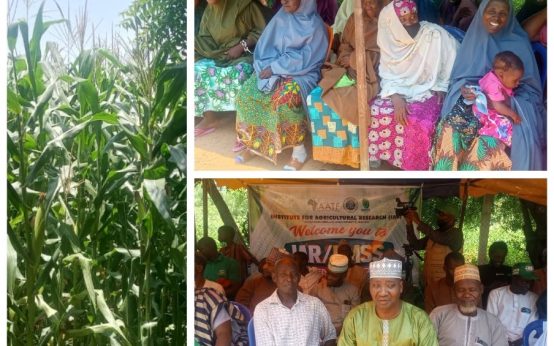 Tela maize hybrids capable of producing 8-9 tonnes per hectare — Researcher
 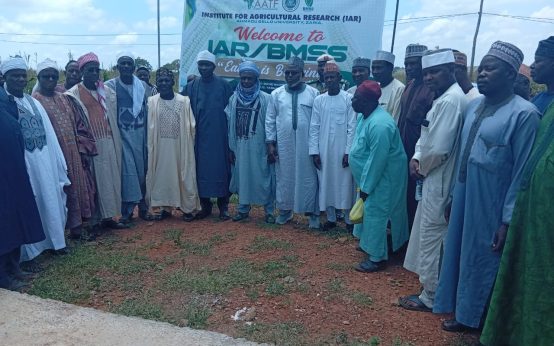 IAR/BMSS Holds ‘Eating is Believing’ Sensitization on TELA Maize in Giwa
  AFAN Demands Independent Probe Into Death Of Over 30 Suspected Illegal Miners In NSCDC Custody In Minna
 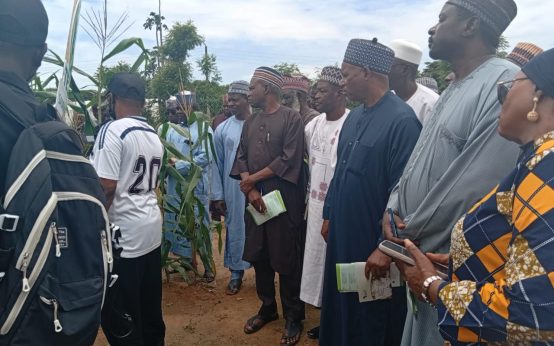 ABU Zaria Showcases TELA Maize Technology to Boost Farmers’ Yields and Food Security
  FG Reviews Agricultural Land, Soil Management Policy to Boost Food Security
  AFAN President Backs Tinubu’s Agricultural Transformation Agenda, Supports Gov. Yusuf’s Second Term
  Kano Govt Pledges Support for NIPR, WPRF 2026
  NSCDC Arrests Two Suspected Car Thieves, Vandal in Kano
  Gov. Yusuf Reaffirms Support for NYSC, Urges Corps Members to Embrace National Unity
  Kano Police Reiterate Ban on Durbars, Horse Riding, Require 72-Hour Notice
  Bakwana Celebrates Abubakar Abba Bichi @45
  Kano Employs 2,037 Health Workers, Upgrades Hospitals — Gov. Yusuf