
 Admin
Admin By Abdullahi Kano
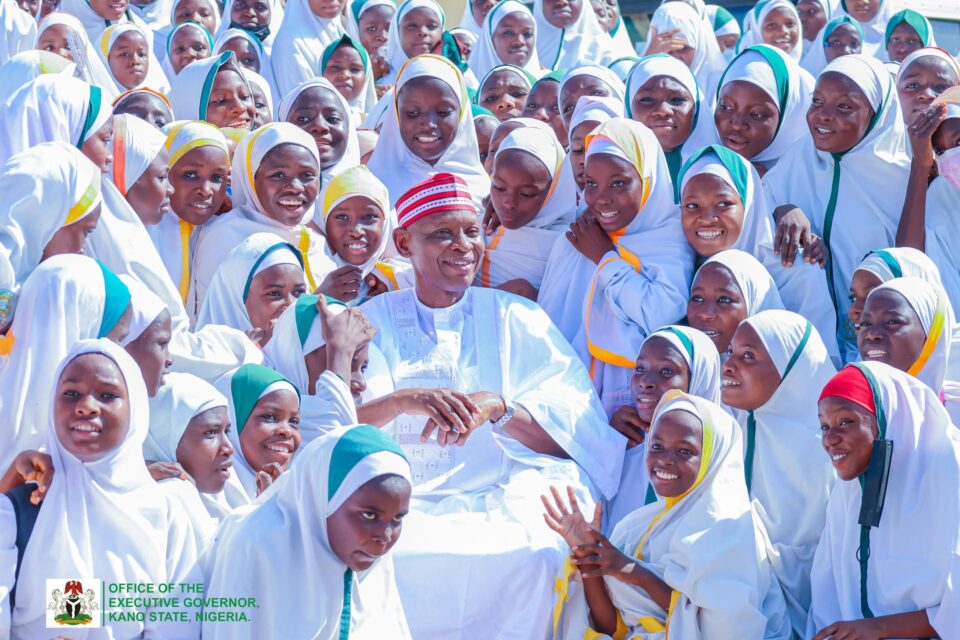
For the second consecutive year, Kano State has emerged at the top of the national performance table in the Senior School Certificate Examination conducted by the National Examinations Council (NECO), renewing the debate over the impact of sustained public investment in education.
According to figures released on the 2026 NECO examination, 74,413 candidates from Kano obtained at least five credits, including English Language and Mathematics, placing the state ahead of Lagos, which recorded 72,496 candidates, while Oyo came third with 55,543 candidates.
The development represents a repeat of Kano’s performance in the 2025 NECO examination, when the state also recorded the highest number of candidates meeting the five-credit benchmark, including English and Mathematics.
For a state with one of Nigeria’s largest school-age populations, the result carries significance beyond the examination figures. It provides the latest indicator of how government spending, examination sponsorship, teacher recruitment, learning facilities and other interventions may be translating into measurable educational outcomes.
Governor Abba Kabir Yusuf, while reacting to the result, attributed the performance to the collective efforts of students, teachers, parents and other stakeholders. He said the back-to-back performance demonstrated that the state’s investment in education was producing tangible results.
“Education remains one of the priorities of our administration,” the governor said, assuring residents that his government would continue to increase funding, improve learning facilities, recruit and train teachers, provide scholarships and support students from disadvantaged backgrounds.
One of the most significant interventions highlighted by the administration is its sponsorship of candidates for external examinations. The state government says it spent more than N4.4 billion in 2026 to sponsor candidates for the Senior Secondary School Certificate Examination, with particular attention to indigent students.
The intervention is designed to remove financial barriers that could prevent children from sitting for critical examinations. In a state where household income remains a major consideration in access to education, the government argues that examination sponsorship can give thousands of students an opportunity to complete an important stage of their education.
But Kano’s education spending goes beyond examination fees.
Education has consistently occupied a substantial portion of the state’s annual budget under the Yusuf administration. In 2024, education reportedly accounted for about 29.95 per cent of the state budget. The allocation rose to N168.35 billion, representing about 31 per cent, in the 2025 budget.
For 2026, the state allocated N405.35 billion to education, representing roughly 30 per cent of its N1.478 trillion budget. The administration says the funds are being channelled into classroom renovation, teacher recruitment and training, learning materials, uniforms, scholarships and other education-related interventions.
The scale of the challenge is considerable. Kano has one of the largest populations of school-age children in the country, with the state government reporting more than five million schoolchildren in its latest annual school census.
This makes education policy in Kano not merely a question of increasing budgetary allocations, but also of determining whether the money reaches classrooms, teachers and pupils in ways that improve learning outcomes.
The latest NECO performance therefore offers an important measure, although examination results alone cannot capture the entire condition of an education system. Issues such as literacy and numeracy, teacher quality, classroom conditions, retention, transition to higher education and employability remain equally important indicators of educational progress.
The Kano administration has also pointed to a series of awards and recognitions as evidence of external acknowledgement of its education policies. These include education-related awards from Leadership Newspaper, New Telegraph, the Nigeria Union of Teachers, Blueprint Newspaper and other organisations.
The administration has further cited international recognitions received in London and Paris in 2026, including awards relating to literacy, learning and education spending.
While such awards provide another dimension to the administration’s record, the more enduring test may be whether the state’s current investments produce sustained improvements in learning and educational opportunities over the coming years.
For students and parents, however, the immediate significance of the NECO figures is more personal. Every successful candidate represents a young person who has crossed an important educational hurdle, often after years of schooling under difficult economic and social circumstances.
Governor Yusuf dedicated the latest achievement to Kano’s students, teachers, parents and the wider population, saying the government’s objective is to build an education system capable of preparing young people for higher education, employment, innovation and leadership.
The challenge now is to sustain the momentum.
For Kano, the second consecutive NECO lead provides an encouraging data point. The bigger question is whether the investment behind the numbers can continue to produce improvements across the broader education system—and ultimately equip millions of young people with the knowledge and skills required to shape the state’s future.
Abdullahi Kano is a journalist who writes from Kano.
namamaoga799@gmail.com
 From Dry Taps to Renewed Hope: Abba Kabir Yusuf’s Drive to Restore Water Supply in Kano
  Muhuyi’s Assignment, Abba’s Edge: How Anti-Drug War Reshapes Kano’s 2027 Race.
  Waiya Unveils Nigeria Forward in Abuja to Mobilise Support for Tinubu’s Reforms
 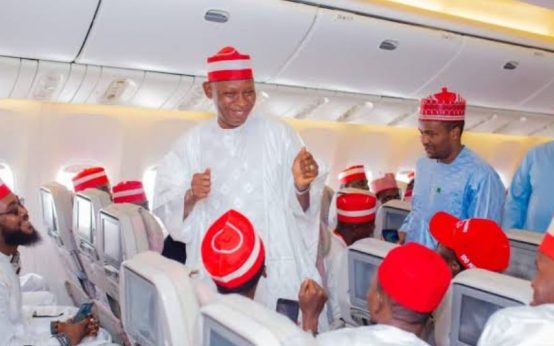 Investing in Minds, Building Kano’s Future: Abba Kabir Yusuf’s Human Capital Development Drive
 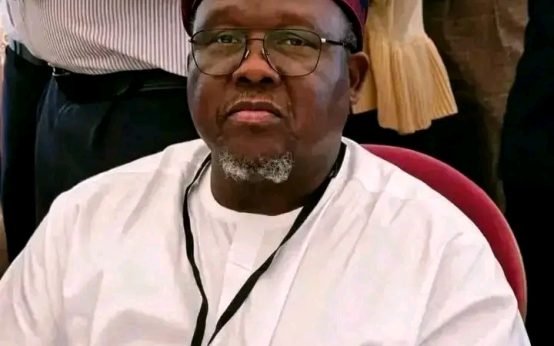 Ibrahim Kabiru Masari: The Political Strategist Shaping a New Northern Conversation
 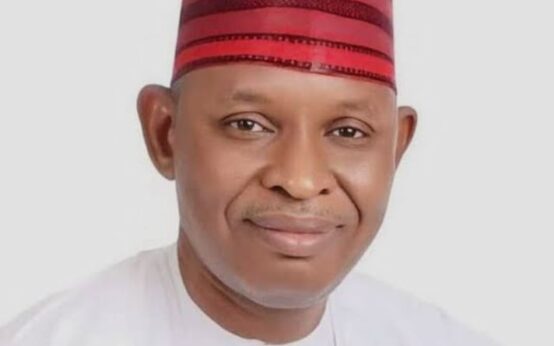 Abba Yusuf and the Politics of Realignment: How Kano’s New APC Coalition Could Reshape 2027
  Kano Govt Approves N144bn For Development Projects
  BREAKING:Explosion Rocks Gas Refilling Outlet In Abuja’s Kubwa
  Governor Radda Joins VP Shettima, Global Leaders at UNGA 81, Pushes for Fintech Collaboration, MSME Financing
  NCoS contains cholera outbreak at Kurmawa Custodial Centre, Kano
  Gov. Yusuf Mourns former MD KNARDA Malam Sani Shawai, condoles with Family
  Azman Group Set to Commission New Filling Station in Abuja