
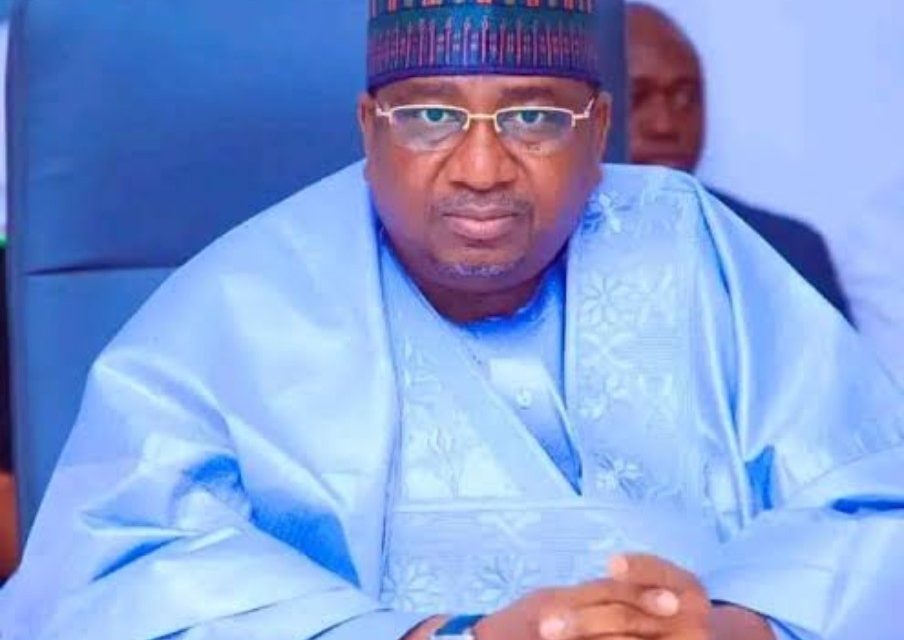
 Admin
Admin By Ibrahim Abubakar Jombali
No one can deny the obvious fact that road construction is one of the most visible measures of government performance. But in rural communities, a road means much more than asphalt, drainage and engineering works. It can determine how quickly a farmer gets produce to market, how easily a patient reaches a hospital and whether a community can participate meaningfully in the wider economy.
This is why the recent approval and flag-off of rural road projects across Kebbi State by Governor Nasir Idris deserve attention. The projects, covering routes linking Kalgo to Diggi, Tungar Lafiya, Maidahini, communities in Bagudo, Zuru and other locations, have brought the question of rural connectivity back to the centre of the state’s development debate.
For a state with a significant agricultural base, the condition of rural roads is not a minor infrastructure issue. It has direct implications for productivity, trade, household welfare and the cost of doing business. The decision to extend road development to communities outside the major urban centres is therefore a potentially important step towards more balanced development.
The projects across Kalgo, Diggi, Tungar Lafiya, Maidahini, Bagudo, Sakaba, Danko Wasagu and Zuru offer an opportunity to demonstrate that infrastructure development can reach communities whose needs are often overlooked in the competition for public investment.
For residents of such communities, development is not an abstract concept. It is the practical difference between spending hours negotiating a difficult route and reaching a destination with relative ease. It is the ability to transport agricultural produce without excessive losses and the possibility of accessing essential services without unnecessary delays.
These are the everyday concerns against which the value of government must be measured.
WHY RURAL ROADS MATTER.
Kebbi’s rural economy depends substantially on the movement of people, agricultural produce and commercial goods. Where roads are inadequate, transportation becomes more expensive, market access is restricted and the economic potential of farming communities is weakened.
A better road network can help reduce these constraints. Farmers may find it easier to move produce to buyers, traders may reach more customers, and transport operators may serve communities more reliably. Improved connectivity can also strengthen access to schools, health facilities and administrative services.
The benefits, however, are not automatic. Roads alone cannot resolve every challenge facing rural communities. It is against this background that Gov Nasir Idris invested heavily in agricultural extension services, storage facilities, electricity, education, healthcare and access to finance.
Nevertheless, roads remain a critical starting point because they connect people to services, markets and institutions that would otherwise be difficult to reach.
For Governor Idris, the strategic importance of the current initiative lies in its potential to make rural development an integral part of Kebbi’s economic planning rather than an occasional intervention.
THE KAURA PHILOSOPHY .
Gov Idris believes that a village should not be treated as the end of the road for government investment. It should be recognised as a productive centre whose contribution to the state’s economy depends, in part, on the quality of infrastructure available to its residents.
The politics of development
Infrastructure projects also carry political significance. They provide citizens with visible evidence against which competing claims of good governance can be assessed. But such assessments are most credible when they are based on verifiable records rather than partisan declarations.
Previous administrations should be judged by the projects they completed, the resources they deployed and the improvements they delivered. The present administration should face the same scrutiny.
It would be premature to declare the current road programme an unprecedented achievement without comparative evidence establishing how it measures against previous governments in terms of the number of roads, expenditure, geographical coverage and quality of delivery.
Equally, it would be unfair to dismiss the initiative merely because it is being undertaken by a sitting governor. The appropriate response is to examine the evidence, monitor implementation and determine whether public resources are producing measurable benefits.
This is where the administration actually distinguished itself. By publishing project details, including contract values, contractors, completion timelines and implementation milestones, the government has given residents a clearer basis for evaluating its performance.
Independent monitoring and transparent procurement have further strengthened public confidence. Communities have been offered channels through which they can report poor workmanship, abandoned projects or delays.
Such measures are bound to transform rural road development from a political talking point into an accountable public programme.
THE CHALLENGE OF DELIVERY AND MAINTENANCE.
Governor Idris is a teacher not an Engineer. Yet, his meticulous nature and experience made him to appreciate the simple logic that the commencement of construction is only one stage in the life of a road project. The more difficult questions concern engineering quality, funding, supervision and long-term maintenance. He made it clear to all involved in the process.
The Governor was very clear and unmistakable that roads must be designed to withstand local conditions, with adequate drainage and other protective measures. Poor drainage, especially during the rainy season, can quickly undermine expensive construction work. Weak supervision and the use of substandard materials can also reduce the lifespan of the infrastructure. Thus, Kaura was emphatic: we must do quality jobs !
Interestingly, the Kebbi State Government has continued to ensure that the projects are backed by proper technical supervision and realistic maintenance plans.
Governor Nasir did not waste time in establishing clear priorities. He made sure that Communities are assessed according to their economic importance, population, access to essential services and the severity of their infrastructure deficits. This ultimately helped in ensuring that public spending responds to demonstrable needs rather than political considerations.
The transparent system of prioritisation adopted by the Idris administration has also made it easier for residents to understand why particular routes have been selected and when other communities might benefit.These are not unreasonable demands. Public infrastructure is financed with public resources, and citizens are entitled to expect value for money.
A LEGACY MEASURED BY RESULTS.
Governor Idris has grabbed the opportunity to make rural connectivity a defining feature of his administration’s development record. He is trying consciously to create a lasting legacy that leaves every community feeling the impact of the projects.
Governor Kaura has brought substance to leadership demonstrating that roads are not only initiated but are completed, that their quality meets the required standards and that they remain usable after the inauguration ceremonies have ended. His idea is that rojects must improve access to markets and essential services in ways that residents can identify and experience.
For rural communities, the measure of success is straightforward. Can farmers transport their produce more easily? Are journeys to hospitals less difficult? Can traders reach customers with fewer obstacles? Are communities better connected to neighbouring settlements and economic centres?
These questions are more revealing than the volume of praise an administration receives. The people would rather see things on the ground. They would rather feel the positive impact of the policies of an administration. They are fed up with loud but empty noise of bluffing politicians.
The road projects now being advanced across Kalgo, Diggi, Tungar Lafiya, Maidahini, Bagudo, Zuru, Sakaba, Fakai, Danko Wasagu and other communities represent an opportunity to strengthen the foundations of rural development in Kebbi State. The faithful and proper implementation of these valuable projects is already improving connectivity, supporting livelihoods and expanding access to economic opportunities.
Governor Nasir understands the mechanics of practical leadership and focuses on actualising every positive goal. He deliberately resists the temptation to equate approval with achievement. He believes that the people need completed roads, not merely promising announcements. They need infrastructure that works, not projects that exist principally in empty political communication. He is simply realistic!
Ultimately, the value of Governor Idris’ rural road programme is practically determined by the difference it is making to the lives of ordinary residents. That difference must be demonstrated through quality construction, transparent expenditure, timely completion and sustained maintenance.
A road may begin with a government decision, but its real purpose is fulfilled only when it becomes useful to the people. When it connects a farmer to a market, a patient to medical care and a community to wider economic opportunities, it becomes an instrument of development rather than simply another public works project.
For Governor Nasir Idris administration, he has consistently demonstrated that development can reach beyond the major towns and respond to the needs of communities that sustain the state’s economy.
In the final analysis, the strongest evidence of good governance is not what a government says it intends to do, but what citizens can see, use and benefit from. That is the standard against which Kebbi’s rural road initiative should be judged.
As more roads open on our rural areas, the Kaura revolution is being consolidated and the people of kebbi are the better for it. Democracy is working in Kebbi state. Good governance is manifesting in the Land of Equity.
Ibrahim Abubakar Jombali
Special Adviser on Public Enlightenment and Orientation to the Kebbi State Governor
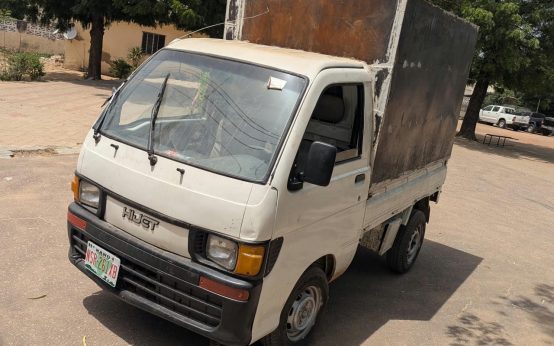 Kano Police Arrest Four Suspects, Recover Three Stolen Vehicles
  Pantami Urges Supporters to Remain Calm over Omission from INEC List
  A CELEBRATION OF A DISTINGUISHED ADMINISTRATOR, A MAN OF UNIMPEACHABLE CHARACTER AT 55: ALHAJI UMAR HASSAN WAZIRI, FCA
  2027: Sen. Bwacha Inaugurates 251-Member Campaign Council In Taraba
  Gov Radda Seeks NIMC Partnership to Strengthen Identity Management
  NUJ Kano Vice Chairman Loses Mother
  Kano Police Arrest Four Suspects, Recover Three Stolen Vehicles
  Pantami Urges Supporters to Remain Calm over Omission from INEC List
  A CELEBRATION OF A DISTINGUISHED ADMINISTRATOR, A MAN OF UNIMPEACHABLE CHARACTER AT 55: ALHAJI UMAR HASSAN WAZIRI, FCA
  2027: Sen. Bwacha Inaugurates 251-Member Campaign Council In Taraba
  Gov Radda Seeks NIMC Partnership to Strengthen Identity Management