
 Admin
Admin By Abdullahi Kabir
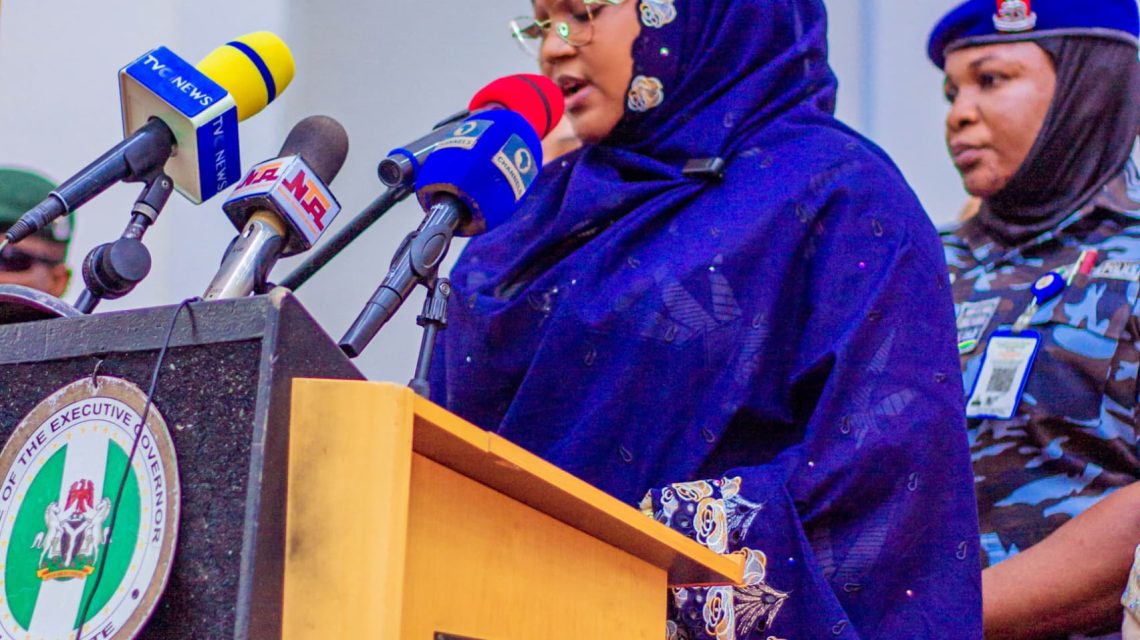
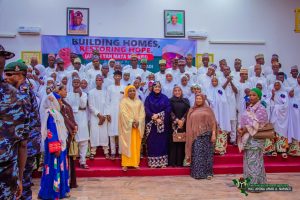
In a remarkable display of compassion and social responsibility, the wife of the Governor of Jigawa State, Ambassador Dr. Amina Umar Namadi, recently organized a mass wedding ceremony for orphaned brides selected from all the 27 local government areas of the state.
The event, which attracted community leaders, Islamic scholars, government officials, and families from across the state, has continued to generate widespread commendation as one of the most impactful humanitarian interventions in recent years.
The mass wedding initiative was not merely a ceremonial gathering but a carefully coordinated social support programme aimed at restoring dignity, stability, and hope to vulnerable young women who had lost parental care.
For many of the beneficiaries, the ceremony represented the beginning of a new chapter after years of hardship and uncertainty. The initiative also reflected the growing role of women leaders in promoting social welfare and strengthening community values in northern Nigeria.
Observers described the event as a milestone in the philanthropic journey of Ambassador Dr. Amina Umar Namadi, whose humanitarian activities have steadily expanded since her husband assumed office as governor.
Over the years, she has built a reputation as a compassionate advocate for women, children, and disadvantaged families across Jigawa State.
Her interventions have focused largely on education, healthcare support, women empowerment, and poverty alleviation.
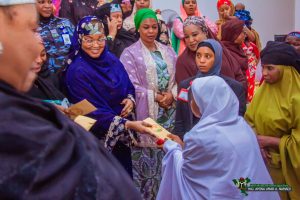
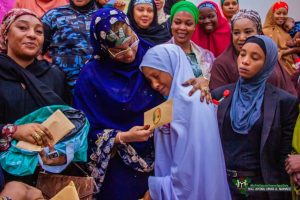
At the colourful wedding ceremony, the brides and grooms were reportedly provided with essential household items, clothing materials, bedding, furniture, and financial support to help them begin married life with dignity. Islamic clerics who presided over the marriages commended the initiative, describing marriage as an important institution that promotes morality, social stability, and mutual support within society.
Community leaders from different parts of the state noted that orphaned girls often face enormous social and economic challenges, especially in rural communities where access to education and financial opportunities remains limited.
They argued that many vulnerable young women become exposed to exploitation and poverty when adequate support systems are absent. According to them, the intervention by the governor’s wife has therefore addressed both humanitarian and social concerns at the same time.
The initiative also highlighted the importance of collective responsibility in caring for orphans and vulnerable children. Religious leaders at the occasion emphasized that supporting orphans occupies a special place in Islamic teachings, urging wealthy individuals and public office holders to emulate the example set by Ambassador Dr. Amina Umar Namadi.
They stressed that societies become stronger when the vulnerable are protected and empowered.
For many residents of Jigawa State, the mass wedding project is only one aspect of the First Lady’s expanding humanitarian footprint.
Through various programmes and foundations, she has continued to champion the return of out-of-school children to classrooms, particularly girls who are often forced to abandon education due to poverty or cultural barriers.
Education advocates believe such interventions are helping to reduce illiteracy and encourage school enrollment in several communities.
In addition to education support, Ambassador Dr. Amina Umar Namadi has also invested heavily in women empowerment initiatives. Hundreds of women across the state have reportedly benefited from skills acquisition programmes, small business support schemes, vocational training, and financial assistance aimed at improving household incomes and reducing dependency.
Beneficiaries of these programmes say the support has transformed their lives and enhanced their ability to provide for their families.
Analysts say her growing popularity among women and grassroots communities stems largely from her direct engagement with ordinary people rather than ceremonial appearances alone.
Unlike many public office holders who limit their activities to official events, she is often seen interacting closely with widows, orphans, traditional leaders, and community groups in rural areas.
This personal connection has strengthened public confidence in her humanitarian activities.
The mass wedding ceremony also carried significant cultural and economic implications. In many northern Nigerian communities, the rising cost of marriage has become a major obstacle for low-income families.
By easing the financial burden associated with marriage, the initiative helped several families who may otherwise have struggled for years to support their daughters’ marriages. Some parents and guardians openly expressed gratitude for what they described as a life-changing intervention.
Social development experts have equally praised the programme as a practical model for addressing poverty and social exclusion. According to them, supporting vulnerable women through marriage, education, and empowerment programmes contributes to stronger family structures and more stable communities.
They argued that government alone cannot solve every social challenge, making partnerships between public institutions, philanthropists, and community organizations increasingly important.
Political observers also believe the initiative reflects a broader attempt by the Jigawa State administration to promote inclusive governance through humanitarian outreach.
Although the governor’s wife operates largely outside partisan politics, many residents see her activities as complementing the social development agenda of the state government.
Her programmes have helped project a softer, people-centered image of governance focused on compassion and human development.
Beneficiaries of the mass wedding ceremony could hardly hide their emotions as they expressed appreciation for the opportunity given to them. Some of the brides described the intervention as a blessing they never imagined possible, while several grooms promised to uphold the values of love, respect, and responsibility in their marriages.
Family members who attended the event also praised the organizers for conducting the programme in a dignified and transparent manner.
As news of the mass wedding spread beyond Jigawa State, many Nigerians on social media and within civil society circles applauded the initiative as an example of leadership driven by empathy and service to humanity.
Several commentators called for similar interventions across the country, particularly in communities where poverty and insecurity continue to leave many children orphaned and vulnerable.
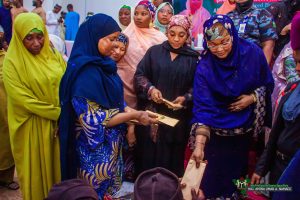
In a society grappling with economic hardship and widening social inequalities, the humanitarian efforts of Ambassador Dr. Amina Umar Namadi have offered a powerful reminder that leadership is not measured only by political authority but also by compassion, sacrifice, and commitment to uplifting the less privileged.
Through the mass wedding initiative and her numerous empowerment programmes, she has not only changed lives but also reinforced the enduring values of care, unity, and hope within the people of Jigawa State.
Abdullahi Kabir writes from Kano
Can be reached via email namamaoga799@gmail.com
 Massive Turnout in Kiru/Bebeji as Abdulmumin Jibrin Kofa Secures Affirmation for Fifth Term Bid
  Poverty, Profit and the Dangerous Extraction Destroying Kano’s Environment
 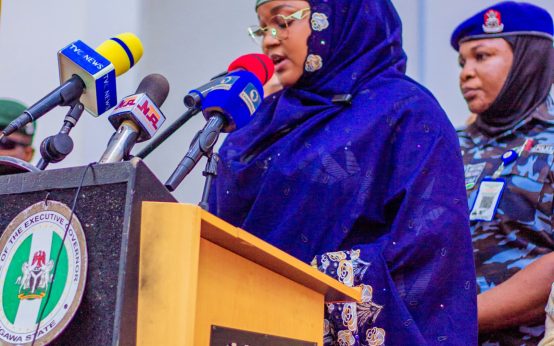 Weddings of Hope: How Amina Namadi Is Changing the Lives of Orphans in Jigawa
  Victory Smiles
  Jigawa First Lady Applauds Corps Members at NYSC Orientation Camp Cultural Display
  Pulse Nigeria Apologises Over Misleading ‘Underwear Distribution’ Report following Kano Development Forum’s Intervention
  Governor Radda Welcomes NDE Delegation, Pledges Partnership on Skills Development
  Police Return Thousands of IDPs to Fegin Kanawa as Zamfara Launches Violent Crime Response Unit
  Zamfara Police Hold Strategic Security Meeting Ahead of Eid-el-Kabir
  NEMA receives 497 stranded Nigerians from Niger Republic
  Dangote Cement Gboko Rolls Out Multi-Million Naira Empowerment Programmes For Six Benue Host Communities
  Kwankwaso, Abba, and the Fate of Binary Choice.