
 Admin
Admin 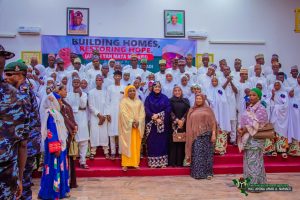
In a society where many vulnerable children struggle to find stability and belonging, a remarkable initiative in Jigawa State is rewriting the story for hundreds of orphans through marriage, dignity, and renewed hope.
At the centre of this transformation is the wife of the state governor, Hajiya Amina Namadi, widely known as Garkuwar Marayu—a title that reflects her commitment to protecting and uplifting orphans.
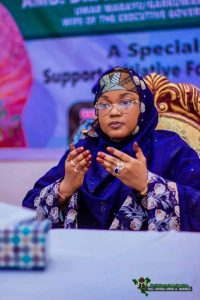
Her latest intervention, a mass marriage programme for 300 orphans drawn from all 27 Local Government Areas of the state, has not only captured public attention but also sparked conversations about social responsibility and compassion.
The programme, coordinated by the Jigawa State HISBA Board, culminated in a colourful engagement ceremony at the Government House Banquet Hall in Dutse.
Five couples were selected from each local government area, ensuring that the initiative had a wide reach and equitable representation across the state.
Beyond the numbers, however, lies a deeper story—one of young men and women who, despite losing parental care, are being given a chance to build families of their own.
For many of the beneficiaries, marriage is more than a cultural milestone; it is a pathway to stability, identity, and a sense of belonging that had long been missing.
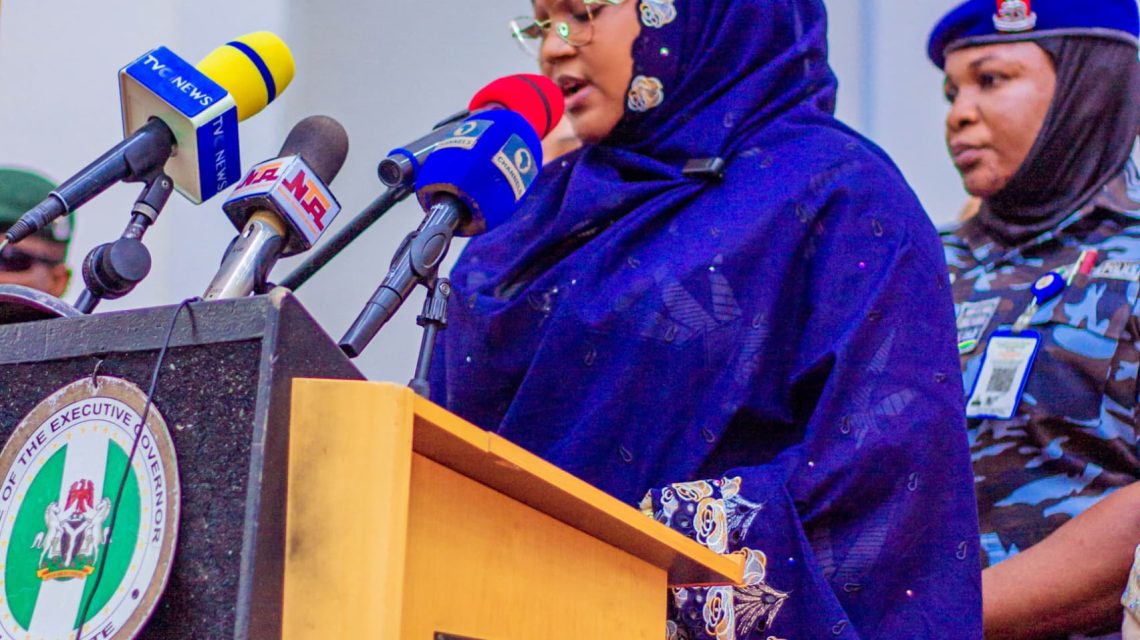
Speaking at the ceremony, Hajiya Namadi highlighted the growing challenges faced by orphaned households, many of which are headed by women struggling to survive in difficult economic conditions.
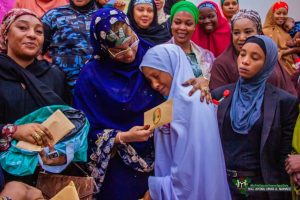
She stressed that caring for orphans is not just a moral obligation but a collective duty that requires the involvement of individuals, leaders, and institutions.
Her appeal to wealthy Nigerians and political actors to extend support resonated strongly, especially at a time when economic pressures continue to weigh heavily on families across the country.
The First Lady also acknowledged the role of her husband, Umar Namadi, whose support she described as instrumental in bringing the initiative to life.
In practical terms, the programme went beyond matchmaking to provide a solid foundation for the new couples.
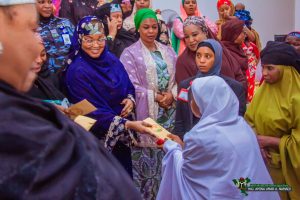
Dowries were paid for the brides, while the grooms received financial assistance, easing the burden traditionally associated with marriage.
In addition, each couple was supported with furniture and essential household items, giving them a meaningful start as they embark on married life.
Observers note that such comprehensive support reduces the risk of early marital strain, particularly among economically disadvantaged couples.
The Commander of the HISBA Board, Fa’iz Bashir, underscored the importance of the initiative within the framework of Islamic teachings.
According to him, Islam places great emphasis on the care of orphans and the responsibility of society to ensure their well-being.
He revealed that the board undertook a rigorous screening process to confirm that all beneficiaries were genuine orphans, indigenes of the state, and willing participants in the marriages.
This careful approach, he explained, was necessary to preserve the integrity of the programme and ensure its long-term impact.
The event itself was not just a ceremony but a celebration of resilience, as families, community leaders, and government officials gathered to witness the union of the couples.
For the newlyweds, the occasion marked the beginning of a new chapter filled with possibilities and renewed optimism.
Many of them expressed gratitude, offering prayers for Hajiya Amina Namadi, Governor Umar Namadi, and the Jigawa State Government for their intervention.
Looking ahead, the HISBA Board has disclosed plans for another mass marriage programme aimed at supporting less privileged women across the state.
Such initiatives are gradually positioning Jigawa as a model for community-driven welfare programmes rooted in cultural and religious values.
As the echoes of celebration fade, the true impact of the programme will be seen in the homes built, the families nurtured, and the futures secured.
In a time when social challenges often dominate the narrative, this initiative stands out as a powerful reminder that empathy, leadership, and collective action can change lives in profound ways.
 Massive Turnout in Kiru/Bebeji as Abdulmumin Jibrin Kofa Secures Affirmation for Fifth Term Bid
  Poverty, Profit and the Dangerous Extraction Destroying Kano’s Environment
  Victory Smiles
  Jigawa First Lady Applauds Corps Members at NYSC Orientation Camp Cultural Display
  Pulse Nigeria Apologises Over Misleading ‘Underwear Distribution’ Report following Kano Development Forum’s Intervention
  Tarauni Breathes As Ja’o’ji Advances
  When Ja’o’ji Answers Reconciliation With Humility in Victory
  APC Aspirant Raises Concerns Over Conduct of Primary Election in Jigawa Constituency
  Kano Govt Pledges Stronger Collaboration with FG, Partners on Education
  Ambassador Dr Amina Umar Namadi Sponsors Mass Marriage for 300 Couples in Jigawa
  Police Warn Against Violence Ahead of APC Primaries in Akwa Ibom
  RFI Hausa to Host Festival, Celebrate Kannywood in Kano